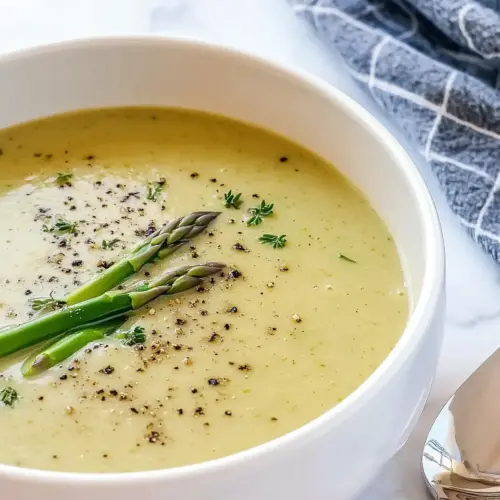
Asparagus Soup
Asparagus Soup is a creamy, bright spring soup that blends tender asparagus with aromatic onion and garlic, finished with a touch of heavy cream. It s an easy weeknight dinner or elegant starter, offering silky texture and fresh green flavor. Make it for a light lunch or a special seasonal menu for a comforting, tasteful reason to celebrate spring produce.
Equipment
- 6-quart Dutch Oven
- Multi Speed Immersion Blender
Ingredients
- 1 pound asparagus Trim and cut into bite-sized pieces to provide the fresh, grassy base and primary texture for the soup; woody ends should be discarded and tender tips reserved for garnish or added near the end of cooking to preserve color.
- 1 medium onion (chopped) Sauté until translucent to build a sweet, aromatic foundation; finely chop to melt into the broth and support the asparagus flavor without dominating it.
- 2 cloves garlic (minced) Mince and gently cook to release pungent, savory aroma and deepen the soup's flavor; add toward the beginning to bloom its oils and complement the onion.
- 2 tablespoons unsalted butter (or olive oil) Melt or heat to sauté aromatics and create a rich mouthfeel; use unsalted butter for controlled seasoning or olive oil for a lighter, dairy-free option.
- 4 cups vegetable (or chicken broth, low sodium or no sodium added) Simmer as the cooking liquid to infuse the soup with savory depth and adjust saltiness; low- or no-sodium versions allow precise seasoning control.
- 1/2 cup heavy cream (or half-and-half) Fold in near the end to add creaminess, body, and a silky finish; use heavy cream for richness or half-and-half for a lighter texture.
- salt and pepper (to taste) Season gradually to balance and enhance flavors; taste as you go and add small amounts to avoid over-salting.
- fresh parsley (for garnish) Chop and sprinkle over each bowl to add fresh color and a bright, herbaceous note that lifts the finished soup.
Instructions
- Rinse the asparagus under cold water. Trim off the woody ends (about 1-2 inches from the bottom). Cut the asparagus into 1-inch pieces, reserving a few tips for garnish if desired.: The stalks s feel cool to the touch, and rinsing removes grit and any residual soil, ensuring a clean, bright flavor. As you rinse, notice the energetic green color and the crisp snap of fresh spears. A common mistake is not trimming the woody ends, which can leave fibrous bits in the purée; trim about 1 to 2 inches to avoid toughness.
- In a large pot over medium heat, melt the butter. Add the chopped onion and sauté until translucent, about 5 minutes. Stir in the minced garlic and cook for an additional 1 minute.: Those lower sections are often fibrous and detract from the soup s silkiness. Cutting them away improves mouthfeel and reduces the need for extra blending. If you leave them on, expect stringy bits in the final texture; don t skip this simple prep step.
- Add the asparagus pieces to the pot. Pour in the broth and bring to a boil. Reduce heat to a simmer and cook until the asparagus is tender, about 15 minutes.: Smaller pieces cook evenly and blend more smoothly. The visual cue to watch for as they simmer is a brighter, slightly softened green. Save a few tips for garnish, they provide a lovely contrast; forgetting to reserve tips means you ll miss a nice finishing touch.
- Remove the pot from heat. Use an immersion blender to purée the soup until smooth. Alternatively, carefully transfer the soup to a blender in batches and blend until smooth.: When the butter melts it will foam slightly and emit a nutty aroma, indicating readiness for the next ingredients. This gentle heat builds a flavor foundation. Don t let the butter brown, which will shift the soup toward toasty notes instead of clean aromatics.
- Return the pot to low heat. Stir in the heavy cream. Season with salt and freshly ground black pepper to taste. Heat the soup gently, without boiling.: The onion should become soft and slightly glossy, releasing sweet, mellow aromatics into the pot. You ll smell a sweeter, savory scent as the sugars develop. A common error is rushing this step on high heat, which can brown the onion and change the intended flavor profile.
- Ladle the soup into bowls. Garnish with reserved asparagus tips and chopped herbs if desired. Serve warm.: Garlic s fragrance will bloom quickly, offering a warm, aromatic layer that complements the onion . Listen for a gentle sizzling and smell the garlic s immediate punch. Burned garlic turns bitter, so add it briefly and lower the heat if sizzling gets too vigorous.
- Add the asparagus pieces to the pot: As the asparagus hits the aromatic base it will begin to release a fresh, vegetal scent, and you ll notice the color deepen slightly. This step integrates the main flavor into the savory foundation. Overcrowding the pot can steam instead of sauté, which changes texture, so keep a sensible amount in the pan.
- Pour in the broth and bring to a boil: The broth fills the pot and carries aromas through the kitchen, and the initial boil is your cue that the heat is sufficient. Boiling helps extract flavor from the asparagus . Once it reaches a boil reduce to a simmer, because prolonged rolling boils can break down delicate flavors and cloud the broth.
- Reduce heat to a simmer and cook until the asparagus is tender about 15 minutes: The vegetable will soften and the pot will smell greener and sweeter as starches and sugars release. Tenderness is your guide here rather than the clock, test a piece for softness. Overcooking will mute the fresh green notes and may require more seasoning to recover.
- Remove the pot from heat: Pulling the pot off the burner stops the cooking cycle so you can blend at the ideal stage, preserving color and fresh flavor. The residual heat will keep things warm without further softening. Leaving it on the heat risks continued breakdown and a duller green hue.
- Use an immersion blender to purée the soup until smooth: As you blend you ll see the texture shift from chunky pieces to a glossy, unified soup, and the aroma will intensify. Blending warm liquid can create a gentle steam and a rich sheen. If using a traditional blender, work in small batches and vent the lid carefully to avoid pressure buildup; rushing this can cause splatters and burns.
- Alternatively carefully transfer the soup to a blender in batches and blend until smooth: The blender will create a velvety finish if you pulse and scrape as needed, and the sound will change from sloshing to a steady whirr. Blending in batches prevents overheating the blender and reduces the risk of spills. A common mistake is overfilling the blender, which can lead to hot liquid escaping when you remove the lid.
- Return the pot to low heat: Warming the puréed soup gently lets you marry the flavors and adjust seasoning before serving, releasing a comforting, rounded aroma. Low heat prevents the dairy from separating and keeps the texture silky. Avoid reheating at a rapid boil, which can break the cream and alter the texture.
- Stir in the heavy cream: The heavy cream will add a glossy, rich mouthfeel and soften any sharp green notes. You ll notice the soup become silkier and slightly paler as the cream integrates. If you add cream at too high a temperature it may curdle, so keep the heat low and stir steadily.
- Season with salt and freshly ground black pepper to taste: Tasting is essential, because salt brightens flavors and pepper adds subtle warmth. Add gradually and taste between additions to avoid oversalting. A frequent error is heavy handed seasoning early on; season at the end to control the final balance.
- Heat the soup gently without boiling: Gentle warming maintains the silky texture and prevents the cream from separating, while allowing flavors to meld fully. Watch for tiny bubbles at the edge rather than a rolling boil. Boiling at this stage can curdle the dairy and dull the freshness.
- Ladle the soup into bowls: As you serve, notice the soup s viscosity and how it coats the spoon, which indicates the proper texture. Presenting it warm enhances aroma and comfort. Serving too cold will mute flavors and make the texture feel thicker than intended.
- Garnish with reserved asparagus tips and chopped herbs if desired: The tips provide a crisp visual and textural contrast, and chopped parsley adds a fresh pop. The final touches lift the dish visually and flavorwise. Skipping garnish is harmless but you ll miss the bright, fresh accent they provide.
- Serve warm: Enjoy the soup while it s warm so you get the fullest aroma and creamiest mouthfeel. Warm bowls make a comforting presentation that invites the first spoonful. If you re serving later, reheat gently to preserve texture and flavor; overheating will alter the experience.
Notes
- Fresh or frozen asparagus, both work. Frozen asparagus will soften faster, so reduce the simmer time by a few minutes to prevent a mushy texture.
- Trim the woody ends, cut off the bottom 1 to 2 inches for a smoother soup and to prevent stringy fibers in the purée.
- Ultra smooth finish, blend well and strain through a fine mesh sieve for a velvety, restaurant quality texture if you prefer.
- Cream alternatives, heavy cream adds richness; for a dairy free version use coconut milk or cashew cream, or skip the cream entirely for a lighter bowl.
- Adjust thickness, if the soup is too thick add a splash of broth, if too thin simmer uncovered for a few minutes to reduce and concentrate flavors.
- Make ahead and storage, refrigerate for up to three days. If freezing, do so before adding cream and stir in fresh cream when reheating for the best texture.
- Brighten with acid, a squeeze of lemon juice before serving makes the flavors pop and balances the creaminess.