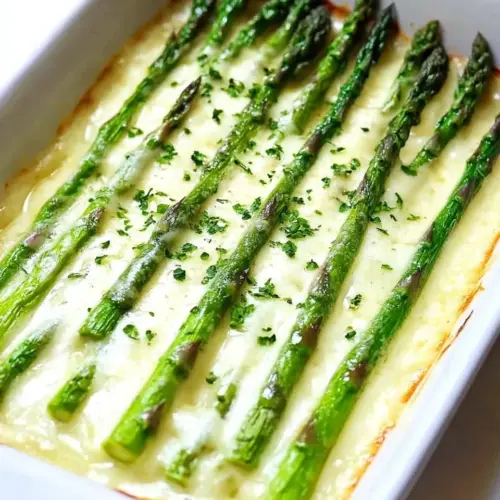
Asparagus Gratin
Asparagus Gratin is a creamy, cheesy spring side featuring tender blanched asparagus and a velvety Parmesan and Monterey Jack sauce. This easy weeknight dinner or special occasion side balances bright green vegetable flavor with a golden, bubbling top, making it a crowd pleaser. Try it for seasonal gatherings when asparagus is at its peak.
Equipment
- Oven Broiler
- Sauté Pan
- Oven safe casserole dish
- Whisk
- Slotted Spoon
Ingredients
- 1 pound asparagus Trim and cook to tender-crisp texture; provides the primary fresh vegetable body and natural flavor for the gratin. Roast or blanch to concentrate sweetness and maintain a pleasant bite that contrasts with the creamy topping.
- 1 1/2 cups water Simmer to steam and help tenderize asparagus while forming the base cooking liquid; contributes moisture needed to create a light sauce and to prevent drying during baking. Use measured amount to control final consistency of the gratin.
- salt and pepper Season lightly to enhance natural flavors and balance richness; adds basic taste contrast and can be adjusted to preference. Apply during cooking and again before serving to taste, using salt for depth and pepper for subtle heat.
- 1 1/2 tablespoons unsalted butter Melt to create a flavorful fat base for the roux and to coat asparagus; adds richness and helps brown the surface. Use unsalted butter to control overall saltiness and to bind flour when making the sauce.
- 1 tablespoon all-purpose flour Whisk into melted butter to form a roux that thickens the sauce; provides structure and body for a smooth, creamy gratin topping. Cook briefly to remove raw flour taste before adding liquid for best texture.
- 1/2 cup grated Parmesan cheese Sprinkle for savory, nutty flavor and a salty finish; offers umami depth and helps form a golden crust when broiled. Grate finely so it melts evenly and combines well with other cheeses in the gratin.
- 1/2 cup shredded Monterey Jack cheese Layer to provide creamy melt and mild, slightly tangy richness; contributes to gooey texture and helps create a cohesive cheesy topping. Shred for even melting and mix with Parmesan for balanced flavor and browning.
- 1 tablespoon minced fresh parsley Garnish chopped to add fresh herbal brightness and a pop of color; balances the richness of the cheese and butter. Sprinkle at the end to preserve its fragrance and enhance presentation.
Instructions
- Place rack in upper middle position of the oven and preheat the broiler to high.: You will notice an immediate heat build up, and the kitchen will smell faintly warm as the broiler element readies. Setting the rack high ensures the cheese browns quickly without overcooking the spears. A common mistake is placing the dish too close, which can char the top before the sauce heats through, so give it a little distance to allow even browning. Keep oven mitts handy because you will be working close to the heat when you check doneness.
- Trim the woody ends of the asparagus off. In a saute pan (with lid), bring the water to a simmer. Add the woody asparagus ends plus 1/4 teaspoon of salt to the water and cook for 5 minutes. Using slotted spoon, remove and discard the woody asparagus ends.: As you simmer the discarded ends they will release vegetal perfume into the water, which is actually useful for flavoring the sauce. The bubbling water will sound lively, and that tiny simmer preserves clarity in the cooking liquid. One pitfall is overboiling, which can make the water cloudy and overly reduced, so keep it to the stated time and remove the ends as instructed.
- Return water to a simmer. Add the asparagus to the water, cover and cook for 2 minutes, until just nearly tender (for very thin asparagus, you only need to cook 1 minute). With slotted spoon, remove the asparagus and reserve. Pour just 1/2 cup of the asparagus water into a measuring cup (discard the rest).: The blanching should leave the stalks vibrant and slightly snap when you bite them. You will see the color deepen to a glossy green and the tips remain intact, a visual cue for perfect timing. Reserving half a cup of the cooking liquid is crucial because it carries flavor and starch that help emulsify the sauce later. A common error is overcooking so the spears become limp, so test one spear for firmness before draining the rest.
- Wipe the saute pan dry and return to stove on medium heat. Melt the butter in the pan and with whisk or spoon, stir in the flour. Reduce heat to medium-low and cook until thickened and nutty smelling, about 3-5 minutes. Turn off the heat. Stir in most of the cheese (reserve a couple of tablespoons of cheese for the top of the asparagus) and the reserved asparagus water. Taste then season with salt and pepper.: As the butter melts it will foam slightly and release a nutty aroma when the flour is added. Whisking here avoids lumps and creates a smooth base. If you see any browning beyond a pale tan, lower the heat because burnt flour gives a bitter edge. The sound is subtle a gentle sizzle that quiets as moisture cooks off, and that helps you sense progress.
- Pour this thickened cheesy sauce into oven-safe casserole dish. Place the asparagus on top of the sauce. Sprinkle remaining cheese on top of asparagus. Broil for 6-8 minutes. Top with parsley. Serve immediately.: As the roux thickens the aroma shifts to toasty and welcoming, and the texture will become glossy. Adding the cheeses off heat prevents them from seizing and turning grainy, producing a silkier sauce. The reserved asparagus water helps the sauce glide rather than stiffen, so stir it in slowly until you reach a silky consistency. Taste carefully because the Parmesan cheese may already add significant salt, and over seasoning is a common oversight.
- Pour this thickened cheesy sauce into oven safe casserole dish: The sauce should look rich and coat the back of a spoon, and pouring it into an ovenproof dish distributes warmth so the asparagus sits in an inviting pool rather than on a cold base. If the sauce seems too thick you can thin with a splash more reserved water, but avoid making it watery. One error people make is using a dish that is too shallow, which can let the cheese run off under the broiler, so choose a vessel with enough depth to hold the sauce and spears.
- Place the asparagus on top of the sauce: Lay the asparagus so the tips are evenly spaced and slightly elevated, creating an attractive presentation and allowing heat to circulate. You will hear the faint hiss as residual heat meets the cool spears, and the contrast in temperatures helps set the final texture. Avoid crowding too tightly which can trap steam and soften the tips prematurely.
- Sprinkle remaining cheese on top of asparagus: The reserved cheese will create a thin shell that browns and bubbles under the broiler. You want a light, even dusting that melts into a golden crust, so distribute it carefully. Too much on top can insulate and prevent crisping, so moderation yields the best visual and textural outcome.
- Broil for 6 to 8 minutes: Under the broiler the surface will transform quickly, bubbling and sending up savory aromas. Watch for a deep golden color and small brown flecks, those are signs the sugars and proteins in the cheese are caramelizing. Do not walk away because the broiler works fast and can go from perfect to overly dark in a minute. If you notice black specks, reduce the broiler intensity next time or move the rack slightly lower.
- Top with parsley: The minced fresh parsley will add green brightness and a subtle herbaceous finish that balances the melted cheeses. Sprinkle right after you remove the dish so the herbs retain their color and fresh scent rather than wilting. A common misstep is adding herbs too early, which dulls their flavor and impact.
- Serve immediately: Serve while the top is still bubbling and the interior warm, because the contrast between hot cheese and cool plate air makes the texture most appealing. The first bite should deliver a soft interior sauce and a lightly browned surface, with the asparagus offering a gentle snap. Avoid letting it sit uncovered too long, which will form an undesired film on the sauce.
Notes
- Make it creamier by adding a tablespoon of reserved asparagus water at the end if the sauce seems stiff, this preserves silkiness without diluting flavor.
- For a crisper top use the broiler on high for the last 1 to 2 minutes only, keeping a vigilant eye so the cheese browns evenly instead of charring.
- Adjust blanching time based on stalk thickness, cook thin spears for one minute and thicker ones for two minutes to maintain lively texture.
- Control salt by tasting after the cheese is added, since Parmesan cheese can significantly increase saltiness and you can always add more later.
- Alternate cheese ratio by swapping part of the Monterey Jack for another mild melting cheese if you want different melt and color while keeping the same meltability.
- Presentation tip arrange spears with tips all facing the same direction for a professional looking platter that highlights the browned edges.