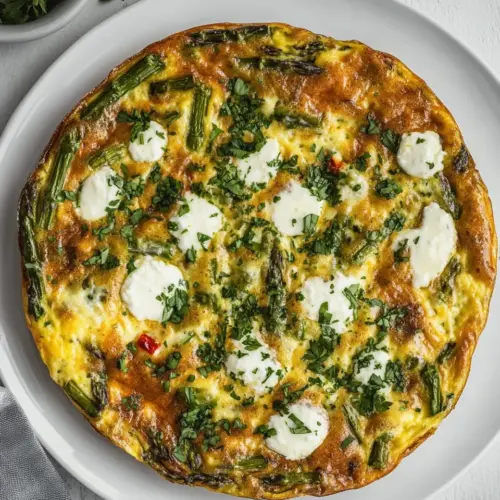
Asparagus Frittata with Herbs and Mozzarella
Asparagus Frittata with Herbs and Mozzarella is a creamy, herb studded bake that celebrates spring produce. Bright asparagus and fragrant herbs meld with creamy mozzarella for an easy weeknight dinner or elegant brunch. This simple, satisfying dish is perfect for entertaining or a quick family meal, making it worth trying tonight.
Equipment
- Roasting Pan
- 8 inch ovenproof skillet
Ingredients
- 1/2 pound asparagus Trim and snap into bite-sized pieces then sauté briefly to add a tender-crisp, slightly sweet green flavor that brightens the frittata and provides texture contrast.
- 1 medium shallot sliced Slice thinly and sweat over medium heat to release a mild, sweet oniony aroma that forms a flavorful base and enhances overall savory depth.
- 1 clove garlic sliced Slice thinly and gently cook with shallot to impart a subtle pungent, aromatic garlic note that complements herbs and enriches the egg mixture.
- 3 teaspoons olive oil divided Divide between sautéing and finishing steps to provide a fruity, slightly bitter fat for cooking aromatics and preventing sticking while adding richness to the dish.
- 8 large eggs Whisk thoroughly to create the primary structure and custardy body of the frittata, delivering protein, richness, and a golden set when baked or cooked.
- 3/4 cup milk Whisk with eggs to loosen and lighten the custard, contributing creaminess and a tender, silkier texture while extending the mixture slightly.
- 1/4 cup minced fresh flat-leaf parsley plus extra for serving Mince finely and fold into the egg mixture to introduce fresh herbaceousness and a bright, slightly peppery parsley flavor that lifts the overall dish; reserve extra for garnish to add color and freshness.
- 3 tablespoons minced chives Mince finely and mix into the custard to impart a delicate onion-like, mild herbal bite that complements parsley and enhances the savory herbal profile.
- 1/2 teaspoons salt Measure and season evenly into the egg mixture to balance flavors, enhance savory notes, and help proteins set properly for a well-seasoned frittata.
- 1/4 teaspoon black pepper Grind or crack as needed and add to taste to provide warmth and a subtle bite that elevates other flavors without overpowering delicate herbs and cheese.
- 2 ounces fresh mozzarella Tear or slice and scatter over the cooking frittata to melt into creamy, milky pockets, adding a rich, soft texture and subtle fresh cheese flavor throughout.
Instructions
- Preheat oven to 400˚F. Chop 1” from the bottom of the asparagus. Place in a roasting pan along with the sliced shallots, garlic, 2 teaspoons olive oil, and salt. Toss until everything is combined and well coated with the olive oil. Roast asparagus until tender, 30 to 40 minutes.: The air warms and prepares a dry heat that will roast the asparagus and soften the shallot and garlic . You should smell a faint hint of warmth as the oven reaches temperature, and the hot environment helps caramelize edges when the vegetables go in. A common mistake is rushing this step, which can lead to uneven roasting. Ensure the oven is fully heated so you get even browning rather than steaming the vegetables.
- Turn up the heat to 425˚F. Whisk together eggs, milk, herbs, salt, and pepper. Add remaining teaspoon of olive oil into an 8” high-sided skillet over medium-low heat. Pour in the egg mixture and let cook/sit for 4 to 5 minutes, until the bottom has started to set.: Fresh asparagus often has a woody base that needs removal for tenderness. When you snap or chop off the bottom inch, you will reveal a pale, tender interior that cooks uniformly. If you leave the woody ends, the bite will be fibrous and unpleasant; always trim or snap before roasting.
- Sprinkle the asparagus mixture on top of the eggs and top the frittata with mozzarella. Transfer to the oven and bake for 15 to 18 minutes until frittata is completely set - it should be puffed and the cheese should be browning. Sprinkle with extra parsley before serving.: Tossing the asparagus with shallot , garlic , olive oil , and salt ensures each piece gets a glossy coat that promotes caramelization. As the vegetables roast, you will hear a faint sizzle and later notice browned tips. A frequent oversight is overcrowding the pan, which causes steaming instead of roasting, so arrange items in a single layer for best results.
- Toss until everything is combined and well coated with the olive oil: Proper coating guarantees even browning and flavor distribution. Use your hands or tongs to make sure every strand of asparagus and slice of shallot is kissed with oil. If some pieces are dry, they will not caramelize and will taste underdone; coat thoroughly and evenly.
- Roast asparagus until tender, 30 to 40 minutes: During roasting you will first see bright green color intensify, then tips and edges will darken and crisp slightly. The kitchen will fill with nutty, vegetal aromas as sugars caramelize. Be mindful to check at around 30 minutes if your spears are thin, since overroasting can cause them to turn limp and lose vibrancy. A common mistake is assuming longer is always better; remove when tender but still with a slight bite.
- Turn up the heat to 425˚F: Increasing temperature concentrates heat for a faster, broiler like finish when the assembled frittata goes into the oven. The higher heat helps the top puff and encourages the mozzarella to brown. Forgetting to raise the temperature can lead to a pale, underbaked surface, so adjust the dial before the next steps.
- Whisk together eggs, milk, herbs, salt, and pepper: Whisking creates a uniform mixture where the milk softens the eggs for a custardy texture and the herbs distribute evenly. You should see a smooth, slightly frothy mixture and smell the fresh herb aroma. Overwhisking to a foam is a mistake, as too much air can make the frittata collapse after baking, so whisk only until combined.
- Add remaining teaspoon of olive oil into an 8” high-sided skillet over medium-low heat: The oil warms and provides a nonstick surface while adding a soft gloss to the base. You will hear a quiet shimmer as the pan reaches temperature. Using too high heat here can brown the eggs too quickly on the bottom while leaving the center raw, so keep it gentle and steady.
- Pour in the egg mixture and let cook sit for 4 to 5 minutes, until the bottom has started to set: As the eggs begin to set, you will notice the edges firm and pull slightly from the skillet, while the center remains glossy. This gentle pre bake helps form a stable base so the toppings can be added without sinking. A typical error is flipping or stirring too early, which prevents a clean custard from forming at the base; resist the urge to move it.
- Sprinkle the asparagus mixture on top of the eggs and top the frittata with mozzarella: When you layer the roasted asparagus and scatter torn pieces of mozzarella , you introduce pockets of tender vegetable and creamy cheese that will create textural highlights. Visually, the frittata becomes more appealing with green and white contrasts. Avoid piling the toppings too thickly, which can prevent even baking of the center.
- Transfer to the oven and bake for 15 to 18 minutes until frittata is completely set: In the oven you will notice the edges pull away slightly and the top puff and become lightly golden, with the mozzarella bubbling and browning. The aroma will be richer and more concentrated. A common pitfall is underbaking; test by gently jiggling the skillet center it should be set and not liquid. If the cheese browns too fast, lower the rack to avoid burning.
- It should be puffed and the cheese should be browning: The visual cue of a puffed top and browned cheese indicates the custard has set and the flavors have melded. You will also hear a faint settling sound as it cools slightly. Cutting too soon will cause the center to ooze in an unintended way, so allow a brief resting period for cleaner slices.
- Sprinkle with extra parsley before serving: A final sprinkle of fresh parsley adds bright color and a fresh aroma that contrasts the warm, baked flavors. The herb lifts the dish and adds a finishing touch. Skipping the garnish loses that last note of brightness, so I recommend adding it right before plating.
Notes
- Roast ahead: If you want a faster assembly on the day of serving, roast the asparagus, shallot, and garlic a day in advance. Store them in an airtight container and reheat briefly before folding into the eggs. This reduces active cook time and helps when hosting.
- Adjust milk for texture: Use slightly less milk for a firmer slice, or a touch more for a creamier interior. Whole milk yields richer mouthfeel, while lower fat milks make a lighter set; modify by tablespoons to reach your preferred custard.
- Herb intensity: If your parsley or chives are very aromatic, start with the lower amount listed and add more after tasting the beaten eggs. Fresh herbs are powerful, and adding them in stages prevents overpowering the delicate eggs.
- Cheese placement: Scatter the mozzarella in small pockets rather than one layer for even melting and little strings of cheese across slices. This ensures every bite has some creamy melt without creating a single molten zone.
- Oven hot spots: Rotate the skillet halfway through baking if your oven has uneven heat. This encourages uniform browning of the mozzarella and a consistent set from edge to center.