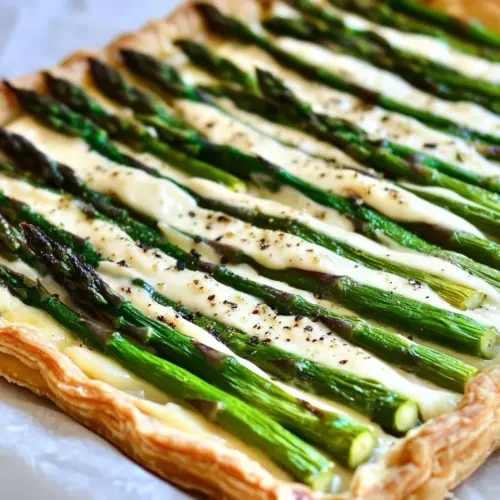
Asparagus Fontina Tart
Asparagus Fontina Tart is a flaky, creamy spring tart that pairs crisp asparagus with melting Fontina and browned butter. This easy elegant recipe creates a golden phyllo shell filled with tender vegetable and nutty cheese, perfect for an easy weeknight dinner or a celebratory brunch, and a persuasive reason to make it is how impressive it looks with minimal fuss.
Equipment
- Baking Sheet
- Parchment Paper
- large deep baking dish to fit ice and asparagus
- Large Skillet to fit asparagus
- Small Saucepan
- Pastry Brush
Ingredients
- 1 pound asparagus trimmed Trimmed to remove tough ends and provide tender spears that cook evenly; adds fresh, slightly sweet green flavor and a crisp texture contrast to the rich filling. Arrange atop the tart to create an attractive finish and ensure even roasting so the vegetable melds with the cheese.
- 1/2 cup butter unsalted Melted into the filling to provide a rich, silky mouthfeel and help create a golden, buttery base for the phyllo layers. Adds depth and richness to the tart while assisting browning and flakiness of the pastry.
- 3 tablespoons shallots diced Sautéed briefly to release a mild, onion-like sweetness and aromatic complexity; provides a subtle savory backbone without overpowering the delicate asparagus and cheese. Fold into the creamy filling or scatter across the tart for concentrated bursts of flavor.
- 2 cups loosely packed Fontina Shredded or cubed to supply a creamy, nutty melt that binds the filling and complements the asparagus; contributes both body and a slightly tangy, mellow flavor. Use generously to create a luscious, cohesive interior that browns attractively under the phyllo.
- 1 roll phyllo pastry sheets use about 8-10 sheets, thawed Layered to form the tart's crisp, flaky shell; thawed phyllo sheets become golden and crackly when brushed with butter, creating multiple delicate layers. Use about 8–10 sheets as directed to achieve structural support for the filling and a light, airy texture.
- kosher salt and pepper to taste Sprinkled to enhance and balance flavors; kosher salt brings out sweetness and savory notes while freshly ground pepper adds mild heat and aromatic lift. Season to taste after assembly to avoid over-salting the cheese and to achieve a well-balanced final bite.
Instructions
- Preheat oven to 400°F. Place parchment paper on a baking sheet and set aside. Fill a 9" x 13" baking dish with ice and keep in the freezer until ready to use.: The air of the kitchen begins to warm and you will smell faint traces of butter from previous batches as the oven nears temperature. This step establishes the right environment for the phyllo to crisp quickly without overbrowning, and chilling an ice bath in a large baking dish is crucial for an immediate shock when you blanch the asparagus . You are creating contrast between hot and cold so the vegetable stops cooking instantly, preserving its vivid color and tender snap. A common mistake is skipping the ice bath, which results in overcooked and dull looking asparagus . Keep your parchment close by, it makes transfer easy and prevents sticking.
- In a large skillet add about an inch of water to a boil. Add asparagus and cook until bright green and tender (2-5 minutes). Drain the hot water and carefully put the asparagus in the ice water to cool. Transfer asparagus to a bed of paper towels or a clean kitchen towel to dry. Pat gently to remove the moisture.: Right when the water hits a rolling boil you will see steam rise and the kitchen fill with a green, vegetal scent. The asparagus will turn a vivid green within minutes and give slightly when pierced with a fork, signaling readiness. Rapid cooling in the ice bath stops the cooking and keeps the cells firm, which preserves a crisp interior texture. After draining, pat carefully because excess water will steam under the phyllo and make it soggy. The biggest misstep here is under drying; be thorough but gentle to avoid bruising the tips.
- In a small saucepan over medium heat melt butter and stir until bubbles begin to form and the color is pale amber. Add the shallots and continue to stir for another minute, but be careful not to burn the butter. Remove from heat.: As you melt the butter , listen for a gentle sputter followed by an air of toasted nuttiness as the milk solids color. The transformation to a pale amber gives the sauce a toasty perfume that pairs perfectly with both the shallots and the Fontina . Adding the diced shallots at the end of the browning lets them soften fast and release their sweet aromatic notes without turning bitter. If you leave the butter on the heat too long it will scorch and give a harsh, ashy flavor, so remove from heat promptly.
- Roll out the phyllo sheets and quickly brush each sheet with butter and lay on top of each other. Bake for about 10 minutes or until light brown. Remove from oven.: The room will fill with a warm, faintly toasty scent as the layered phyllo browns. Brushing each sheet with melted butter gives the layers separation and ensures an even golden color and pronounced flakiness. Baking until light brown creates a sturdy shell that will support the Fontina and asparagus without collapsing. Avoid overbaking which will make the phyllo overly brittle and hard to slice; watch for an even, pale golden hue rather than a deep brown.
- Return asparagus to the dry skillet and pour the remaining butter and shallot mix over the asparagus coating each piece.: The sound here is subtle, a soft sizzle as the warm butter hits the room temperature asparagus , releasing aromatics and making each spear glossy. Coating the asparagus ensures the flavor is distributed and that each piece picks up that browned butter perfume. This step matters because the butter helps the Fontina adhere and keeps the vegetable from tasting plain. Overcrowding the skillet or adding too much liquid can steam the spears and dull their texture, so toss gently and briefly.
- Sprinkle Fontina cheese on top of the baked phyllo sheets and then place the asparagus side by side over the cheese.: When you scatter the shredded Fontina it should look like a pale, velvety blanket, and within minutes it will begin to soften and melt into glossy pools. Laying the asparagus in neat rows creates a beautiful presentation and ensures even distribution in every slice. This arrangement also aids even heating so the cheese melts consistently under the vegetable. A typical error is piling the spears too thickly, which can inhibit even melting and cause uneven baking; arrange them in a single layer for the best result.
- Season with salt and pepper and bake for about 10 minutes or until the cheese is melted.: As the tart goes back into the oven you will hear a faint bubbling and smell the melding of browned butter and warmed Fontina . The visual sign of readiness is the cheese turning glossy and slightly flowing around the edges of the phyllo , with the surface showing no unmelted patches. This final bake unites flavors and crisps the phyllo one last time. Watch closely; leaving it too long risks drying the cheese and overcrisping the pastry. Pull the tart when the cheese is just melted and the edges show a satisfyingly golden tone.
Notes
- Keep phyllo pliable. Work quickly and cover unused sheets with a slightly damp kitchen towel so they do not dry and crack, which makes layering and brushing with butter much easier.
- Use unsalted butter so you control seasoning, especially because the Fontina has natural saltiness; add kosher salt at the end to taste.
- Trim asparagus uniformly. Choose stalks of similar thickness or trim thicker ends to match, ensuring even blanching and consistent texture in every bite.
- Brown butter for depth. Let the butter reach a pale amber stage before adding the shallots, the nutty aroma enhances both the Fontina and asparagus without overpowering them.
- Prebake the phyllo if needed. If you want to assemble ahead, prebake the layered phyllo shell and store it at room temperature wrapped in foil, then fill and finish baking before serving.
- Dry asparagus thoroughly. Excess moisture will steam the tart and make the phyllo soggy; pat gently but completely after the ice bath.