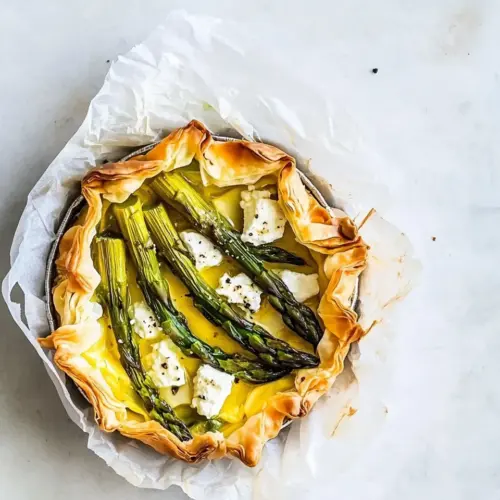
Asparagus and Feta Tartlet with Phyllo Crust
Asparagus and Feta Tartlet with Phyllo Crust offers a crispy, flaky shell filled with a creamy, herb bright custard and tender asparagus. This easy springtime appetizer balances tangy feta with fresh dill for an elegant yet approachable bite, perfect for brunch or a simple weeknight gathering. Make it for an effortless, crowd pleasing dish that looks and tastes special.
Equipment
- Muffin Tin
- Nonstick pan
- Oven
Ingredients
- 12 medium asparagus, about 4 ounces Trim and snap into bite-sized pieces to provide fresh, tender spear texture and a bright vegetal flavor that pairs with creamy fillings. Roast or lightly sauté to concentrate its natural sweetness and add a pleasant bite contrast to the crisp phyllo crust.
- 2 olive oil spray, divided, plus Lightly coat surfaces and pan to promote even cooking and prevent sticking while adding a subtle fruity richness. Use divided, applying sparingly to phyllo layers and asparagus to create golden, flaky pastry and enhance browning without overpowering other flavors.
- 2 garlic cloves, finely chopped Finely chop to release aromatic oils and gentle pungency that complements the tartlet's creamy and tangy elements. Sauté briefly to mellow sharpness and infuse the filling with savory depth without dominating delicate ingredients.
- 1 tablespoon lemon juice Brighten the filling and balance the salty feta with a touch of acidity that lifts overall flavors and adds freshness. Drizzle and taste as needed to achieve a harmonious interplay between creaminess and tang.
- 1/4 teaspoons salt Season to enhance and balance flavors throughout the tartlet, bringing out the natural sweetness of asparagus and the tang of feta. Sprinkle modestly into the filling mixture and adjust after combining other components.
- 1/4 teaspoon freshly ground black pepper Grind freshly to add warm, pungent heat and aromatic complexity that complements the herb and cheese. Use sparingly to avoid overpowering subtle flavors, adjusting to personal taste for a mild peppery finish.
- 1 1/3 ounces feta cheese, crumbled Crumble into the filling to introduce a salty, tangy, and slightly creamy component that contrasts with the crisp phyllo and tender asparagus. Distribute evenly so each bite benefits from its characteristic crumbly texture and bold flavor.
- 6 tablespoons half and half Combine with egg to create a silky custard that binds the filling and adds gentle creaminess without weighing down the pastry. Measure carefully to maintain a balanced, pourable consistency that sets during baking.
- 1 large egg Whisk to incorporate and act as the primary binder for the filling, contributing structure and a rich, golden finish when baked. Beat lightly with half and half and seasoning to ensure a smooth, homogeneous custard.
- 1 tablespoon chopped fresh dill Finely chop to impart a fresh, herbal brightness and subtle anise-like nuance that complements the feta and asparagus. Stir into the custard mixture to distribute flavor evenly and enhance aroma without overwhelming other elements.
- 4 phyllo sheets Layer and brush with oil to create the flaky, crisp shell that holds the filling and provides a delicate, crunchy texture. Handle sheets gently, keeping them covered to prevent drying while assembling the tartlets for optimal flakiness.
Instructions
- Heat oven to 350° F. Lightly spray 6 cups in a muffin tin with olive oil spray.: The oven should feel preheated and steady, providing even dry heat so the phyllo crisps without burning. You will notice the air in the oven shifting from cool to gently warm, and when the tin feels room temperature to the touch and the oven holds heat, you are ready. Use a light, even coating of spray to prevent sticking while keeping the shells crisp. A common mistake is over spraying, which can cause the phyllo to become greasy rather than flaky; use just enough to coat the surface.
- Snap off and discard the woody end of the asparagus.: As you handle a spear, the natural breaking point tells you where the tender flesh begins, and snapping produces a clean break with a faint vegetal scent. Discarding the woody ends improves texture, preventing stringiness in the finished tartlet. If you leave tough ends in, the mouthfeel will be unpleasant and uneven; always check each spear before slicing.
- Cut 1 1/2-inch long pieces from the tip end. Cut the remaining parts of the stalks into 1-inch pieces.: The tips provide a visual crown for each tartlet while the smaller pieces fill the custard with tender bites. As you slice, you'll see vibrant green contrast with paler stalk interiors, and that color translates to freshness after cooking. Uniformity is key here; mismatched sizes will lead to some pieces overcooking while others remain underdone.
- Spray nonstick pan with olive oil spray over medium high heat. Add asparagus and garlic and sauté, stirring, for 2 minutes.: When the pan hits temperature, you should hear a quick sizzle as vegetables meet the surface, and garlic will quickly perfume the air. This high energy contact sears and concentrates flavor without fully softening the asparagus . Stirring keeps everything moving and prevents bits from sticking. Avoid letting the garlic brown too much, as it turns bitter; two minutes of attentive stirring is usually ideal.
- Stir in the lemon juice and 1 tablespoon water. Reduce heat to low, cover and cook for 1 minute more.: Adding acid and a splash of water creates steam, and lowering the heat lets the asparagus finish cooking gently. You will notice a brief hiss and a deeper green emerge as chlorophyll brightens. This short steaming step preserves tenderness while integrating flavors. Rushing this step or keeping heat high can over soften the spears and dilute their fresh character.
- Remove asparagus pieces to a plate using a slotted spoon and reserve the pan juices and garlic.: Lifting the vegetable with a slotted spoon leaves behind the concentrated, flavorful juices that will flavor the custard. The juices carry the savory, garlicky notes that tie the filling together. Resist the temptation to pour everything into the plate, because those pan juices are seasoning gold and you want them in the mixture, not lost on the pan.
- Place a phyllo sheet on a clean work surface, lightly spray with oil and top with another phyllo sheet. Repeat with two more sheets and oil.: As you layer, the sheets should feel cool and pillowy, and a light coating of spray helps the layers adhere and brown uniformly. Working quickly prevents dryness, since exposed phyllo will crisp prematurely and crack. Keep unused sheets under a damp towel to avoid brittleness; dried sheets tear when you try to shape them.
- Cut the phyllo into 4-inch squares. Fit one square each in the prepared muffin cups.: When you cut and shape the squares, they should fold into the cup with gentle, clean pleats and form a shallow shell. The edges will become crisp and slightly blistered in the oven, creating that satisfying crunch. If sheets crack while fitting, they were too dry; cover and rehydrate slightly with a spritz before trying again.
- Evenly distribute the 1-inch asparagus pieces and feta among the muffin cups.: Place the small asparagus bits and crumbled feta so each cup gets a balanced portion, which ensures flavor consistency across tartlets. You should see an attractive mix of green spears and white crumbles. Overfilling will cause spillover and uneven baking, so keep portions modest for best results.
- Whisk half and half, egg, dill, and reserved pan juices together. Evenly divide among the phyllo cups (about 3 1/2 tablespoons in each).: The custard should look glossy and smooth after whisking, with herb flecks distributed evenly. Pouring a consistent amount into each cup helps them set uniformly and produce the same delicate texture. If the custard is lumpy or uneven, whisk more thoroughly; a poorly mixed custard will bake inconsistently and create textural surprises.
- Place two asparagus tips on each cup and bake for 30 minutes until custard is set and phyllo is golden.: While baking you will see the edges of the phyllo deepen to a warm golden brown and the custard lose its wet sheen, setting to a slightly puffed, matte surface. The aroma will shift from raw vegetables to toasty, buttery notes and tangy feta . A common pitfall is under baking causing a wobbly center; ensure the custard does not jiggle when the tin is gently nudged. Let the tartlets cool a bit so the custard firms up fully before removing them from the tin.
Notes
- Phyllo handling — If you do not have phyllo, use small prebaked tart shells, but be aware the texture will shift from ultra crisp to a sturdier pastry. When working with phyllo, keep it covered with a damp kitchen towel so sheets stay pliable and do not crack while assembling.
- Asparagus timing — If your asparagus spears are very thick, slice them lengthwise or blanch briefly before sautéing to ensure tenderness. Thinner spears cook faster and will remain bright green, so adjust your sauté time to avoid overcooking.
- Adjust salt carefully — Because feta is salty, reduce added salt in the custard if you prefer milder seasoning. Taste the filling batter if you are unsure, and remember the cheese will carry salt into the finished tartlet.
- Make ahead note — You can assemble tartlets up to the point of baking and refrigerate for a few hours; bring them to room temperature before baking so the phyllo crisps evenly and the custard sets properly.
- Boost herbal notes — If you love herbs, fold a bit more chopped dill into the custard, but add sparingly so it does not overwhelm the delicate balance between feta and asparagus.