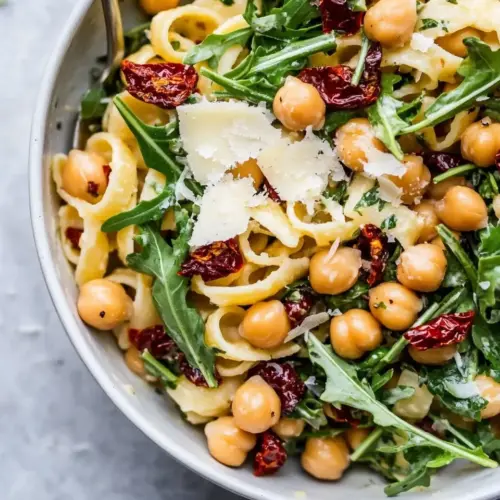
Arugula Pasta Salad with Chickpeas and Sun Dried Tomatoes
Arugula Pasta Salad with Chickpeas and Sun Dried Tomatoes combines peppery arugula, tender pasta, and hearty chickpeas with tangy sun dried tomatoes and shaved Parmesan. It is light, bright, and perfect as an easy weeknight dinner or picnic side. Quick to make and full of texture, this salad is a go to when you want fresh flavor with minimal fuss.
Equipment
- Large Pot
- Colander
- Large Bowl
- Tongs
Ingredients
- 3 cups baby arugula Adds a bright, peppery base that freshens the salad and contrasts richer components; use tender leaves to keep texture light and avoid wilting when mixed with warm pasta.
- 6 oz uncooked penne or rotini pasta, or chickpea or gluten-free pasta Provides the hearty backbone and chew of the salad; cook until al dente, rinse under cold water to stop cooking, and toss with dressing so the pasta absorbs flavors without becoming mushy.
- 1/4 cups sun dried tomatoes, chopped Imparts concentrated sweet-tart tomato flavor and a chewy texture that elevates savory notes; finely chop and distribute evenly so each bite has balanced umami and acidity.
- 2 tbsp extra virgin olive oil Coats ingredients with a silky mouthfeel and carries fat-soluble flavors; whisk into the vinegar and seasonings to make a simple dressing that binds the salad together.
- 2 tbsp balsamic vinegar Contributes acidity and sweet depth to the dressing, brightening flavors and balancing oil and cheese; mix with olive oil to create a well-rounded vinaigrette for the salad.
- kosher salt, to taste Enhances overall flavor by amplifying other ingredients and bringing out natural sweetness; season gradually and taste as you go to avoid over-salting.
- 1 cup canned chickpeas, rinsed and drained Adds protein, creaminess, and a subtle nutty flavor while boosting the salad's heartiness; rinse and drain thoroughly to remove excess sodium and improve texture.
- 4 tbsp Parmesan or Pecorino cheese, freshly shaved Provides salty, savory, umami-rich shavings that finish the salad with depth and richness; grate or shave fresh just before serving for the best flavor and texture contrast.
- fresh black pepper, to taste Introduces a sharp, aromatic finish and mild heat that rounds out flavors; grind freshly to taste so the pepper remains fragrant and complements the cheese and vinegar.
Instructions
- Boil pasta in a large pot of salted water according to package directions for al dente.: You'll know the pasta is approaching al dente when a piece still has a slight firm center and the surface looks glossy rather than swollen. The water should be at a lively, rolling boil that gives a continuous sheet of bubbles and a low, steady roar; this agitation prevents sticking and promotes even cooking. I always salt the water well so the pasta is flavored from the inside out, which makes a huge difference to the final dish. A common mistake is under salting the water, which results in bland pasta that needs rescuing later. If you're unsure, taste a piece a minute or two before the package time ends to catch that perfect bite.
- Drain and run under cold water to stop the cooking.: Right after draining, rinse the pasta briefly under cool running water until it feels room temperature; this halts the cooking process and rinses away some of the surface starch so the noodles do not clump. You should feel the pasta move separately, not sticky or gummy, and the aroma will shift from hot to pleasantly neutral. The reason for this quick rinse is that it preserves the integrity of the arugula when tossed, preventing premature wilting. Avoid leaving the pasta sitting in a colander too long, which can dry out the edges. A frequent misstep is skipping the rinse when the salad will sit, which leads to sticky clumps that resist dressing.
- Toss the pasta with baby arugula, sun dried tomatoes, chick peas, oil, vinegar, half of the cheese, salt and fresh cracked pepper to taste.: When you combine ingredients, start by placing the warm, just cooled pasta in a large bowl so it can absorb a little of the extra virgin olive oil and balsamic vinegar . As you add the arugula , notice how the leaves soften slightly where they touch the warm pasta, taking on a glossy sheen. The sun dried tomatoes will release small pockets of concentrated flavor, and the chickpeas provide a firmer mouthfeel that balances the soft noodles. Toss gently with tongs so the ingredients mingle without bruising the greens. I add half the shaved Parmesan so it melds into the salad and acts as a light binder. If the salad tastes flat at this stage, it usually needs a touch more salt or acid. A common error here is over tossing, which bruises the arugula and makes the salad limp.
- Divide between 4 plates and top with remaining shaved Parmesan cheese.: Serve promptly by portioning the salad, then finish each plate with the reserved Parmesan shavings and a fresh crack of black pepper . The warm pasta will slightly soften the cheese, creating little ribbons of creaminess against the peppery leaves. Visually, the shavings add height and a polished touch, while texturally they offer melt in your mouth richness. If you need to transport the salad, wait to add the final shavings until right before serving to preserve their texture. A misstep is plating too early, which can let the cheese sink and lose its striking presence on top.
Notes
- Use chickpea pasta to boost protein and add a slightly nuttier flavor while keeping the salad gluten free for those who need it.
- Oil packed sun dried tomatoes can be chopped and a little of the oil reserved for the dressing to deepen the flavor profile.
- Swap Pecorino for Parmesan if you prefer a sharper, saltier finish; Pecorino brings more assertive tang than Parmesan.
- Add lemon zest for a brighter aromatic lift if your balsamic vinegar is mellow or sweet, the zest adds freshness.
- Serve warm or chilled depending on the season, warm keeps the Parmesan slightly melty while chilled makes it a refreshing summer salad.