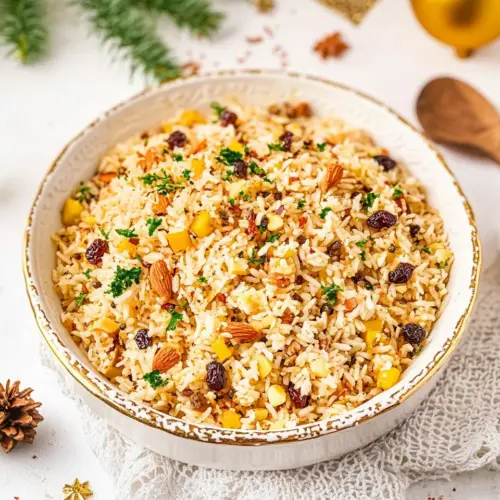
Arroz Navideno
Arroz Navideno is a festive, nutty rice studded with sweet raisins and crunchy toasted almonds. This warm, aromatic side is comforting and slightly sweet, an easy weeknight dinner upgrade or a holiday side that complements many mains, making it a perfect choice when you want a memorable dish without fuss.
Equipment
- Skillet or sauté pan
- Saucepan with lid
- Fork
Ingredients
- 3 tablespoons olive oil Heat and flavor the pan while providing a fruity, slightly bitter backbone; olive oil helps sauté other ingredients and prevents sticking. Use high-quality extra-virgin for brighter aroma, and regulate temperature to avoid burning which can impart bitterness.
- 1 1/2 cups livered almonds Add richness and a toasty, slightly metallic depth that complements rice; livered almonds are likely toasted or ground with a hint of iron-like flavor. Incorporate gradually or sprinkle on top to boost texture and deliver nutty complexity to the dish.
- 3 cups rice Provide the starchy base and body of the dish, absorbing flavors and swelling as it cooks; rice determines the overall texture and yield. Rinse if desired to remove excess surface starch, then add to the hot oil or broth as directed to achieve separate, tender grains.
- 6 cups vegetable broth, or homemade vegetable broth recipe [1.5 liter] boiling hot Infuse the rice with savory, vegetable-derived umami and moisture necessary for cooking; boiling-hot broth accelerates proper absorption and even cooking. Use homemade or high-quality store-bought stock to control salt and flavor intensity for a well-balanced final result.
- 2 teaspoons salt Season and enhance all other flavors, bringing balance and highlighting savory notes without overpowering the mix; salt controls overall taste perception. Add gradually and taste toward the end, since broth may already contribute sodium.
- 1 1/2 cup raisins, and sultanas mixed Contribute concentrated sweetness, chewiness, and tiny bursts of fruity flavor that contrast with savory rice; a mix of raisins and sultanas adds varied sweetness and texture. Soak briefly if plumping is desired, and distribute evenly to ensure sweet pockets throughout.
- 3 tablespoons minced parsley Brighten and finish the dish with fresh herbaceous aroma and a pop of green; minced parsley adds color and a mild, slightly peppery freshness. Sprinkle near the end of cooking or as a garnish to preserve its delicate flavor and visual appeal.
Instructions
- Heat the oil over medium heat. Stir in the almonds and cook stirring until they turn a light golden color. Remove the almonds from the oil and set them aside.: A warm, slightly shimmering surface signals the right temperature, and you may notice tiny ripples in the oil. The oil should be hot enough to fizz slightly when you add a nut, but not so hot that it smokes. This gentle heat lets the almonds brown evenly. If your oil smokes, lower the flame to prevent bitterness, and remember that rushing this step will leave unevenly toasted nuts.
- Add the raw, unrinsed rice to the heated oil, cook stirring until the grains are coated with oil, and turn a slightly yellow color. Pour in the vegetable broth, stir, and salt to taste. Boil over medium flame, stirring often, until the liquid has almost all evaporated. Add the raisins and sultanas and stir to combine. Lower the heat, cover with a tight-fitting lid, and simmer for 15 minutes. Stir the rice and simmer covered for another 10 minutes, or until the rice is cooked through. Uncover, fluff with a fork, and mix in the toasted almonds. Remove from the stove.: You'll hear a faint crackle as the almonds toast and smell a toasty aroma that shifts from raw to warm and nutty. Stir frequently so no pieces scorch, and remove them as soon as they take on a pale golden hue because residual heat will continue to cook them. A common mistake is leaving them unattended, which results in a bitter aftertaste.
- Place the rice in a serving platter and sprinkle with fresh parsley.: Once out of the pan the almonds stop browning, preserving their crunch. Placing them on a cool plate prevents carryover cooking. If you leave them in the hot pan, they may overbrown and change the intended texture profile.
- Add the raw, unrinsed rice to the heated oil: As the rice hits the oil you'll hear a soft sizzle and see each grain take on a glossy sheen, which signals even coating. The surface starch might make the grains cling slightly, and that helps build a cohesive texture. Avoid using wet or previously rinsed rice here, because excess moisture can steam instead of toasting, yielding a different mouthfeel.
- Cook stirring until the grains are coated with oil, and turn a slightly yellow color: The rice will shift from opaque to a subtly translucent shade and develop a gentle toasted scent. Stirring ensures uniform contact with the oil so the grains cook consistently when broth is added. Neglecting to stir can produce unevenly cooked clusters.
- Pour in the vegetable broth, stir, and salt to taste: Adding boiling hot vegetable broth should produce an immediate hiss as it hits the warm rice, which helps set the cooking temperature quickly. Stirring once distributes the liquid and dissolved salt , which seasons from the inside as the rice absorbs it. If your broth is very salty, measure carefully to prevent over salting, because it's harder to fix later.
- Boil over medium flame, stirring often, until the liquid has almost all evaporated: During the simmer you will smell the savory broth concentrating and see the surface go from bubbling to a few lingering pearls of liquid. Stirring often keeps the grains separate and prevents them from sticking, and it lets you watch for the moment the surface is nearly dry, which is crucial before lowering the heat. A common problem is leaving the lid off too soon, which can dry the top while the bottom remains undercooked.
- Add the raisins and sultanas and stir to combine: As you fold in the mixed raisins , you'll notice them start to swell slightly and glisten, releasing sweet notes that mingle with the savory aroma. Stir gently so they distribute evenly without crushing. Over stirring could make the rice sticky and compress the grains.
- Lower the heat, cover with a tight-fitting lid, and simmer for 15 minutes: With the lid on the steam creates an even, enclosed environment that finishes cooking the grains. You may hear a soft whisper of steam and smell a round, blended aroma. This gentle simmer is essential for tender rice . If the heat is too high, the bottom can scorch before the center cooks, so keep the flame low and steady.
- Stir the rice and simmer covered for another 10 minutes, or until the rice is cooked through: After the initial steam phase, a brief stir redistributes moisture and any settled raisins . The second covered simmer ensures that the interior of each grain reaches tenderness. Test a grain for a slight bite; if it is still firm, add a splash of hot broth and continue a few minutes. Overcooking here will yield mushy texture.
- Uncover, fluff with a fork, and mix in the toasted almonds: Uncovered, the surface will look glossy and separate. Fluffing with a fork teases the grains apart and releases trapped steam, preserving the ideal texture. Folding in the reserved toasted almonds at this point keeps them crunchy and fragrant. Avoid vigorously mashing the rice because that breaks the grains and changes the mouthfeel.
- Remove from the stove: Once off the heat the rice continues to settle, and flavors marry as it rests for a moment. Leaving it on residual heat can dry the bottom, so transfer promptly. A pitfall is letting the pot sit uncovered on the warm burner which can alter moisture balance.
- Place the rice in a serving platter and sprinkle with fresh parsley: As you transfer the dish, notice the warm steam rising and the contrast between glossy grains and bright minced parsley . The herb adds a fresh note and visual lift. Garnish just before serving so the herbs remain vibrant and do not wilt under residual heat.
Notes
- Choose a good quality olive oil because it sets the flavor base for both toasting the almonds and coating the rice. A clean fruit forward oil enhances aroma without overpowering the dish.
- Monitor the almond toasting closely since they can move from golden to burnt in seconds, and burnt nuts will lend bitterness. Have a plate ready to remove them as soon as color changes.
- Keep the broth boiling when adding because hot liquid prevents a long temperature drop which can make the rice cook unevenly. This small step improves texture significantly.
- Use the specified quantity of liquid yet be ready to add a splash of hot broth if a test grain is still firm at the end, as humidity and rice type affect cooking time.
- Fold in toasted almonds at the end so they preserve their crunch, and sprinkle fresh minced parsley just before serving to retain its color and brightness.