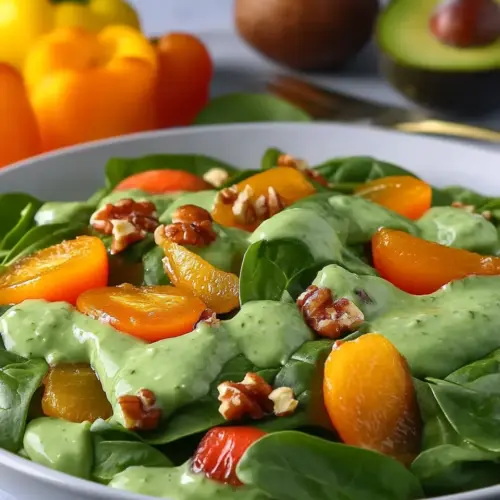
Apricot Spinach Salad with Avocado Basil Dressing
Apricot Spinach Salad with Avocado Basil Dressing combines creamy avocado basil dressing with juicy apricot, tender spinach, and toasty walnuts for a fresh, light spring side. This easy, colorful salad is perfect for quick lunches or a bright addition to an easy weeknight dinner, offering creamy, crunchy, and fruity contrasts that make it worth trying.
Equipment
- Skillet
- Large salad bowl
- Blender
Ingredients
- 12 ounces baby spinach cleaned and sorted Provide a tender leafy base that adds a mild, slightly sweet flavor and delicate texture to the salad; handle gently to preserve leaf integrity and dress just before serving to avoid wilting.
- 3/4 cup unsalted raw walnuts or walnut pieces no shell Offer a crunchy, buttery contrast and rich nutty flavor while supplying healthy fats and protein; toast lightly if desired to enhance aroma and coarsely chop for even distribution.
- 5 whole ripe apricots sliced into 6-8 pieces each Contribute juicy sweetness and bright stone-fruit flavor while adding color and a soft, slightly tart bite; slice uniformly so pieces integrate well with the greens and other elements.
- 1 cup ripe avocado diced Supply creamy texture and rich, mellow flavor that helps thicken and smooth the dressing when blended; choose ripe avocado for easy mashing and to achieve a luscious consistency.
- 1 cup fresh basil leaves loosely packed Bring a fragrant, peppery-herb note that lifts the dressing and complements the fruit; pack loosely when measuring to avoid overly compacting and bruise leaves minimally for best flavor.
- 1/4 cup fresh lemon juice Provide bright acidity and citrusy tang that balances richness and sweet notes in the dressing; measure freshly squeezed lemon juice for best flavor and to prevent oxidation.
- 2 teaspoons honey Add subtle floral sweetness to round out the dressing and enhance fruit flavors; dissolve into the lemon juice and avocado mixture to integrate flavor evenly.
- 1 tablespoon extra virgin olive oil Introduce a fruity, robust fat that emulsifies the dressing and adds depth of flavor; whisk or blend with avocado and lemon juice to form a cohesive vinaigrette.
- 3/4 cup cold water Help adjust dressing consistency and create a smooth, pourable texture while keeping the dressing cool; add gradually when blending to reach desired thickness.
- 1/2 teaspoons alt heaping Season the salad and dressing with a savory touch to enhance all flavors; add gradually and taste as you go to avoid over-salting given varying saltiness preferences.
Instructions
- Toast the walnuts in a skillet over medium heat until they begin to brown and smell toasty. Remove from heat. Combine spinach, walnuts, and apricot slices in a large salad bowl and toss gently to combine.: As the walnuts heat they will release a warm, nutty aroma and a faint crackle may be heard as their natural oils pop, signaling that their flavor is intensifying. You'll want to watch closely because walnuts can go from golden to bitter quick, so remove them the moment small brown flecks appear and the kitchen fills with a toasty scent. When you assemble the spinach , walnuts , and apricot slices, toss with a gentle hand so the fruit keeps its shape and the leaves stay intact, preventing limp spots. A common mistake here is overtoasting, which makes nuts taste burnt; another is tossing too vigorously, which bruises the spinach . If your walnuts seem oily after toasting, blot them briefly on paper towel to avoid leaving greasy spots on the greens. The visual cue you're aiming for is warm brown nuts and glossy, vibrant leaves with apricot slices that still hold their flesh.
- Combine dressing ingredients in a blender and process until smooth and creamy. Do not over-process in order to preserve the color. If the mixture is too thick and not smooth enough to easily pour, stir in water a tablespoon at a time until a dressing consistency is reached.: When you blend the avocado , basil , lemon juice , honey , extra virgin olive oil , and a bit of water , you'll see the mixture transform from chunky to glossy and mousse like, and its color will be a bright, herb flecked green. Stop the blender when the texture is even, because over-blending can cause heat buildup and dull the vibrant green tone. If the dressing is too thick to drizzle, add cold water slowly, stirring between additions, until it pours without splattering. One trap is adding too much liquid at once which thins flavor; go slowly so you keep the balance intact. The smell should be fresh and lemony with an herbal basil note, and the sound is a steady, even hum rather than loud clattering. If the dressing splits or seems greasy, a quick pulse with a tablespoon of lemon juice can help bring it back together.
- Serve salad portions drizzled with dressing. The dressing may be made a few hours ahead; store it in the refrigerator with plastic wrap touching the surface of the dressing to prevent browning. Best made the day of serving to preserve color and freshness of flavor.: When plating, spoon just enough dressing to lightly coat each portion so the spinach retains texture and the flavors remain distinct; you want ribbons of creamy green dressing, not a drowned bowl. Drizzle in a controlled, flowing motion so the dressing lands on both fruit and leaves, giving each forkful a balanced taste. Visually, aim for glossy leaves dotted with apricot and speckled walnuts, which makes the plate inviting. A frequent error is over dressing which masks the fruit's sweetness and makes the greens soggy, so taste as you go and reserve any extra dressing for guests to add. The sound of the salad being tossed will be soft, and you should notice a bright citrus scent with herb and nut undertones. Serve immediately so the apricot maintains its shape and the spinach stays crisp.
- The dressing may be made a few hours ahead; store it in the refrigerator with plastic wrap touching the surface of the dressing to prevent browning.: Chilling keeps the flavors melded, and pressing plastic wrap directly onto the dressing surface limits air contact, which helps preserve its green color. When you retrieve it, give it a gentle stir to reincorporate any separated water or oil and taste for seasoning, because cold temperatures can mute salt and acidity. If the dressing thickens too much in the fridge, allow it to come to near room temperature or thin with a splash of cold water before using. A common oversight is storing the dressing uncovered, which accelerates discoloration, so always seal it well. The texture should return to creamy and the aroma bright when you are ready to use it.
- Best made the day of serving to preserve color and freshness of flavor.: Freshness is key, especially with delicate elements like ripe apricot and bright basil . Preparing components too far in advance can lead to muted flavors and limp leaves, so I recommend assembling the salad shortly before guests arrive when possible. If you must prep earlier, keep the spinach chilled and the apricot sliced but refrigerated to slow softening, and wait to dress until the final moment. A typical mistake is combining everything hours ahead, which causes sogginess and color loss; salvaging this often requires adding crisp leaves or extra acid right before serving. When done correctly, the salad looks lively, smells fresh, and offers a crisp contrast between fruit, nut, and green.
Notes
- Swap nuts carefully. If you prefer a different crunch profile, try toasted pecans or almonds, but keep them unsalted so the dressing controls the seasoning and the overall balance stays fresh.
- Adjust sweetness sparingly. If your apricots are very sweet, reduce the honey by half before tasting, because excess sweetness can mask the lemon and basil brightness.
- Control dressing thickness. Add cold water a tablespoon at a time until the dressing pours easily, avoiding thinning too quickly which reduces flavor intensity.
- Make it ahead strategically. Prepare the dressing up to two days in advance and refrigerate with plastic wrap on the surface, but only assemble the salad when ready to serve to preserve the spinach texture.
- Elevate crunch on service. Toast walnuts just before serving to ensure their crispness stands out against the creamy dressing and soft apricot.