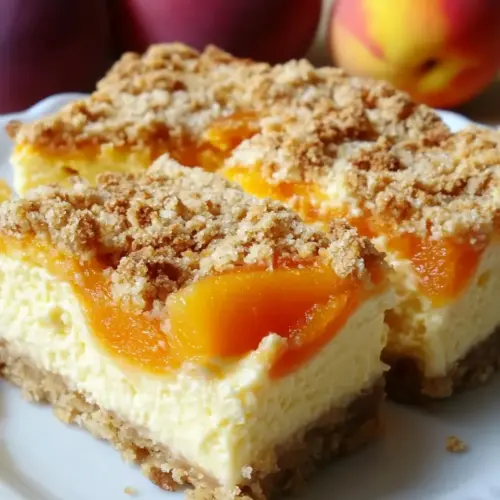
Apricot Crumble Cheesecake
Apricot Crumble Cheesecake is a creamy, fruity dessert with a buttery biscuit base and a crunchy nutty crumble. This easy summer cake combines tender apricots with a silky cream cheese filling for a balanced sweet and tangy bite, perfect for casual dinners or special occasions. Make it ahead for stress free hosting and enjoy a slice that is both elegant and comforting.
Equipment
- Food Processor
- 25 to 35 cm Teflon tray
- Oven
- Mixing Bowl
- Spatula
Ingredients
- 250 g biscuits Crushed finely to form the base layer and provide structure; binds with melted butter to create a crisp, crunchy crust. Adds texture contrast to the creamy filling and absorbs flavors from other ingredients. Works as the primary source of body for the cheesecake foundation.
- 120 g butter Melted and mixed with crushed biscuits to bind the base and help it set firmly when chilled or baked. Contributes a rich, buttery flavor that complements the sweet and tangy filling. Also used later to enrich crumble bits for topping if needed.
- 600 g cream cheese Softened and whipped to create the rich, creamy filling; supplies the characteristic smooth, dense texture of a cheesecake. Provides tangy, dairy richness that balances sugars and fruit components. Acts as the main protein and fat matrix for the custard-like interior.
- 3 large eggs Beaten and incorporated into the cream cheese to help set the filling and provide structure when baked. Adds moisture and richness while contributing to a tender, custardy texture. Also helps emulsify and stabilize the mixture.
- 120 g sugar Dissolved into the filling to sweeten and balance the tang of the cream cheese. Controls overall sweetness level and helps achieve a smooth mouthfeel when properly blended. Can also aid in gentle browning of the surface during baking.
- 1 teaspoon vanilla extract Added for aromatic flavor and to enhance the overall sweetness profile with warm vanilla notes. Intensifies the dessert's fragrance and complements both fruit and dairy elements. Used sparingly to avoid overpowering delicate flavors.
- 1 pinch of salt Sprinkled to enhance flavor balance and intensify other tastes by contrast; a small amount elevates sweetness and reduces flatness. Helps to bring out depth in both the filling and fruit components without being noticeable as salt. Plays a subtle role in overall flavor harmony.
- 500 g apricots Pitted and sliced or halved to provide the primary fruit component; offers bright, juicy, slightly tart flavor that pairs with creamy cheese. Cooked down or arranged fresh to form a topping or layer, adding natural sweetness and texture. Contributes moisture and visual appeal to the finished cheesecake.
- 1 tablespoon lemon juice Squeezed into the fruit or filling to add acidity, brighten flavors, and prevent fruit from oxidizing. Balances sweetness and enhances the apricot's natural tartness for a fresher taste. Helps set fruit preparations slightly when combined with sugar.
- 50 g flour Folded into crumble or topping mixture to give structure and slight chewiness once baked. Provides a bit of bulk and helps absorb some moisture from fruit, preventing sogginess. Adds a mild, neutral flavor that supports nuts and butter in the crumble.
- 50 g ground walnuts Ground and incorporated into the crumble topping to add nutty flavor and crunchy texture. Contributes richness and depth that complements the buttery elements and apricots. Enhances mouthfeel and offers a toasted, aromatic note when baked.
- 50 g butter Cut into the topping mixture and rubbed with flour and sugar to form coarse crumbs that crisp in the oven. Supplies additional richness and helps brown the crumble for a pleasing crunchy finish. Works with walnuts and sugar to create a balanced texture contrast.
- 50 g sugar Mixed into the crumble topping to sweeten and caramelize during baking, forming a golden, crunchy finish. Balances the tartness of the apricots and the richness of the cheese while encouraging pleasant browning. Helps bind crumble bits together for a cohesive topping.
Instructions
- Prepare a 25-35 cm (9-12 inch) Teflon tray. Preheat the oven to 180° Celsius (356° Fahrenheit).: As you ready the pan, notice the slight perfume of butter and biscuit crumbs you will soon create, and preheating ensures the crust starts setting immediately when it hits the oven. This step matters because a properly warmed oven produces even heat which helps the crust toast without overbaking. A common mistake is skipping proper preheat time, which can leave the crust undercooked or soggy. Make sure the pan is lightly greased and lined if not nonstick, and confirm the oven has reached temperature before placing the crust inside.
- Put the biscuits in the food processor and grind them finely.: The sound here is a steady whir, and the resulting texture should look like damp sand. Finely ground crumbs compact better and yield a firm base that will hold the creamy filling. If the crumbs are too coarse you may get a fragile crust that crumbles when sliced, so aim for uniformity. If you do not have a food processor, use a rolling pin and a sealed bag to crush the biscuits to a similar consistency.
- Melt the butter over low heat, add it to the biscuits, and homogenize.: As the butter warms, it takes on a nutty aroma and binds the crumbs into a cohesive mixture. Combining the butter with the crumbs until evenly moistened ensures the crust bakes into a compact layer. Avoid overheating the butter which can brown and change flavor; low heat is gentler. A typical pitfall is adding too little moisture, leading to a dry base, so ensure the crumbs glisten slightly and hold together when pressed.
- Put the biscuits in the pan, pressing it well onto the bottom and around the edge.: Use a flat bottomed cup or measuring glass to press firmly and evenly, creating a uniform thickness. You should hear a soft compacting sound and see a smooth surface when done. Pressing firmly prevents the crust from disintegrating when you slice the cheesecake. If you press unevenly, some slices may be dense while others are crumbly, so take your time to level the crust carefully.
- Bake in the oven for 10 minutes, then set aside and move on to the filling.: A short bake helps the crust set and develop a faint toasted aroma without becoming hard. When you remove it, it should smell warm and slightly caramelized. Skipping this step can result in a soggy bottom once the filling is added. Cool the crust a bit before adding the filling to avoid melting the ingredients you will mix next.
- Turn the oven to 160° Celsius (320° Fahrenheit).: Lowering the temperature prepares a gentler environment for the delicate cheesecake filling, helping to prevent cracking and overbrowning. The oven will continue to radiate heat, so allow a couple minutes for the new temp to stabilize. A typical mistake is keeping the oven at too high a temperature which can produce an overly browned top and a dry texture.
- Mix the cream cheese with the sugar for 3 minutes, then add the eggs one at a time and mix well after each, until fully incorporated.: The mixing sound changes from resistance to silky smooth, and the mixture should look pale and glossy. Beating the cream cheese with sugar until smooth eliminates lumps and traps just enough air for a tender texture. Adding eggs gradually helps maintain stability so the custard does not split. Overmixing at this stage can introduce too much air, which may cause cracks, so stop once combined and smooth.
- Finally add the salt, vanilla essence, and lemon juice, mixing gently. Set aside.: At this point a bright scent of citrus and warm vanilla will lift the batter. Mixing gently prevents deflating the mixture and keeps the filling dense and creamy, which is key for a stable set. If you stir vigorously you risk incorporating too much air and creating bubbles that lead to a cracked surface, so fold these flavorings in carefully.
- Cut the apricots into small pieces and sprinkle with a little lemon juice to prevent them from oxidizing.: The sound of the knife is soft, and the fruit will glisten when tossed with lemon juice . This small step preserves the apricot color and brightens flavor, preventing dull brown spots. Cutting pieces uniformly helps the fruit distribute evenly in the filling; uneven pieces can sink or create sparse pockets, so aim for consistency.
- Mix the flour with the nuts, butter, and sugar until you get a sandy dough. Refrigerate for half an hour.: As you work the cold butter into the flour and ground walnuts , the mixture should resemble coarse sand with small pebbles of butter. Chilling firms the fat, which on baking creates a crumbly, crisp texture. Skipping refrigeration can yield a greasy, spread out crumble, so be patient and keep the mix cold.
- Put the cream cheese over the biscuit base. Then sprinkle on the apricot pieces and press them down gently.: Spreading the filling should feel smooth and slightly dense under your spatula, and the apricots will nestle into the custard. Pressing them gently ensures they do not float excessively while baking, which helps the fruit stay distributed. If you push too hard, you may create pockets or uneven layers, so aim for a light, even placement.
- Sprinkle the crumble over the top.: Scatter the chilled crumble in an even blanket so it forms small clusters during baking. The contrast between the golden crumble and the pale filling is satisfying visually and texturally. If the crumble is too fine or pressed flat it may not crisp up properly, so preserve some texture when sprinkling.
- Put the cake in the oven for no more than an hour.: During this bake the aromas will change from custardy sweetness to light caramel notes as the crumble browns. The center should still have a slight wobble when you gently jiggle the pan, which indicates a creamy set. Overbaking dries the filling and dulls the fruit, so check at around 50 minutes depending on your oven.
- The cheesecake should be slightly golden on top.: A thin golden halo across the surface signals caramelization without overbrowning. Visual cues are helpful here, because the internal temperature continues to rise slightly after you remove it. If it looks deeply browned you likely baked too long, so aim for a gentle golden color.
- Leave in the oven to cool for 2 hours, then refrigerate for at least 6 hours, or overnight.: Cooling inside the turned off oven prevents abrupt temperature shifts that can cause cracks, and the long chill time ensures the filling firms for neat slices. The patience pays off in clean cuts and a silky mouthfeel. Rushing this step is the most common error here; slicing too early yields a runny center.
- It slices easily once it has completely cooled. It's delicious. Enjoy!: When the cake is fully chilled, the knife will glide through with a satisfying, clean sound and the cross section will show distinct layers of base fruit filling and crumble. Serve at a slightly cool temperature so the filling is creamy and not icy. If slices fall apart, the cake needed more chill time, so return it to the fridge before serving.
Notes
- Room temperature dairy: Warm the cream cheese and even the eggs slightly before mixing to achieve a lump free, silky batter that whips smoothly without overworking.
- Measure ingredients carefully: Weigh the biscuits, butter, and sugar for consistent results, especially for the crust and crumble, where texture depends on ratios.
- Protect the crust: Parbake the base for the recommended 10 minutes so it sets and resists sogginess from the filling, ensuring neat slices later.
- Lower bake temp for filling: Baking the filling at 160 Celsius 320 Fahrenheit reduces cracking and keeps the center creamy, so monitor rather than relying on time alone.
- Chill thoroughly: Refrigerate the finished cheesecake for at least 6 hours or overnight to allow the filling to firm and flavors to meld for cleaner slicing and better texture.
- Use cold butter in crumble: Keep the butter cold when making the crumble so it creates small pockets that crisp up beautifully in the oven.