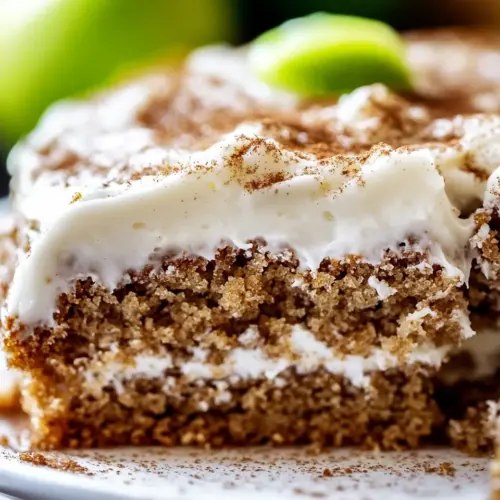
Apple Spice Cake with Spiced Cream Cheese Frosting
Apple Spice Cake with Spiced Cream Cheese Frosting is a tender, warmly spiced sheet cake with tart apple pieces and crunchy walnuts, topped with a creamy maple spiced frosting. The crumb is moist from sour cream and the flavor is deepened by maple and molasses, making it perfect for fall gatherings or an easy holiday dessert. Make it for a crowd and watch it disappear.
Equipment
- 9x13 pan
- Parchment Paper
- Stand mixer or hand mixer
- Wire Rack
Ingredients
- 1 tablespoon ground cinnamon Add ground cinnamon to provide warm, sweet-spicy depth that defines the cake’s autumnal flavor profile and pairs with apples and maple syrup; evenly incorporate into the dry ingredients to ensure consistent spice distribution throughout the batter.
- 1/2 tsp EACH ground cloves, ground ginger, ground allspice Measure ground cloves, ground ginger, and ground allspice to introduce sharp, pungent, and aromatic notes that complement cinnamon and enrich the cake’s spice complexity; whisk with the other dry spices so they blend uniformly.
- 1/4 teaspoon ground nutmeg Include ground nutmeg to contribute a warm, slightly sweet and nutty accent that brightens the spice blend and enhances the overall aromatic character when folded into the flour mixture.
- 2 1/2 cups all-purpose flour Sift all-purpose flour to form the structural base of the cake, providing necessary gluten for crumb formation while balancing moisture and lift when combined with leaveners and wet ingredients.
- 1/2 teaspoon baking powder Add baking powder as a chemical leavening agent to generate lift and lightness in the cake crumb by releasing gas during baking; combine with flour to ensure even rise.
- 1/2 teaspoon baking soda Use baking soda to react with acidic components like sour cream and molasses, aiding leavening and contributing to a tender crumb and desirable browning during baking.
- 1/2 teaspoons salt Stir in salt to enhance and balance sweetness while sharpening the spice flavors and strengthening dough structure by tightening proteins slightly in the batter.
- 3/4 cup granulated sugar Cream granulated sugar with butter to incorporate air for tenderness and sweetness, aiding caramelization and contributing to the cake’s texture and flavor depth.
- 1/2 cup butter, softened (1 stick) Soften butter to create a pliable fat for creaming with sugar, which helps trap air for volume and adds richness, moisture, and tender flake to the baked cake.
- 3/4 cup pure maple syrup Fold pure maple syrup into the batter to impart deep, woody sweetness and moistness while complementing the cake’s spice and apple notes with its characteristic flavor.
- 2 tablespoons molasses Add molasses to introduce robust, slightly bitter-sweet complexity and color, enhancing the cake’s depth and interacting with baking soda for subtle lift and a moist crumb.
- 1 tablespoon vanilla extract Stir in vanilla extract to provide floral, sweet aromatic undertones that meld the spices and sweeteners together and round out the flavor profile of the cake.
- 2 large eggs, room temperature Whisk large eggs at room temperature to provide structure, moisture, and emulsification; beat into the batter to help incorporate air for a finer, stable crumb.
- 3 large egg yolks, room temperature Mix large egg yolks at room temperature to add richness, color, and emulsifying fats that create a velvety texture and enhance the cake’s tenderness and mouthfeel.
- 1 cup full fat sour cream Fold full fat sour cream into the batter to contribute acidity for leavening interaction, creamy moisture, and a tender crumb while balancing sweetness and spice.
- 2 Granny Smith apples, peeled, and diced into 1/4” – 1/2” pieces Toss peeled and diced Granny Smith apples to add bright, tart freshness and pleasant texture contrast; fold them gently into the batter so they remain evenly distributed during baking.
- 3/4 cup walnuts, chopped Chop walnuts to provide crunchy texture and nutty flavor that contrasts the cake’s softness, adding earthy depth and visual interest when folded into the batter.
- 8 ounces cream cheese, softened Soften cream cheese for the frosting to create a tangy, creamy base that balances the cake’s sweetness and spice while delivering smooth spreadability and flavor richness.
- 6 tablespoons unsalted butter, room temperature Soften unsalted butter to whip with cream cheese and sugar, contributing structure, aeration, and a silky mouthfeel to the frosting without adding extra saltiness.
- 1 tablespoon sour cream Add sour cream to the frosting to introduce slight acidity and creaminess that lightens texture and brightens the frosting’s flavor, ensuring it isn’t overly sweet or dense.
- 2 tablespoons pure maple syrup Stir in pure maple syrup to the frosting for additional natural sweetness and a subtle maple note that complements the cake and echoes the batter’s flavors.
- 1 teaspoon pure vanilla extract Add pure vanilla extract to the frosting to enhance aromatic complexity and round out sweetness, tying together the cream cheese, butter, and maple components.
- dash of salt Include a dash of salt to the frosting to enhance all flavors, balance sweetness, and prevent the frosting from tasting flat by highlighting its subtle savory notes.
- 1/2 teaspoon reserved spices (in directions) Reserve a portion of the spice blend to sprinkle into the frosting to echo the cake’s flavors and provide a cohesive spiced finish when lightly folded or dusted on top.
- 2 cups confectioners’ sugar Sift confectioners’ sugar into the frosting to sweeten and stabilize the mixture while delivering a smooth, pipeable consistency that complements cream cheese and butter.
Instructions
- Preheat oven to 350 degrees F. Line a 9×13 pan with parchment paper that extends beyond the pan and spray with nonstick cooking spray. Set aside.: The air warms and you will notice a subtle oven hum as it comes to temperature. The moment your oven reaches 350 degrees F , the heat will be steady, which is crucial for even rise and browning. Lining a 9×13 pan with parchment that extends makes it easy to lift the cake out cleanly later, and a quick spray helps prevent sticking at the edges. You should feel confident that the pan preparation prevents tearing and ensures neat slices. A common mistake is skipping the parchment or using improperly sized paper, which can cause the cake to adhere and break when unmolding. If your pan is warm or cold, it may slightly alter baking time, so always use a correctly sized pan and preheat fully first.
- Mix cinnamon, ginger, cloves, allspice, and nutmeg together in a large bowl. Remove 1/2 teaspoon for the frosting. To the large bowl, mix in flour, baking powder, baking soda and salt. Set aside.: When you combine the spices, inhale deeply to check that they are fresh, as stale spices will mute the cake aroma. Removing exactly 1/2 teaspoon of the blend for the frosting ensures the cake and frosting speak the same flavor language without dominating the cream cheese. Once the spices are evenly distributed, folding in the 2 1/2 cups all purpose flour , 1/2 teaspoon baking powder , 1/2 teaspoon baking soda , and 1/2 teaspoons salt guarantees even leavening throughout the batter. The dry mix should look uniform and slightly speckled with warm spice tones. A common error at this stage is failing to thoroughly sift or whisk the dry ingredients, which can leave pockets of leavening that create uneven texture. Take a moment to whisk the dry mix until you see a consistent color and fine crumb.
- With a stand or hand mixer, beat butter and sugar over medium high speed until light and fluffy, about 4 minutes, scraping down sides as needed. With mixer running on medium speed, beat in maple syrup, molasses and vanilla until well combined followed by eggs, then egg yolks, one at a time, beating just until the yellow disappears after each egg.: As you cream 1/2 cup butter with 3/4 cup granulated sugar , you will see the mixture turn paler and slightly voluminous, and you will hear the mixer change tone as air incorporates. This aeration is the backbone of the cake's tender crumb. When you add 3/4 cup pure maple syrup , 2 tablespoons molasses , and 1 tablespoon vanilla extract , the mixture will become glossy and richly scented. Adding the 2 large eggs and then the 3 large egg yolks one at a time allows each to blend without over mixing, which preserves the trapped air. Watch for the moment the yellow streaks vanish, then stop mixing to avoid a dense cake. A frequent misstep is adding all eggs at once, which can cause the batter to break or deflate. If your batter looks curdled after eggs, continue mixing briefly, as the flour and dairy additions will usually bring it back together.
- Gradually add flour mixture to butter/sugar mixture in thirds, alternately with sour cream in between each third, beating until just combined after each addition. Stir in apples and walnuts. Spoon batter into prepared pan.: As you fold the dry mixture into the wet, take care to alternate with the 1 cup full fat sour cream . This gentle cadence prevents over working the gluten and maintains a tender crumb. The batter should look thick and glossy, dotted with flecks of spice, and heavy enough to support the chopped 2 Granny Smith apples and 3/4 cup walnuts without them sinking to the bottom. Stir the apples and walnuts in by hand to preserve their texture and keep the batter airy. Spoon the resulting batter into the prepared pan with confidence, smoothing just enough to even the surface. A common mistake is over mixing at this stage, which yields a tight, chewy cake rather than a soft, tender one. If the batter seems too wet, check that your apple pieces are not excessively juicy; pat them lightly before folding in if needed.
- Bake at 350 degrees F until a wood pick inserted near the center of cake comes out clean, 34 – 40 minutes. Let cake cool in pan on wire rack, about 2 hours before frosting OR serve warm directly right out of the oven without frosting.: As the cake bakes, you will notice a warm spice perfume fill the kitchen and the top turn a deep golden brown. The sound is subtle, but you may hear a soft set as bubbles subside and the crumb becomes stable. Checking with a wooden pick near the center ensures doneness without over baking; a few moist crumbs are fine, but raw batter is not. Cooling the cake in the pan for about 2 hours allows the crumb to set and makes spreading the frosting easier, while serving it warm creates a softer, more rustic presentation. A typical error is removing the cake while it is too hot and attempting to frost immediately, which can cause the frosting to melt and slide. Patience here rewards you with cleaner slices and better mouthfeel.
- Maple Frosting: Using a stand or hand mixer, beat the cream cheese, butter, sour cream, maple syrup, vanilla, salt and reserved 1/2 teaspoon spices at medium high speed until well combined. Add confectioners’ sugar 1/2 cup at a time then beat until very fluffy, about 2 minutes. Add either more maple syrup if frosting is too thick or more sugar if too thin to reach desired consistency. Evenly spread frosting over cake and sprinkle with chopped walnuts (optional).: Using a stand or hand mixer, beat the cream cheese, butter, sour cream, maple syrup, vanilla, salt and reserved 1/2 teaspoon spices at medium high speed until well combined. Add confectioners’ sugar 1/2 cup at a time then beat until very fluffy, about 2 minutes. Add either more maple syrup if frosting is too thick or more sugar if too thin to reach desired consistency. Evenly spread frosting over cake and sprinkle with chopped walnuts (optional). : The frosting comes together into a silky, tangy spread as you beat 8 ounces cream cheese with 6 tablespoons unsalted butter and 1 tablespoon sour cream . When the mixture looks completely homogeneous and slightly glossy, add 2 tablespoons pure maple syrup , 1 teaspoon pure vanilla extract , a dash of salt, and the reserved 1/2 teaspoon spices to harmonize it with the cake. Introducing the 2 cups confectioners’ sugar gradually prevents a gritty texture and helps you control the thickness. Beat until very fluffy, about 2 minutes , and adjust balance with more maple or more sugar depending on your spreadability preference. Spread the frosting evenly when the cake is cool to avoid melting, and finish with chopped walnuts for crunch. A frequent misstep is adding all the powdered sugar at once which can make the frosting overly dense; always add it gradually and taste to check balance.
- Refrigerate cake for up to 5 days and bring to room temperature before serving.: Chilling the frosted cake helps the frosting set and the flavors to marry. When refrigerated, the cake firms slightly and slices become clean and manageable. Before serving, allow the cake to come to room temperature so the crumb is tender and the frosting regains just a touch of softness. Store in an airtight container to maintain moisture and prevent absorption of other refrigerator odors. A routine mistake is leaving the cake chilled when serving a crowd who prefers softer texture; plan 30 to 60 minutes for tempering if refrigerated overnight.
Notes
- Make ahead: Bake the cake a day before and store it wrapped in the refrigerator; bring it to room temperature before serving to let flavors bloom.
- Adjust frosting sweetness: Reduce the confectioners’ sugar incrementally and increase maple syrup to taste if you prefer a less sweet frosting.
- Nut free option: Omit the walnuts and replace with an equal volume of pumpkin seeds if you need a nut free version.
- Texture tweak: For a denser, more custardy cake, substitute half of the all purpose flour with an equal amount of cake flour.
- Serving variation: Serve warm slices with a scoop of plain ice cream or whipped cream for an extra indulgent treat.