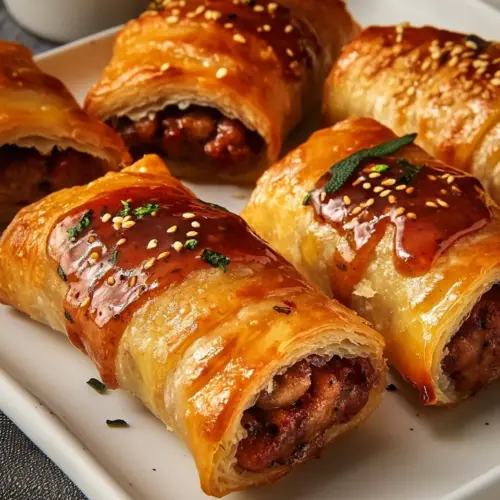
Apple Sage Sausage Rolls
Apple Sage Sausage Rolls bring together flaky puff pastry, savory sausage, and bright apple sauce for a crispy, easy crowd pleaser. These handheld pastries offer a warm herby aroma and golden finish, perfect for easy weeknight dinner sides or fall gatherings. Make them in an Air Fryer or the oven for impressive results with minimal effort, a must try for entertaining.
Equipment
- Air Fryer
- Oven
- Mixing Bowl
- Piping Bag
- Pastry Brush
Ingredients
- 3 country-style sausages Provide savory and meaty filling, offering a coarse texture that holds seasonings and binds with apple sauce; brown thoroughly to develop caramelized flavor and ensure sausages are fully cooked. Chop or remove casings as desired to distribute evenly along the pastry for easy rolling and consistent bites.
- 5 sage leaves Add an aromatic, slightly peppery herb note that complements pork and apple; finely chop leaves to release essential oils and fold into the filling for even flavor distribution. Use whole leaves sparingly as garnish or finely shredded within the mixture to avoid overpowering the sausage.
- 2 tbsp apple sauce Introduce sweet-tart moisture that balances the savory sausage and herb flavors while helping bind the mixture; stir into the cooked sausage briefly to amalgamate flavors without making the filling too wet. Choose a smooth applesauce to prevent excess lumps which could make pastry soggy during baking.
- 2 sheets of puff pastry (thin sheets) Create a flaky, buttery encasement for the filling that crisps and provides structure; roll the thin sheets lightly and seal edges well to trap juices and produce even browning. Keep pastry chilled until assembly to maintain layers and achieve the desired lift and flakiness in the oven.
- 1 egg wash (egg yolk diluted with water) Brush onto pastry to promote golden color and glossy finish that enhances presentation; whisk yolk with a little water to achieve an even, brushable consistency and apply just before baking. Use a light hand to avoid pooling, which can burn or weigh down the pastry during cooking.
- pepper Season the filling with a bright, mildly pungent kick that rounds out sweetness from the apple and richness from the sausage; grind freshly to taste, adding incrementally to avoid over-salting. Combine with other seasonings during mixing to ensure balanced flavor across each roll.
- poppy seeds Provide a nutty, decorative crunch and subtle flavor contrast when sprinkled on top; press seeds gently into the egg-washed surface so they adhere during baking. Use sparingly to maintain visual appeal and avoid overwhelming the pastry's texture.
Instructions
- Use a sharp knife to remove the casing from the sausages and finely chop the meat inside.: The first time you slice through sausage casing you notice a soft, slightly springy resistance, followed by the release of seasoned meat that smells savory and warm. Finely chopping the meat rather than leaving large chunks ensures even distribution through each roll, so every bite is balanced. You want small pieces so the filling pipes smoothly and forms a cohesive log when placed on the pastry. A common mistake is using a dull knife which tears the casing and makes a mess, or chopping too coarsely which creates uneven texture. If the meat feels sticky from handling, chill it briefly to firm it up before continuing.
- In a large bowl, combine the sausage meat, pepper, apple sauce, and sage leaves. Mix well.: When you stir these items together the scent of sage lifts and the apple sauce tames the sausage richness. Mixing releases juices and binds the components so the filling becomes cohesive. Use your hands or a spoon to make sure the chopped sage disperses evenly and the pepper is distributed. If the mixture seems too wet, rest it in the fridge for ten minutes to firm; if too dry, a teaspoon more apple sauce can help. Avoid overmixing which can make the texture dense instead of tender.
- Transfer the mixture to a piping bag.: Moving the filling into a piping bag smooths the assembly process and creates neat uniform logs on the pastry, which helps the rolls bake evenly. As you fill the bag you should feel the mixture settle, and a quick squeeze will show you how it will behave when piped. If the mixture resists, it might be slightly stiff, in which case allow it to sit at room temperature for a few minutes to soften. A common misstep is using a bag without cutting an appropriate opening, resulting in chunks getting stuck; choose an opening just large enough to accommodate the mix.
- Place a sheet of puff pastry on your work surface with the long side facing you.: Laying the puff pastry with the long side toward you gives you the most efficient space for rolling. The pastry should be cold and slightly firm to the touch, and you will notice a faint doughy smell with buttery undertones. Working quickly preserves the butter layers which create lift during baking. If the pastry feels tacky or soft, pop it back in the fridge to chill for ten minutes. A mistake is rolling on a warm surface which causes the pastry to stick and lose structure.
- Spread half of the sausage mixture down the center of the pastry and brush the surface with the egg yolk.: As you pipe the filling down the center, the contrast of pale pastry and darker filling becomes visible. The act of brushing the pastry with the egg wash adds moisture that helps the seam stick and promotes browning. Keep the filling in a neat line so you can fold the pastry cleanly. Avoid overfilling which can cause leakage during baking, and be sure to leave a margin at the edges for sealing.
- Fold the bottom part of the pastry over the sausage mixture, pressing firmly to seal. Trim any excess dough.: Folding creates a snug pocket; press firmly so the seam holds, and any excess should be trimmed for tidy rolls. As you press the seam you may hear a faint crinkle as layers compress, which is normal. Trimming ensures uniform pieces and helps prevent uneven browning. Do not skip sealing, since poorly sealed seams can open during baking and spill filling into the pan.
- Cut the rolled pastry into 9 equal pieces and press the edges with a fork to seal.: When you slice the roll the visual of tight spirals appears, and you can see the filling encased by layers of pastry. Pressing the edges with a fork not only seals but leaves a decorative imprint. Aim for even pieces so they cook at the same rate. A common error is uneven cutting which leads to mismatched baking times; use a ruler or gentle measuring to keep sizes consistent.
- Brush the tops with egg yolk and sprinkle with poppy seeds.: Brushing the tops creates that glossy amber finish and helps the poppy seeds adhere. As the glaze hits the surface you can see it darken slightly, signaling an even bake later on. The seeds toast and add a tiny nutty crunch when baked. Over brushing will pool the wash and may cause soggy spots, so use a light, even layer.
- Repeat the process with the second sheet of puff pastry.: Repeating ensures you use all the filling and makes a second batch with the same visual consistency. Working methodically keeps the workflow smooth, and the second sheet often goes faster since you know the rhythm. If the pastry warms while working, chill the assembled rolls briefly before cooking. Rushing this step can lead to sloppy seams and less lift.
- Place the rolls in the air fryer and bake at 180°C/356°F for 20 minutes. Alternatively, you can bake the rolls in the oven.: As they bake in the Air Fryer you will notice the pastry turning golden and you may hear a faint crackle as layers separate and crisp. The aroma of toasting poppy seeds and warming sausage fills the kitchen, which is a good cue to peek. The oven alternative gives a similar result though timing can vary, so check for a deep golden color. A common mistake is opening the cooker too often which lets heat escape and reduces puff; resist frequent peeks and rely on color as the main indicator of doneness.
Notes
- Keep everything cold The single most important trick is to keep the puff pastry and filling chilled, which preserves the pastry layers and prevents the butter from melting before baking. If things warm up, a short rest in the fridge will correct it.
- Use a piping bag for neatness Piping the filling into a neat log down the center of the pastry results in tidy, uniform rolls and minimizes handling, which keeps the filling texture intact.
- Light egg wash for shine Apply the egg wash with a gentle hand, using a pastry brush. Too much wash pools and can create soft spots, while a thin coat yields beautiful golden color.
- Watch for color not time Ovens and air fryers vary, so judge doneness by a deep, even golden brown on the pastry and a sizzling aroma, rather than relying solely on the clock.
- Toast poppy seeds slightly If you want extra nuttiness, quickly toast the poppy seeds in a dry pan before sprinkling, which enhances their flavor and aroma.