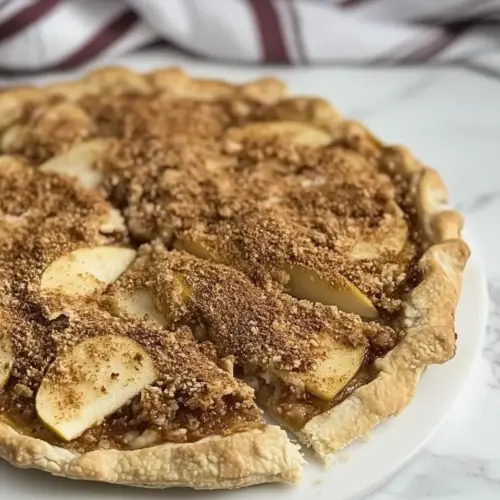
Apple Pie Pizza
Apple Pie Pizza blends warm, spiced apple filling with a crisp, buttery pastry base for a recipe that is both playful and comforting. This easy to slice dessert delivers tender fruit, a crunchy crumb topping, and aromatic spices that make it perfect for an easy weeknight dessert or a festive fall gathering. Try it for a shareable treat everyone will request again.
Equipment
- Oven
- 12 inch pizza pan
- Large Bowl
Ingredients
- Pastry for a single-crust pie. I used this Apple Galette pastry dough. Provides a buttery, flaky base for the pizza-style pie, offering structure and a crisp edge when baked. Helps contain the apple filling and delivers a tender contrast to the fruit’s texture.
- 2/3 cup sugar Adds sweetness to the filling, balancing the tartness of the apples and caramelizing slightly during baking to create a glossy, flavorful syrup. Can be adjusted to taste and helps achieve a golden-brown finish on the fruit.
- 3 tablespoons flour Thickens the apple juices released during baking to prevent a soggy crust and gives the filling a cohesive, slightly jammy consistency. Also helps the spices adhere to the fruit for even flavor distribution.
- 1 teaspoon cinnamon Contributes warm, aromatic spice that complements the apples and provides classic pie flavor; enhances the overall depth without overpowering the fruit. Distributes easily through the filling for consistent seasoning.
- A few gratings of fresh nutmeg Imparts subtle, fragrant warmth and complexity with small amounts, brightening the apple flavor and adding a slightly sweet, nutty note. Freshly grated nutmeg is more aromatic than preground, so use sparingly to avoid bitterness.
- 4 baking apples (I used 2 Granny Smiths and 2 Golden Delicious), peeled, cored and sliced into 1/2-inch slices Supplies the main textural and flavor component, offering a mix of tartness and sweetness depending on variety; slicing uniformly ensures even cooking. Peeling and coring allow the apples to soften and integrate with the thickened, spiced filling.
Instructions
- Preheat oven to 350º.: Warmth in the room changes how the dough behaves, and the scent of a preheating oven primes your senses. At this temperature the crust browns evenly while allowing the fruit to cook through without burning the topping. You should hear the faint hum of the oven as it stabilizes. A common slip is to put the pie into an oven that is not fully up to temperature, which can yield a soggy bottom instead of a crisp base.
- Roll out the pastry crust to fit a 12-inch pizza pan. Fold the edges of the pizza under to make a rim around the perimeter.: As you roll, you will feel the pastry gently thin beneath your hands; keep a light touch to preserve flakiness. Laying it on a 12 inch pan creates a wide surface so the apple can be arranged in a single layer. Folding the edges under forms a rim that catches juices and becomes golden and slightly crisp, a lovely counterpoint to the soft filling. If the dough resists, let it rest briefly so gluten relaxes, otherwise it may spring back and tear.
- In a large bowl, toss the apple slices with sugar, flour, and spices. Arrange over crust in a single layer.: The moment you mix these elements the kitchen fills with fragrance, the sugar and cinnamon dusting each slice like a promise. Tossing ensures each apple is evenly coated so juices thicken uniformly as it bakes. Lay slices in a single layer so heat reaches each piece and they soften at the same rate, producing consistent texture. A typical error is overcrowding, which traps steam and prevents gentle browning.
- Combine the topping ingredients until well mixed and crumbly, and sprinkle over the apples.: Creating a crumbly topping introduces a toasty, crunchy texture that contrasts with the soft apple . As you rub the mixture, you should feel it break into small clumps that will brown and offer a pleasant crunch. The aroma will deepen as butter or fat in the topping warms. If the topping is too fine, it may sink; if too large, it can be uneven, so aim for pebble sized crumbs.
- Bake for 35-40 minutes or until the apples are tender when pierced with a knife.: During baking, steam will rise and the filling will bubble gently around the edges while the crust turns golden brown. You can peek after 25 minutes to check the color, and a knife will slide through the fruit when it is done, leaving a slightly glossy surface. Listen for a soft crackle as juices bubble and the topping browns. Beware of overbaking, which dries the fruit and makes it mealy rather than tender.
- Drizzle with caramel and serve warm. Top with ice cream if desired.: The finishing drizzle adds sticky sweetness and a glossy sheen that elevates each slice. Serve while warm so the contrast between hot fruit and cool ice cream creates an irresistible marriage of temperatures. If you wait too long, the caramel will firm up and the sensory contrast diminishes, so plate promptly for best effect.
Notes
- Use a ready made pastry for speed If you are short on time, a store bought single crust pie shell or rolled pastry will save time and still deliver a buttery base. Chill it briefly before rolling to avoid tearing, and press gently when forming the rim to keep the layers intact.
- Mix apple varieties for balance Combining tart apples like Granny Smith with sweeter ones such as Golden Delicious gives you both bright acid and mellow sweetness. This prevents the filling from becoming cloying while adding complexity to each bite.
- Adjust spice levels to taste Increase or decrease the cinnamon and nutmeg slightly to match your preference, but do so sparingly because warm spices concentrate during baking. Keep notes on small tweaks so you can recreate your favorite version.
- Make the topping chunkier or finer The size of the crumb influences mouthfeel, so make it chunkier for pronounced crunch or finer for an even, sandy texture that melds with the fruit. Either approach changes the eating experience in a pleasant way.
- Serve with a warm drizzle A simple caramel sauce warmed slightly before serving gives a glossy finish and makes the dessert feel indulgent. Pour it sparingly so it complements rather than drowns the filling.