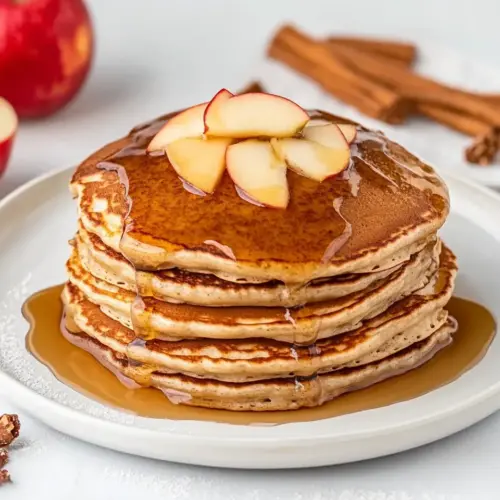
Apple Pie Pancakes
Apple Pie Pancakes are a comforting stack of tender, spiced pancakes studded with grated apple and warm cinnamon notes, offering a creamy, fluffy texture and crispy edges. This easy, breakfast friendly recipe feels like a seasonal treat yet comes together with pantry staples for an easy weeknight or special weekend morning. Make it for a quick cozy meal that tastes like apple pie in every bite.
Equipment
- Skillet or griddle
- Mixing Bowls
- Measuring Cups and Spoons
- Spatula
- Baking Sheet
Ingredients
- 1 cup all purpose flour Provide structure and bulk to the batter, creating the framework that holds pancakes together while producing a tender crumb when mixed with wet ingredients and cooked.
- 2 tablespoons light brown sugar Add gentle sweetness and a touch of moisture to the batter, helping to caramelize the surface during cooking and enhancing overall flavor complexity in each bite.
- 1 teaspoon baking powder Leaven the batter by releasing trapped gases when heated, giving pancakes lift and a light, airy texture while ensuring even rise across the surface.
- 1 teaspoon ground cinnamon Impart warm, aromatic spice throughout the batter, supporting the apple flavor and adding depth; evenly distributed cinnamon creates familiar pie-like notes.
- 1/8 teaspoons salt Balance and enhance other flavors by providing a subtle saline contrast; a small amount helps to accentuate sweetness and overall taste without becoming salty.
- 1/8 teaspoon ground nutmeg Contribute a warm, nutty spice note that complements cinnamon and apples; a tiny amount adds complexity and enhances the pie-like flavor profile.
- 1 cup whole milk Moisten and bind the dry ingredients, helping to form a smooth batter; milk also contributes to tenderness and aids in even browning during cooking.
- 1 large egg Bind the batter components while adding richness and structure; beaten egg helps with emulsification and contributes to a slightly denser, sturdier pancake.
- 1 tablespoon unsalted butter, melted and cooled Add richness and a creamy mouthfeel while contributing subtle flavor; melted cooled butter helps incorporate fat evenly and prevents toughness.
- 1 teaspoon vanilla extract Provide sweet floral and vanilla notes that round out flavor and enhance the perception of sweetness, tying together the apple and spice elements.
- 1 cup peeled and grated apple (about 1 medium apple) Introduce fresh apple flavor, natural sweetness, and moisture; grated apple disperses throughout the batter to create pockets of tender fruit and texture.
- butter or vegetable oil, for the skillet Prevent sticking and promote even browning on the skillet surface by adding fat for frying, allowing pancakes to develop a golden crust and easy release.
- warm maple syrup, for serving Offer a warm, sweet finishing syrup to serve with the pancakes; maple syrup complements the apple and spice flavors while adding pleasant sweetness.
Instructions
- In a medium bowl, whisk together the flour, sugar, baking powder, cinnamon, salt and nutmeg.: Warm, spicy aromas will rise as you whisk the dry mix, signaling even distribution of the cinnamon and nutmeg . This step matters because it prevents clumps of leavening or spice from creating bitter pockets, and a fine, uniform dry mix yields consistent bubbles during cooking. If you skip thorough whisking, you might find uneven rise or specks of concentrated spice. Watch for the mixture to look homogenous and slightly aerated, and avoid packing the flour into the measuring cup which could make the batter too dense.
- In a small bowl, whisk together the milk, egg, butter and vanilla.: You will notice the glossy sheen of the beaten egg and the way the melted butter disperses into the milk , forming a smooth, slightly viscous liquid. This wet mix is essential for tender pancakes because the fat coats the flour proteins, limiting gluten formation. A common mistake is adding hot butter that cooks the egg, so ensure the butter is merely warm. The smell of vanilla will be delicate but noticeable, hinting at the flavor to come.
- Add the wet ingredients to the dry ingredients and stir just until combined. You'll have some lumps in the batter. Fold in the grated apple.: You will immediately see the batter transform into a slightly lumpy, thick mixture studded with shredded apple . Those small lumps mean you have not overmixed, which preserves tenderness. Folding in the apple introduces moisture and slight acidity, so stir gently to avoid breaking the apple pieces down too much. Overmixing here leads to tough pancakes, and under-folding can leave pockets of dry flour, so aim for mostly combined with visible streaks of dry bits dissipating.
- Preheat your skillet or griddle to medium and brush with butter or oil. Using a 1/4 cup measure (or ice cream scoop), scoop the batter onto the skillet. Cook 1 to 2 minutes until small bubbles form on the surface of the pancakes, and then flip. Reduce the heat to medium-low and cook on the other side for about 1 minute, or until golden brown.: As the skillet heats, it may faintly scent of butter, and you should see a faint shimmer on the surface when it is ready. Dropping batter from a 1/4 cup measure ensures evenly sized pancakes that cook uniformly. The first pancake often serves as a temperature test; if it browns too quickly, lower the heat, if it barely colors after a minute, increase slightly. Avoid crowding the pan which traps steam and prevents golden edges.
- Transfer the cooked pancakes to a baking sheet and place in a pre-heated oven (200°F.) to keep warm. Repeat with the remaining batter. Serve the pancakes with warmed maple syrup.: Look for small, evenly spaced bubbles breaking on the surface and slightly set edges before flipping, those visual cues mean the interior has set enough. When you flip, listen for a gentle sizzle and observe a golden brown underside. If you flip too early the center may be undercooked, and flipping too late can result in a dry pancake. Aim for a tender interior and lightly crisp exterior, and adjust heat as needed.
- Reduce the heat to medium low and cook on the other side for about 1 minute, or until golden brown: The second side typically cooks faster, and reducing heat prevents overbrowning while ensuring the center finishes. The smell will turn sweeter and more caramel like as the sugars brown. If the pancake needs more time after one minute, give it short additional bursts of heat, but beware of burning. A gentle golden color and springy touch indicate doneness.
- Transfer the cooked pancakes to a baking sheet and place in a pre heated oven (200°F.) to keep warm: Placing the pancakes into a low oven keeps them tender and warm without drying them out. The oven breathes gentle heat that holds texture while you finish the rest of the batch. Skipping this step can lead to pancakes cooling and becoming dense as they sit; if you do not have an oven, stack them under a loose tent of foil to retain warmth.
- Repeat with the remaining batter: As you make more pancakes, you will notice subtle changes in the skillet color and the batter may relax slightly as the apple releases a touch of juice. Wipe the skillet of any accumulated browned bits to maintain even cooking, and replenish the small amount of butter or oil as needed. Consistency across batches comes from keeping a steady temperature and portion size.
- Serve the pancakes with warmed maple syrup: Warm maple syrup will meld with the hot pancakes creating glossy, sticky ribbons that enhance the aromatic spices. Pour just before serving so the syrup soaks in slightly without making the stack soggy. Avoid drowning the pancakes in cold syrup, which can cool them; gently warmed syrup heightens the comforting flavor and aroma.
Notes
- Use different apples: Try tart varieties for more tang or sweeter ones for softer sweetness, adjusting sugar slightly if your apple is very sweet.
- Swap the milk: Use a higher fat milk for richer pancakes or a plant based milk for a lighter texture, keeping in mind slight flavor changes.
- Add chopped nuts: Fold in a small handful of chopped walnuts or pecans for crunch, but do so sparingly so the texture balance remains pleasing.
- Sauté the apples: For a softer, caramel like note, quickly sauté grated apple with a touch of butter and cinnamon before folding into the batter.
- Top creatively: Consider a warm fruit compote, a dusting of powdered sugar, or a smear of yogurt for contrast with the sweet syrup.
- Make mini pancakes: Use a tablespoon measure to create silver dollar sized pancakes that are great for parties or for layering in fun stacks.
- Infuse extra spice: Increase cinnamon slightly or add a pinch more nutmeg for deeper spice notes, but avoid overwhelming the apple.
- Prepare batter ahead: Mix dry and wet separately and combine just before cooking to maintain lift, storing the wet and dry in the fridge for a day.
- Use a nonstick skillet: If you prefer minimal added fat, a good nonstick pan helps achieve color without excess butter or oil.
- Serve with yogurt: A spoonful of plain or lightly sweetened yogurt adds tang and balances sweetness for a more complex bite.