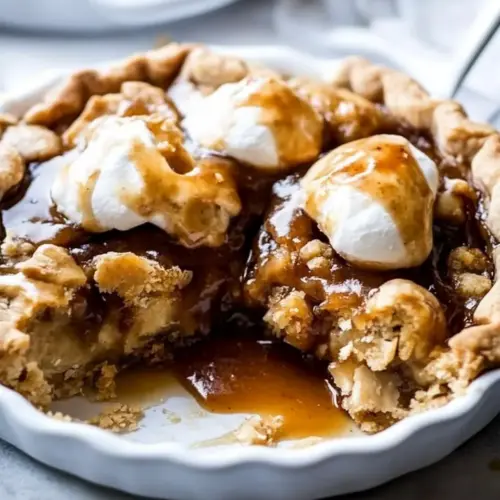
Apple Pie Deep Dish Skillet Cookie
Apple Pie Deep Dish Skillet Cookie is a warm, comforting dessert that blends tender, caramelized apples with a fudgy, buttery cookie crust. It`s simple enough for an easy weeknight dessert yet impressive for guests, offering a mix of soft center and golden edges. Make it for fall gatherings or Thanksgiving to serve a shareable, cozy treat that tastes like a hug on a plate.
Equipment
- 9-inch skillet
- Small Saucepan
- Oven
- Mixing Bowls
- Wooden Spoon
Ingredients
- 2 medium red apples cored and finely diced Cored and finely diced to provide tender, baked apple pieces that distribute evenly through the skillet cookie, adding moisture and natural sweetness. Enhances texture with small fruit bursts and pairs with spices for warm flavor. Use firm red apples to maintain shape during baking.
- 1 tablespoon butter option to use reduced fat or your spread of choice Melted or stirred in to sauté diced apples briefly, softening them and adding a rich buttery flavor that complements the fruit. Can be substituted with reduced-fat spreads to cut calories while still providing mouthfeel. Helps carry cinnamon and sugar into the apple pieces.
- 1/2 teaspoon ground cinnamon Sprinkled into the cooked apples to infuse warm, aromatic spice that enhances apple flavor and balances sweetness. Works in small quantities to avoid overpowering the dessert. Blends smoothly with brown sugar and butter.
- 1 teaspoon vanilla extract Added to the apple mixture to boost depth of flavor with vanilla's sweet, floral notes that complement cinnamon and brown sugar. Enhances overall aroma and rounds out the fruitiness. Use pure vanilla extract for best results.
- 1 tablespoon brown sugar Sprinkled over the apples as a quick sweetener while sautéing, helping to caramelize the fruit slightly and intensify the filling. Adds molasses notes and pairs well with butter and cinnamon. Balances tartness from the apples.
- 1/2 cup butter softened at room temperature Softened at room temperature to cream with sugars and create a rich, tender cookie dough base that yields a soft, buttery crumb. Provides fat for moisture, structure, and flavor throughout the skillet cookie. Ensure fully softened for easy mixing.
- 1 cup brown sugar Creamed with butter to dissolve into the dough and provide sweetness, moisture, and chewiness in the finished cookie. Supplies bulk sweetening and contributes to caramelized edges during baking. Brown sugar adds deeper, molasses-like notes.
- 1 tablespoon vanilla extract Folded into the dough to impart warm, sweet vanilla flavor and enhance overall aroma of the baked cookie. Helps unify flavors and complements the apple filling. Use the same extract measured earlier to maintain consistency.
- 1 large egg Beaten into the creamed butter and sugar to add structure, moisture, and richness, helping bind the dough and support leavening. Contributes to tenderness and helps the cookie set while baking. Use at room temperature for even incorporation.
- 1 cup flour Measured and combined with leavening agents to form the dry structure of the cookie, providing bulk and a tender crumb when mixed with fats and eggs. Gluten development should be controlled to avoid toughness. Spoon and level for accurate measurement.
- 1/4 teaspoon baking powder Added to the dry ingredients to provide a gentle lift and lightness in the cookie, helping it rise slightly and avoid a dense texture. Works subtly in small amounts when combined with egg and creamed butter. Ensure even distribution in the flour.
- 1/4 teaspoon of salt Mixed into the dry ingredients to season and balance sweetness while enhancing other flavors; it also strengthens gluten slightly when combined with liquid. A small amount prevents the cookie from tasting flat. Use measured salt for consistent results.
- 1 tablespoon cinnamon sugar Sprinkled over the assembled apple layer to add a crunchy, sweet-spiced topping that caramelizes during baking and enhances the dessert's presentation. Provides immediate cinnamon-sugar flavor punch and a contrasting texture. Use evenly for balance.
- 1 medium Apple cored and finely sliced Cored and finely sliced to create larger apple slices for layering on top of the dough, adding visual appeal and tender fruit texture after baking. Contributes to a pronounced apple presence and can be arranged decoratively. Choose firm apples to hold shape.
- 2 tablespoons light/reduced fat butter Added in small portions to brush or dot on apples to add buttery richness while keeping calories lower if using light butter, which helps with browning and flavor. Melts into the fruit creating a glossy finish and helps sugar caramelize. Use sparingly for best balance.
- 2 tablespoons brown sugar Sprinkled over the sliced apples to sweeten and encourage caramelization, enhancing the fruit's flavor and producing a syrupy glaze as it melts. Complements cinnamon sugar and butter on the top layer. Distribute evenly for consistent sweetness.
- 1 pinch salt Used sparingly to enhance overall flavor by bringing out sweetness and balancing the brown sugar and butter, while preventing the dessert from tasting flat. A tiny pinch helps round flavors without noticeable salinity. Add cautiously to avoid over-salting.
Instructions
- Preheat oven 176 c | 350 f. Lightly grease a 9-inch skillet (or round pie dish) with butter/oil; wipe over excess with paper towel and set aside.: The air should warm evenly before the pan goes in, creating a predictable bake and a nicely browned edge. You will notice the oven smell change from neutral to warm and slightly sweet as it reaches temperature, which helps the cookie rise and set correctly. Greasing the skillet ensures the cookie releases easily later, and wiping excess prevents an oily bottom. A common mistake is skipping the wipe step, which can pool butter and cause uneven browning around the base.
- Combine all Apple Pie Filling ingredients in a small saucepan. Bring to a boil; reduce heat and gently simmer while occasionally stirring, until apples have softened (about 10 minutes) and caramel has thickened.: As the filling simmers, you`ll see the apples soften and the sugars melt into a glossy caramel that clings to the fruit. Listen for a soft bubbling and smell the cinnamon lift as it cooks, which signals that flavors are melding. Stirring occasionally prevents the sugar from sticking and burning, and simmering gently preserves apple texture without turning them to mush. Avoid vigorous boiling, which can evaporate too much liquid and make the filling overly sticky rather than saucy.
- In the meantime, prepare cookie by combining the butter, sugar and vanilla into a large bowl, and whisk until light and creamy. Add the egg and whisk again until smooth.: Creaming until light introduces air that makes the cookie tender. You`ll notice the mixture lighten in color and become smoother, with a faint, sweet aroma of vanilla . The texture should be free of grainy sugar pockets; if it still feels granular, whisk a bit longer. Over mixing with high speed can make the dough too soft, so aim for a gentle, fluffy texture rather than an overly aerated batter.
- In another bowl, mix together the flour, baking powder and salt. Using a wooden spoon, stir flour into the batter and slowly mix until just combined (do not over beat). Spoon 2/3 the cookie dough into the pan.: Incorporating the egg binds the batter and adds moisture. The batter will look more cohesive and slightly glossy after mixing the egg in. If the batter splits or looks curdled, a brief, gentle whisk usually brings it back together; do not panic and add more liquid. A frequent error is adding a cold egg to very soft butter, which can cause separation, so use room temperature ingredients for a smooth mix.
- Pour the Apple Pie Filling over the cookie dough 1-inch from the edges. Spoon remaining cookie dough batter over the top of the apple mixture and sprinkle with cinnamon sugar (optional): Dry ingredients should be evenly distributed so the rise and seasoning are uniform. You may notice a dry, powdery aroma with a faint mineral note from the salt . Sifting is optional, but whisking thoroughly eliminates clumps and ensures the baking powder is dispersed. Not mixing the dry ingredients well can create pockets of baking agent that affect texture, so take the extra moment to combine them evenly.
- Bake for 35-40 minutes until a toothpick inserted into the centre comes out slightly dirty. The cookie will be moist and fudgy when taken out, but will set and firm as it cools. Don't over bake or it will become dry.: Folding flour gently preserves the batter`s tenderness. You`ll feel the batter thicken and see streaks disappear as the flour incorporates. A slightly sticky texture is normal, and it will bake into a moist center rather than a dense block. Over beating develops gluten and makes the cookie tough, so stop when the flour is mostly combined and a few tiny streaks remain, they will disappear during resting and baking.
- Once cooled, cut into 16 slices. Serve with Salted Caramel Apple Topping.: The dough will spread into a rustic base, and pressing it lightly with the back of the spoon helps form an even layer. You want a slightly thicker rim so the edges can brown and crisp, creating contrast with the soft center. If the dough is too cold and stiff, it may be hard to spread, but a few seconds at room temperature softens it just enough. A common slip is to press so hard you compress air pockets that would have contributed to tenderness in the finished cookie.
- Combine all ingredients into the same saucepan you used for the Apple Pie Filling. Bring to a boil; reduce heat and gently simmer until apple slices have softened and caramel has thickened.: Leaving space near the rim allows the cookie to bake up and brown, framing the filling. As you pour, you`ll see the glossy caramel and softened apples settle into the dough pocket, and the contrast is visually satisfying. This placement prevents the filling from leaking over the sides and burning. Overfilling or pushing the filling to the edges can cause the caramel to bubble over and scorch, so keep that one inch clear.
- Spoon remaining cookie dough batter over the top of the apple mixture and sprinkle with cinnamon sugar (optional): Dabbing and dropping the remaining dough in patches creates a patchwork top that will bake into slightly crisp islands with tender valleys between. The cinnamon sugar melts and forms sweet, crunchy spots on the surface. Aim for even coverage rather than smearing the dough thin, which would reduce the pleasing contrast between top and bottom. A common error is flattening the top too much and losing the texture contrast.
- Bake for 35 to 40 minutes until a toothpick inserted into the centre comes out slightly dirty: While baking, the kitchen will fill with buttery, spiced aromas and the edges will turn a deep golden brown. The center should jiggle slightly and feel soft but not liquid; the toothpick test showing moist crumbs indicates the perfect fudgy interior. The cookie continues to set as it cools, so pulling it a touch early preserves tenderness. Over baking results in dryness, so resist baking until completely clean on the toothpick.
- Once cooled, cut into 16 slices. Serve with Salted Caramel Apple Topping: After resting, the dessert firms and slices neatly, revealing layers of caramelized filling and cookie. I love serving each wedge warm or at room temperature, and the topping adds a glossy, sweet finish. A misstep is slicing while too warm, which can cause sloppy wedges, so wait until the skillet is warm to the touch for cleaner portions.
- Combine all ingredients into the same saucepan you used for the Apple Pie Filling. Bring to a boil; reduce heat and gently simmer until apple slices have softened and caramel has thickened: Making the topping in the same pan layers flavor and simplifies cleanup. You will see the apple slices soften quickly and the mixture bubble into a thick, shiny sauce that clings to the fruit. Stirring keeps the caramel from sticking and ensures even cooking. If you let it boil too hard, the sauce can reduce too far and become gluey, so keep it gentle and watch the consistency closely.
Notes
- Use a different apple variety: Swap in Granny Smith for more tang and structure, or Gala for extra sweetness, adjusting simmer time slightly so slices reach the right tenderness.
- Adjust the sugar balance: Reduce the dough brown sugar slightly if you prefer a less sweet dessert, keeping in mind the filling also contains sugar that caramelizes.
- Try a crisp topping: Sprinkle a modest amount of extra cinnamon sugar right before baking for a crunchy top, watching carefully so it does not burn.
- Make the topping earlier: Prepare the Salted Caramel Apple Topping ahead and reheat gently, which speeds serving and lets flavors meld overnight.
- Swap spreads for butter: Use a light or reduced fat spread where the recipe suggests lighter butter, which slightly changes mouthfeel but keeps the dessert approachable.