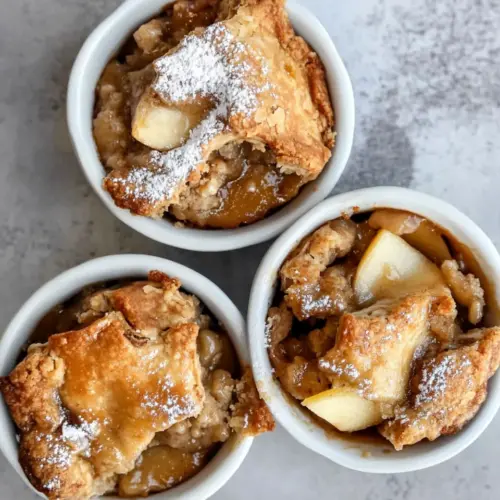
Apple Pie Breakfast Cakes
Apple Pie Breakfast Cakes are a tender, warmly spiced morning treat with diced apple, cozy cinnamon, and a buttery crumble. These small batch cakes are creamy yet lightly textured, making them an easy morning indulgence or simple brunch showpiece. They capture apple pie notes without the fuss, perfect for a quick, comforting bake.
Equipment
- Oven
- Ramekins
- Mixing Bowl
- Whisk
Ingredients
- 1/4 cup butter Cream until soft and use to add rich flavor, moisture, and a tender crumb to the cakes; helps brown the tops during baking and provides a buttery mouthfeel that balances the spices and apple.
- 1/4 cup brown sugar Provide caramel-like sweetness and depth when mixed with butter and egg; help create a moist texture and enhance the overall flavor profile with subtle molasses notes.
- 1 egg Whisk until combined to bind the batter and provide structure; contribute to leavening slightly while adding richness and helping to emulsify the wet and dry ingredients.
- 2 teaspoons vanilla extract Stir in to add aromatic sweetness and enhance other flavors; deliver a warm, floral note that complements the cinnamon and warm spices in the apple mixture.
- 1/3 cup plain Greek yogurt Fold gently into the batter to add tangy moisture and a tender crumb; contribute protein and acidity that improve texture and keep the cakes from drying out.
- 1/3 cup whole wheat pastry flour Sift and combine to offer whole-grain flavor and a slightly denser texture; contribute fiber and a nutty note while supporting structure when mixed with all-purpose flour.
- 1/4 cup all purpose flour Combine with whole wheat pastry flour to balance structure and tenderness; provide gluten development for lightness and a neutral base for flavors and spices.
- 1 teaspoon baking powder Sprinkle in to provide lift and produce a light, airy texture; activate with the wet ingredients to create small air pockets and prevent overly dense cakes.
- 1/4 teaspoons salt Add sparingly to enhance overall flavor balance and strengthen gluten slightly; help control sweetness perception and improve the batter's seasoning.
- 1/2 teaspoon cinnamon Mix in to contribute warm, sweet spice and aromatic complexity; enhance the apple flavor and pair well with the other spices for a classic apple-pie profile.
- a pinch each of nutmeg, ground ginger, & ground cardamom Include a pinch to add concentrated warm and complex spice notes; bring subtle heat, bright fragrance, and depth that complement the cinnamon and apples.
- 1 medium apple, peeled and diced into cubes Toss into the batter to contribute fresh fruit texture and natural sweetness; provide moisture, tartness, and small pieces that distribute flavor and bite throughout each cake.
Instructions
- Preheat oven to 350 degrees F.: When you turn on the oven, you should notice a faint warm scent minutes later as it approaches temperature. Preheating ensures the cakes begin baking immediately, which helps them rise properly. A common error is sliding batter into a cold oven, which yields dense, underbaked centers and uneven browning. Use an oven thermometer if your oven runs hot or cool, and place the rack in the center for even heat circulation.
- Cream butter and sugar together until light and fluffy. Add egg and mix until well combined. Add in vanilla and yogurt and stir. Mix dry ingredients together and add to batter, only mixing until just combined. Fold in apple chunks.: As you cream the butter and brown sugar , watch for a pale, airy texture, this signals enough air has been incorporated for lift. The sound will change from a heavy scrape to a lighter cream as sugar dissolves into the butter. After adding the egg , stop mixing the moment it looks unified, because overworking develops gluten and softens the crumb undesirably. Stir in the vanilla and plain Greek yogurt , which will slightly loosen the batter and add tang. When combining the dry mix of whole wheat pastry flour , all purpose flour , baking powder , salt , and spices, whisk to disperse the leavener and spices evenly. Fold the dry mix into the wet with gentle motions, leaving a few streaks rather than striving for over-perfection, this prevents toughness. The diced apple should be folded last so the pieces stay intact and distributed, giving bursts of texture. A typical mistake here is overmixing after the flour goes in, which tightens the crumb and reduces tenderness.
- Spray 2 ramekins {I used the 6 ounce, 3 1/2 inch} with non-stick spray and pour batter into them equally. Bake for 30-35 minutes or until inserted toothpick comes out clean.: Greasing the ramekins prevents sticking and helps the edges brown evenly. Pouring batter equally ensures uniform bake times; if one ramekin is fuller, it may need more time and risk drying out. While baking you will see the batter puff and edges set, and a gentle aroma of cinnamon and baked apple will rise. The surface should turn lightly golden and spring back when touched. Insert a toothpick into the center at the earliest time, and if it comes out with a few moist crumbs, it is done; wet batter means more time is needed. Avoid opening the oven door frequently, as temperature shifts can cause sinking in the middle.
- For the brown sugar topping, I simply combined 1/2 tablespoon flour, 1 tablespoon brown sugar, 1/4 teaspoon cinnamon, a pinch of salt and 2 teaspoons of melted butter and then crumbled it over top before baking. For an optional glaze on top, combine 3-4 tablespoons of powdered sugar and a drop or two of milk (literally a drop) and whisk until a glaze forms.: The topping ingredients should be mixed until crumbly so they create tiny pockets of caramelized sugar on the cake surface. The melted butter helps bind the crumble so it browns but does not dissolve into the batter. When you sprinkle it on, the contrast between crunchy bits and tender crumb is immediate after baking. For the glaze, whisk the powdered sugar with just a smidge of milk to a thick but pourable consistency; too much milk makes the glaze runny and masks the cake's texture. Apply glaze sparingly after the cakes have cooled slightly to avoid melting it away. A mistake here is adding the topping too late in the bake, which can keep it from crisping, or adding the glaze while the cake is piping hot and causing it to soak in rather than coat.
Notes
- Room temperature ingredients: Let the butter and egg come to room temperature for smoother creaming, which yields a lighter texture.
- Subtle spice balance: If you prefer a milder profile, reduce the pinch of ground cardamom or ground ginger, those spices are potent and a little goes a long way.
- Topping timing: Add the brown sugar crumble just before baking so it crisps up rather than sinking into the batter.
- Check for doneness visually and by toothpick: Look for a lightly golden top and springiness at the center; the toothpick should come out mostly clean.
- Optional glaze restraint: Use a tiny amount of milk for the glaze, just enough to make the powdered sugar pourable, so it rests on the cake instead of saturating it.
- Storage note: Keep leftover cakes in an airtight container at room temperature for a day, or refrigerate for up to three days, and warm gently before serving to revive texture.