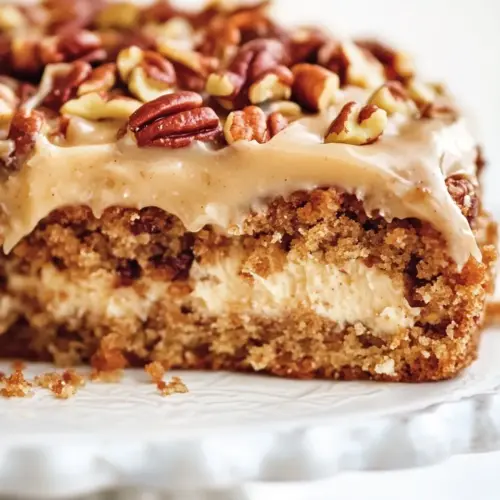
Apple Pecan Spice Cake with Brown Sugar Cream Cheese Frosting
Apple Pecan Spice Cake with Brown Sugar Cream Cheese Frosting is a moist, warmly spiced tray cake filled with tart apples and crunchy pecans topped with a silky brown sugar cream cheese frosting. This easy, cozy dessert offers comforting fall flavors, a tender crumb, and a crowd friendly format that works well for gatherings and potlucks, making it a must make for seasonal baking.
Equipment
- 9 x 13 inch baking sheet
- Large Mixing Bowl
- Medium mixing bowl
- Hand Mixer
- Offset Spatula
Ingredients
- 4 cups chopped Granny Smith apples Provide tartness and moisture when chopped, offering crisp texture contrast that balances sweetness in the cake; fold gently into batter to avoid overmixing and ensure even fruit distribution.
- 2 cups granulated sugar Sweeten the batter and aid in tenderizing the crumb by interacting with fats and eggs; dissolve properly to prevent graininess and help achieve a uniform rise and caramelization during baking.
- 1/2 cup vegetable oil Contribute moistness and a tender crumb by coating flour proteins to limit gluten formation; blend well with sugar and eggs to create an emulsion for consistent texture.
- 2 lightly beaten eggs Bind ingredients and add structure while contributing richness and slight leavening from incorporated air; beat lightly to combine yolks and whites without creating excessive foam.
- 1 teaspoon vanilla extract Enhance and deepen overall flavor profile with warm, sweet aromatics; add to batter for balanced background notes that complement apples and spices.
- 2 cups all-purpose flour Provide the structural framework for the cake by forming gluten when mixed with liquids and fats; sift or whisk to ensure even incorporation and avoid lumps.
- 2 teaspoons baking powder Help leaven the cake by releasing gas when heated, creating lift and lighter texture; measure accurately and evenly distribute within the dry ingredients.
- 1/2 teaspoon baking soda Work with baking powder to adjust acidity and promote proper rise, contributing to a tender crumb; dissolve into the wet ingredients to activate evenly.
- 2 teaspoons ground cinnamon Deliver warm, aromatic spice and accentuate apple flavor while adding depth to the cake; blend uniformly into dry ingredients to avoid clumps and ensure balanced spice throughout.
- 1/2 teaspoon ground nutmeg Add warm, slightly sweet and nutty spice notes that complement cinnamon and apples; use sparingly to prevent overpowering and maintain harmony of flavors.
- 1 teaspoon salt Season and enhance all flavors while balancing sweetness and spice; incorporate into dry ingredients to ensure even distribution in the batter.
- 1/2 cup milk Add liquid for proper batter consistency and contribute a subtle richness depending on fat content; warm slightly if needed to prevent curdling when mixed with hot ingredients.
- 1 cup roughly chopped pecans Provide crunchy texture and nutty flavor that contrasts soft cake crumb; toast briefly for deeper flavor and fold in at the end to maintain crunch.
- 8 ounces room temperature cream cheese Add creamy tang and rich texture to the frosting while helping achieve smooth spreadability; keep at room temperature for easy mixing and lump-free frosting.
- 1/4 cup softened salted butter Contribute creaminess and structure to the frosting while providing slight saltiness that enhances sweetness; beat with cream cheese until fully smooth for a stable icing.
- 2 teaspoons vanilla extract Boost the frosting's aromatic profile with sweet, floral notes and round out other flavors; add to frosting gradually and taste for desired intensity.
- 1 cup light brown sugar Impart deep molasses flavor and moist sweetness to the frosting while aiding spreadability and gloss; pack lightly and cream with butter and cream cheese until smooth.
Instructions
- Preheat oven to 350 degrees Fahrenheit. Spray a 9 x 13 x 1-inch baking sheet with nonstick cooking spray, then lightly dust with flour. Tap out the excess flour and set aside.: The scent of a preheating oven gives you a cue that baking is about to begin, and properly preparing the pan prevents sticking and ensures clean slices that hold together. When you spray the pan and dust it with flour , you'll see a faint white dusting that should be evenly distributed; this thin coating creates a barrier between the batter and the pan. If you skip the flour dusting and only use spray, the cake may stick at the edges as it cools, making slices tear. A common pitfall is using too much flour which can leave a powdery residue on the cake surface, so tap out the excess thoroughly. The even surface will also help the cake bake uniformly and brown consistently.
- In a large bowl, combine 4 cups chopped Granny Smith apples and 2 cups granulated sugar. Stir in 1/2 cup vegetable oil, 2 lightly beaten eggs, and 1 teaspoon vanilla extract.: Right away you'll notice the apples releasing a faint fruity aroma as the granulated sugar begins to draw out their juices, creating a moist base that keeps the cake tender. Mixing in the vegetable oil coats the fruit and helps distribute fat evenly throughout the batter so the crumb stays soft. As you incorporate the lightly beaten eggs , the mixture takes on a slightly glossy sheen, signaling the ingredients are marrying. Be mindful not to overmix, because doing so can break down the apple pieces and introduce too much air, which alters texture. If the apples look unevenly coated, scrape the bowl sides and fold gently until everything is harmonious. A frequent mistake here is adding dry ingredients too soon; give the wet mix a moment to come together so the flour blends in smoothly later.
- In a medium bowl combine 2 cups all-purpose flour, 2 teaspoons baking powder, 1/2 teaspoon baking soda, 2 teaspoons ground cinnamon, 1/2 teaspoon ground nutmeg, and 1 teaspoon salt.: Sifting or whisking these dry components releases the warm spice scents of ground cinnamon and ground nutmeg and ensures even leavening so the cake rises uniformly. The mixture should look pale beige with tiny darker specks from the spices, and when you inhale you'll pick up the classic aromatic profile of fall baking. Properly distributed leaveners prevent pockets of metallic baking soda taste or uneven rising. A common misstep is failing to whisk the leaveners with the flour, which can leave dense areas or cause the cake to dome oddly in the oven. Take a moment to break up any lumps and ensure everything looks homogenous before you proceed.
- Add the flour mixture to the apple mixture and mix to combine. Add 1/2 cup milk and stir until just combined. Add 1 cup roughly chopped pecans and stir until combined.: At this stage, you should see the batter thicken and take on a speckled, rustic appearance thanks to the apples and spices. Adding the milk helps loosen the batter to the right consistency so it spreads easily in the pan without being runny. When you fold in the pecans , notice the visual contrast of nut pieces against the batter; they offer future crunch and a toasty flavor. Stir gently until you no longer see streaks of flour, because overmixing develops gluten and can make the cake tough. If you find large clumps of flour remaining, use a rubber spatula to fold patiently rather than vigorous stirring. A typical error here is forgetting the pecans until after baking, which robs the cake of that essential textural contrast, so measure and add them as directed.
- Pour the batter into the prepared pan and bake for 30-40 minutes or until a toothpick comes out clean from the center. Let the cake cool completely.: As the cake bakes, the kitchen will fill with an intoxicating mix of baked apples , warm spices, and nutty notes. Watch for the edges to pull slightly away from the pan and for the top to become a light golden brown, which are visual hints that the interior is setting. The toothpick test is your most reliable indicator, so insert it into the center and expect it to come out with a few moist crumbs but not wet batter. If you underbake, the center will be dense and gummy; overbake and it becomes dry. Once out of the oven, allow the cake to cool completely so the frosting does not melt when applied. Cooling also lets the flavors settle, making slicing cleaner and presentation neater.
- Add 8 ounces room temperature cream cheese to a large bowl and beat with a hand mixer on high speed until smooth. Add 1/4 cup softened salted butter and beat until smooth, scraping down the sides and bottom of the bowl to ensure it is incorporated evenly.: Creaming the cream cheese and softened butter introduces air and yields a glossy, smooth base for the frosting. When beaten properly, the mixture should be silky and free of lumps; this texture ensures a spreadable frosting that will hold shape but remain soft. Scraping the bowl is crucial to avoid pockets of unincorporated cream cheese that could make the frosting uneven. If either ingredient is too cold, you will see lumps and the frosting will resist smoothing, so bring them to room temperature for best results. Avoid overbeating which can warm the frosting and make it too soft.
- Add 2 teaspoons vanilla extract and 1 cup light brown sugar. Beat for 5 minutes on medium-high speed, until it is light and fluffy and the sugar has dissolved.: As you beat, the frosting will lighten in color and gain volume while taking on the warm, molasses like aroma of the light brown sugar . This extended beating helps dissolve sugar crystals so the frosting is smooth rather than grainy, and the vanilla extract deepens the flavor profile. Listen as the mixer creates a gentle whirring sound and observe a change to a pillowy texture. If you notice sugar grains beneath the surface, continue beating a bit longer. Be cautious not to let the mixer overheat the frosting which can make it too soft for spreading.
- Spread the frosting evenly on top of the cooled cake. Refrigerate until serving.: The final act is gratifying, as the brown sugar cream cheese frosting glides over the cake and fills the little valleys of the crumb. Use an offset spatula for a smooth, even finish, and take a moment to admire the contrast between the creamy frosting and the rustic cake. Refrigeration firms the frosting so slices keep clean edges and the flavors meld, resulting in a better eating experience. A common mistake is frosting a warm cake, which causes the frosting to slide off and become runny. Chill until the frosting sets, about 30 to 60 minutes, before slicing and serving.
Notes
- Measure flour correctly: Spoon the all purpose flour into your measuring cup and level it off to avoid packing, which keeps the cake tender rather than dense.
- Room temperature dairy: Ensure the cream cheese and butter are at room temperature for a smooth, lump free frosting.
- Even apple pieces: Cut the Granny Smith apples into similar sized chunks so every slice has a balanced fruit distribution.
- Fresh spices: Use fresh ground cinnamon and ground nutmeg for brighter spice notes; stale spices yield muted flavor.
- Watch bake time: Start checking the cake at the lower end of the bake window to prevent drying, since oven temperatures vary.