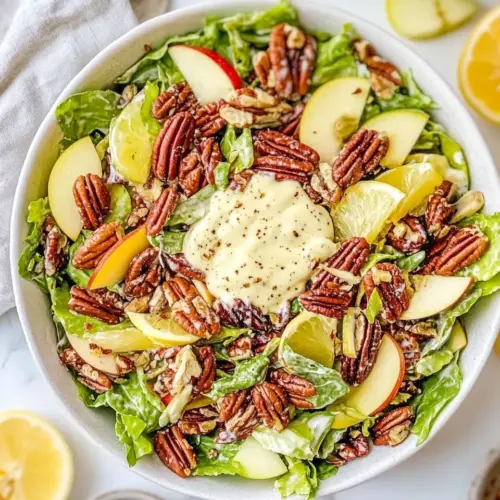
Apple Pecan Salad with Creamy Lemon Dressing
Apple Pecan Salad with Creamy Lemon Dressing is a creamy, tangy, and crunchy autumn salad featuring crisp apples, candied pecans, and shaved aged white cheddar cheese. Easy to assemble and refreshingly bright, it makes a perfect easy weeknight dinner side or potluck favorite, delivering balanced flavors that please a crowd and keep everyone coming back for seconds.
Equipment
- Medium Bowl
- Whisk
- Large Bowl
- Potato peeler or large grater
Ingredients
- 3/4 cup crème fraiche or plain Greek yogurt Provide a rich, tangy base for the dressing, lending creaminess and mild acidity while balancing sweetness; whisk smoothly with other liquids to create a silky texture that coats the salad evenly.
- 3 tablespoons freshly squeezed lemon juice Add bright acidity to the dressing, elevating flavors and cutting through the richness; incorporate gradually and taste to achieve a balanced lemony punch.
- Zest of one lemon Contribute concentrated citrus aroma and bright top notes that intensify the lemon flavor; finely grate to avoid bitter pith and fold into the dressing for freshness.
- 2 tablespoons honey Sweeten and round out the dressing naturally, helping to balance lemon acidity and salt; dissolve thoroughly to ensure even sweetness without graininess.
- 1/2 teaspoon kosher salt Season the dressing and salad components for balanced flavor, enhancing sweetness and acidity while preventing blandness; use measured amounts and adjust to taste.
- 2 heads Romaine lettuce, chopped Provide a crisp, hearty salad base with a slightly bitter backbone that holds up to dressing and mix-ins; chop into bite-sized pieces for easy tossing and even distribution.
- 2 large Honeycrisp apples, thinly sliced Offer sweet-tart crunch and refreshing juiciness that contrasts textures, with thin slices maximizing surface area for dressing absorption and visual appeal; toss immediately to prevent browning.
- 1 tablespoon fresh lemon juice Brighten dressing and salad with fresh acidity in small amounts to lift flavors and add a delicate lemon boost without overwhelming the mixture.
- 1 cup candied pecans Introduce caramelized crunch and nutty sweetness to the salad, adding texture contrast and rich flavor that complements fruit and cheese; distribute evenly for balanced bites.
- 4 oz . aged white cheddar cheese, grated with a potato peeler or large grater Provide sharp, savory richness and creamy, slightly crumbly texture that offsets sweetness and adds depth; grate thin shaving-like pieces to create elegant, melt-in-the-mouth ribbons.
- 1 tablespoon minced chives Impart mild onion-like freshness and delicate herbaceous notes that brighten the salad; mince finely and sprinkle evenly to add subtle savory contrast.
Instructions
- To make the dressing, combine the crème fraiche or Greek yogurt, lemon juice, lemon zest, honey, and salt in a medium bowl. Whisk until smooth. Set aside. The dressing can be made up to 2 days in advance.: The bowl should feel cool under your hands as you add the ingredients, and the first aroma you notice will be the bright top note of the lemon zest. As you whisk, the texture will change from slightly lumpy to a smooth, satiny emulsion, glossing the whisk with a sheen. The sound is soft, just a whisper as the whisk moves through the mixture, and you should smell the honey and citrus lift together. This technique matters because a well emulsified dressing clings to leaves instead of pooling at the bottom of the bowl, ensuring even flavor. A common mistake is adding too much lemon at once which makes the dressing overly sharp; whisk, then taste, then adjust. If the dressing seems too thick for your taste, whisk in a teaspoon of cold water at a time until you reach the desired consistency. If the dressing breaks or becomes grainy, stop whisking and fold gently with a spatula to smooth it back out.
- To assemble the salad, place the lettuce in a large bowl. Drizzle lemon juice over the apple slices and toss to prevent them from browning. Add the apple slices, candied pecans, grated cheese, and chives to the salad bowl.: As you whisk, aim for a uniform texture that coats the back of a spoon smoothly, with no visible lumps of crème fraiche or clumps of honey. You should be able to lift the whisk and see the dressing fall back in ribbons that slowly dissolve, indicating good integration of fat and acid. This matters because a smooth dressing distributes flavor evenly across the salad. One common oversight is not tasting during mixing, which can leave the dressing underseasoned; always taste and correct balance. If the dressing tastes flat, a tiny pinch more salt or a drop of lemon juice can brighten it instantly.
- Add the creamy lemon dressing and toss until salad is well coated. Serve immediately.: Place the finished dressing in the refrigerator if you are not using it immediately; chilling slightly lets the flavors meld and the texture firm up just enough to cling to leaves. The dressing will become fragrant as it rests, with the lemon oil scent mellowing into a rounded citrus note. This step is useful because it allows the honey to integrate fully and the zest to infuse the dairy base. A typical mistake is leaving the dressing at room temperature for too long in warm conditions, which can soften lettuce when tossed later; keep it chilled until assembly time. If you made the dressing in advance, give it a quick whisk before using to bring back that satiny texture.
- The dressing can be made up to 2 days in advance: Early preparation is convenient and practical, and as the dressing rests the flavors continue to harmonize. Store it in an airtight container, and you will notice a subtle melding where the lemon becomes integrated rather than sharp. This matters for planning because you can free up hands-on time on the day you serve. A common mistake is keeping the dressing longer than recommended, which can dull the fresh citrus brightness. Always smell and taste before using to ensure it still has lively acidity.
- To assemble the salad, place the lettuce in a large bowl: The moment you add the chopped Romaine lettuce to a roomy bowl you should be able to toss without spillage, which helps you coat everything evenly. The visual cue is vibrant, glossy green leaves that look crisp and hydrated, not limp or wet. This step matters because adequate space prevents bruising the leaves and allows even distribution of dressing and other components. A common error is using a bowl that is too small, which crushes the lettuce; pick a bowl with ample room for tossing freely.
- Drizzle lemon juice over the apple slices and toss to prevent them from browning: When you add the small tablespoon of lemon juice to the thinly sliced apples , you will see the juice bead on the surface and the slices take on a slightly glossy sheen. Toss gently so each slice gets a light coating, which preserves color and adds a bright edge to the fruit. This matters because browned apples look less appealing and taste muted. A frequent slip is using too much lemon which can make the apple slices soggy; use only the listed amount and distribute it evenly.
- Add the apple slices, candied pecans, grated cheese, and chives to the salad bowl: As you layer these components, notice how the candied pecans introduce a sugar caramel fragrance and the shaved aged white cheddar cheese contributes a savory perfume. The chives bring a green, grassy aroma that rounds the ensemble. Visual balance matters here, aim for even distribution so each forkful includes a bit of everything. One common mistake is adding the candied pecans too early when they can soften; keep them intact until final tossing. If the cheese clusters, gently separate the shavings with your fingers for even coverage.
- Add the creamy lemon dressing and toss until salad is well coated: Start with a light drizzle of the dressing, then toss gently with salad tongs or clean hands to ensure the leaves are lightly but evenly coated. You should hear a soft rustle as the leaves move, and visually the lettuce and apples will take on a subtle sheen. This matters because over dressing can drown the texture and under dressing leaves bites bland. A typical mistake is pouring all the dressing at once; add gradually and taste as you go. If the salad seems underdressed, add a little more, but if it becomes soggy, toss quickly and serve immediately to preserve crunch.
- Serve immediately: Once tossed, serve the salad while the leaves are crisp and the candied pecans remain crunchy. The ideal moment is right after tossing when the aromas are vivid and the textures are distinct. This matters because waiting too long results in limp lettuce and softened nuts. If you must wait, keep the salad chilled briefly, but avoid extended holding times. A common issue is not having plates ready, which delays serving; prepare tableware beforehand to maintain peak texture.
Notes
- Swap the dairy base If you prefer a tangier profile, use plain Greek yogurt instead of crème fraiche for a lighter dressing that still packs creaminess and tang.
- Adjust sweetness If your apples are very sweet, reduce the amount of honey slightly to keep the dressing balanced and prevent it from tasting cloying.
- Protect the apple slices Toss the apples immediately with the small amount of fresh lemon juice listed to prevent browning and maintain a fresh appearance for serving.
- Keep nuts crunchy Store candied pecans at room temperature in an airtight container and add them right before serving to retain their crisp texture.
- Cheese handling Use a potato peeler to shave the aged white cheddar cheese into ribbons for an elegant look and delicate mouthfeel that melds with the salad instead of overpowering it.
- Season lightly Because the aged white cheddar cheese and candied pecans contribute salt and sweetness, season the dressing conservatively and adjust after tasting the assembled salad.