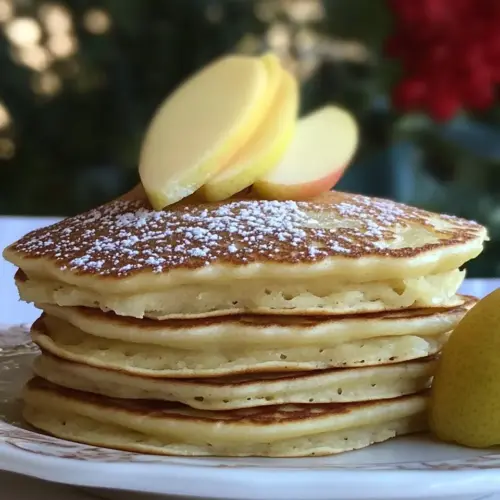
Apple Pancakes
Apple Pancakes are tender and fluffy with bursts of juicy apple in every bite, offering a warm, lightly sweet breakfast experience. This easy pancake recipe uses simple pantry ingredients to create an inviting brunch or weekend treat, perfect for crisp mornings. Make a stack for family or freeze extras for quick reheats, they are a reliable and comforting choice.
Equipment
- Mixing Bowl
- Whisk
- Spatula
- Frying Pan
- Measuring Cup
Ingredients
- 1 1/2 cups all purpose flour Provide structure and bulk to the batter, helping form the pancake crumb when mixed with liquids and leavening; sift or whisk to remove lumps and ensure even texture. Contribute to browning and a tender interior when properly measured and not overworked.
- 1 tablespoon baking powder Leaven the pancakes by producing carbon dioxide when combined with wet ingredients, creating lift and a light, fluffy texture; measure carefully to avoid metallic or soapy flavors. Activate immediately in batter and work best when fresh for consistent rise.
- 1/2 teaspoon salt Enhance overall flavor balance and amplify other ingredients while controlling yeast or chemical reactions; use precise measurement to avoid overly salty taste. Help strengthen dough proteins slightly, improving batter stability.
- 1 1/4 cups milk I used 2%, warm Hydrate dry ingredients to form the batter while dissolving sugar and activating leavening agents; warm milk helps ingredients meld and can improve rise. Provide richness and tenderness depending on milk fat content.
- 1 large egg Bind ingredients together and add richness, contributing to structure and a smoother batter; beat lightly before adding to ensure even distribution. Supply proteins that coagulate during cooking, helping pancakes set and hold shape.
- 1/2 stick unsalted butter melted Add fat for tenderness, moisture, and flavor, aiding in browning and preventing pancakes from sticking to the griddle; melt and cool slightly before mixing for even incorporation. Contributes richness and a softer crumb.
- 2 tablespoons granulated sugar Provide sweetness and help caramelize the pancake surface during cooking, enhancing flavor and color; dissolve into wet ingredients for even distribution. Also slightly tenderizes the crumb by interfering with gluten formation.
- 1 teaspoon pure vanilla extract Infuse a warm, aromatic vanilla note that elevates overall flavor and rounds out sweetness; add with wet ingredients to distribute evenly through the batter. Use pure extract for a cleaner, more pronounced flavor profile.
- 1 tablespoon lemon juice Introduce acidity to brighten flavors and slightly interact with leavening to improve rise; lemon juice can prevent apple slices from browning if applied directly. Balance sweetness and add a hint of freshness to the pancakes.
- 2 apples peeled, cored, and cut into small chunks Contribute fresh fruit flavor, moisture, and texture with natural sweetness and slight tartness; peel and core for best mouthfeel and chop into small chunks for even distribution in batter. Provide bits of apple that soften during cooking and offer pleasant contrast.
- 2 tablespoons powdered sugar Finish pancakes with a light dusting that adds visual appeal and a subtle extra sweetness; sprinkle just before serving for best effect. Dissolve slightly on warm pancakes to create a delicate glaze-like surface.
Instructions
- In a mixing bowl, combine the dry ingredients.: The air will carry a faint scent of baking powder and flour as you whisk them together, and you should see a uniform, pale mixture with no streaks. This step is important because evenly distributed leavening yields consistent rise across pancakes. If you notice lumps, sift or vigorously whisk, as lumps can create uneven pockets and cause some pancakes to bake oddly. A common mistake is adding wet ingredients too soon, which can lead to clumpy batter.
- In a separate bowl, whisk milk with the egg and melted butter. Add the sugar, vanilla extract, and lemon juice, and mix again.: As you whisk, the mixture will lighten slightly and acquire a smooth sheen, and the warm milk helps the melted butter blend without setting. You may catch a gentle aroma of vanilla that indicates good flavor foundation. This combination ensures fat and liquid are emulsified for a tender crumb, and the tiny acid from the lemon juice perks up the overall profile. Avoid whisking so aggressively that you create a foamy texture, which can make the batter too thin and cause flat pancakes.
- Add the dry ingredients to the wet ingredients, and stir with a spatula until just combined (be careful not to overmix the batter). Gently fold in the apple chunks.: The batter should be lumpy but cohesive, not glassy or paste like, and you will notice a slight resistance when the spatula glides through. Folding the batter gently preserves trapped air created by the leavener, yielding a lighter interior. When you fold in the apples , they should be evenly distributed without pulverizing the fruit; this prevents releasing too much juice that could thin the batter. A common pitfall is overmixing, which yields dense pancakes, so stop once streaks of flour disappear.
- Lightly brush a frying pan with a piece of butter. Using a 1/4 measuring cup spoon the pancake batter and spread it into a circle.: As the pan heats, the butter will sizzle softly and become fragrant, signaling readiness. The batter should spread into a round that holds its shape, with a slightly glossy surface. Using a consistent 1/4 cup helps pancakes cook uniformly; uneven sizes mean some will be undercooked while others finish too quickly. One mistake is using too high heat, which browns the surface before the center sets, so aim for medium to medium low heat.
- When bubbles appear on your pancake, turn over. Cook until pancake is lightly brown and cooked in the middle.: Watch for small bubbles forming across the surface and edges setting, which are the visual cues that the underside is golden and the interior is cooking. The sound will be a gentle, steady sizzle rather than a loud crackle. Turning at the right moment preserves height and creates a nicely browned face on the second side, which cooks more quickly. Flipping too early prevents proper rise, while flipping too late can burn the surface.
- Sprinkle with powdered/caster sugar and serve.: The finished texture should be springy to a light press, and the interior should be fully set without raw batter pockets. You can test by inserting a skewer into the center of the thickest pancake to check for moist crumbs rather than wet batter. The aroma will be a warm blend of apples and browned batter. A typical mistake is assuming color alone guarantees doneness, so always check the interior when in doubt.
- Sprinkle with powdered/caster sugar and serve.: The final dusting of powdered sugar will melt slightly on warm pancakes, leaving a soft sheen and just enough sweetness to complement the fruit. Serve immediately while the pancakes are warm, as the contrast of heat and sugar is part of the charm. If left too long, the sugar will absorb moisture and lose its delicate lift, so apply it right before plating. Avoid overly heavy toppings that mask the nuanced apple flavor.
Notes
- Use different apples Replace the apple variety to change sweetness and texture, for example choose a firmer, tarter apple to add contrast or a sweeter one for softer natural sweetness.
- Adjust milk richness Swap 2 percent for whole milk for a richer mouthfeel, or use a lighter milk to reduce overall richness while keeping the same batter consistency.
- Make batter ahead You can mix dry ingredients the night before and store them, then combine with wet ingredients in the morning for a faster prep routine.
- Control sugar level Reduce the granulated sugar in the batter if you prefer less sweet pancakes, remembering that the powdered sugar topping will add sweetness at the end.
- Careful with apple size Cutting apples small helps them cook through in the pancake, while larger chunks offer more bite but may require slightly longer cooking time.