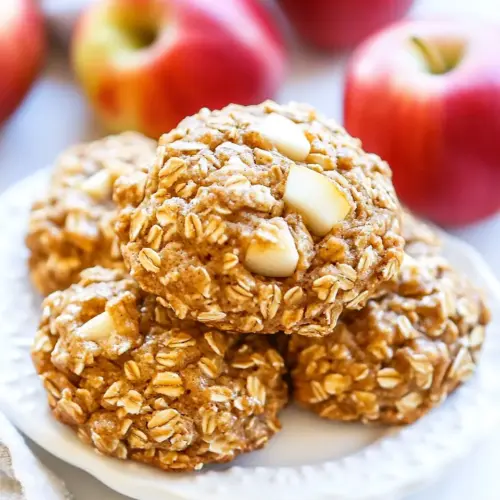
Apple Oatmeal Cookies
Apple Oatmeal Cookies are chewy, lightly spiced, and easy to make, blending oats, whole wheat pastry flour, and juicy diced apple into a comforting cookie. With a honey sweetened base and a simple vanilla glaze, these cookies are perfect for an easy snack or a cozy treat. Make a batch for an effortless, wholesome sweet that brings warm, familiar flavors to your day.
Equipment
- Mixing Bowl
- Small microwave safe bowl
- Wooden Spoon
- Rubber spatula
- Baking Sheet
- Parchment Paper
- Wire Rack
- Cookie Scoop
Ingredients
- 1 cup quick-cooking oats Provide chewy texture and whole-grain fiber while absorbing moisture; quick-cooking oats help bind the dough and give a tender crumb to the cookies. Offer mild nutty flavor that complements apple and cinnamon, and contribute bulk without weighing cookies down.
- 3/4 cup whole wheat pastry flour Add structure and lightness while keeping a whole-grain profile; whole wheat pastry flour gives a tender crumb due to its lower protein content. Contribute subtle nuttiness and pair well with oats and warm spices for a wholesome cookie base.
- 1 1/2 teaspoon baking powder Leaven the cookies slightly to create gentle lift and help make them less dense; baking powder produces tiny gas bubbles when heated. Balance the texture so cookies are soft rather than flat, while working with the egg for proper rise.
- 1 1/2 teaspoons ground cinnamon Provide warm, aromatic flavor that complements apples; ground cinnamon enhances the overall sweetness and adds depth to each bite. Mask any blandness from oats and flour and contribute to the classic apple-cookie profile.
- 1/4 teaspoon kosher salt Enhance overall flavor by balancing sweetness and highlighting other ingredients; kosher salt strengthens dough structure and controls fermentation of any leavening. Improve taste contrast so spices and honey are more pronounced without making cookies salty.
- 1/8 teaspoon ground nutmeg Contribute subtle warm, nutty undertones that enhance the apple and cinnamon flavors; ground nutmeg offers aromatic complexity in small amounts. Add depth without overpowering, making the cookie flavor more rounded.
- 2 tablespoons unsalted butter Add richness and tenderize the crumb while contributing buttery flavor; unsalted butter helps create a soft, slightly crisp edge when baked. Allow control over salt level in the recipe and help with moisture and mouthfeel.
- 1 teaspoon pure vanilla extract Boost overall sweetness and floral aroma while rounding flavors; pure vanilla extract enhances the perception of other ingredients and brings balance. Use sparingly to deepen the dessert-like character of the cookies.
- 1 large egg at room temperature Provide structure, moisture, and act as an emulsifier to bind wet and dry components; a room-temperature egg helps create a cohesive dough and contributes to tenderness. Aid in leavening slightly and improve texture and color when baked.
- 1/2 cup honey Sweeten naturally while adding moisture and a subtle floral flavor; honey keeps cookies soft and lends chewiness. Help brown the cookies and blend with spices and apple pieces for cohesive sweetness.
- 1 medium firm sweet apple, peeled, cored, and diced into small pieces (about 1 cup) Introduce fresh fruit flavor, moisture, and small pockets of tender texture; diced firm sweet apple gives bursts of juiciness and mild tartness. Add natural sweetness and complement spices while contributing to the cookie’s overall moisture balance.
- 1/2 cup powdered sugar Provide a fine, sweet coating or dusting for added presentation and sweetness; powdered sugar dissolves quickly for a smooth finish. Create a delicate sweetness that can balance tartness from the apple without altering dough texture.
- 1/4 teaspoon pure vanilla extract Enhance sweetness and aromatic complexity in the final dusting or glaze; pure vanilla extract deepens the powdered sugar flavor. Blend smoothly with sugar to create a simple glaze or dusting that ties together the cookie flavors.
- 1 -2 teaspoons milk Adjust consistency of glaze or dusting to desired thickness; milk thins powdered sugar mixtures for a drizzle or light coating. Contribute slight richness and help the glaze set to a glossy finish without changing cookie texture.
Instructions
- In a medium mixing bowl, whisk together the oats, whole wheat pastry flour, baking powder, cinnamon, salt, and nutmeg.: The aroma of cinnamon and nutmeg will hit first, warming the kitchen and signaling that you are building the flavor base. As you whisk, notice how the dry mixture loosens so it can incorporate the wet ingredients smoothly, which prevents clumps and uneven pockets of flour. This step matters because even distribution of leavening and spices ensures consistent texture and flavor in every cookie. A common mistake is rushing and leaving lumps, which can create dense spots. If your baking powder is old you may find the mix feels heavy, so check freshness beforehand.
- In a small, microwave-safe bowl melt the butter. Let cool for a few minutes, then whisk in the vanilla extract and egg. Once smooth, whisk in the honey until well combined.: As the butter melts you will smell its toasted notes, which enrich the overall profile. Cooling briefly prevents the egg from curdling when added, so the mixture stays smooth and silky. Whisking in the honey creates a glossy, homogenous wet mixture that will marry with the dry ingredients, promoting even moisture. If you add the egg to piping hot butter the egg can scramble, creating lumps, so patience here is key. The tactile smoothness of a well emulsified wet mix is a sign you are ready to combine with dry ingredients.
- Make a well in the center of the dry ingredients, then pour in the wet ingredients. With a wooden spoon or rubber spatula, stir just until the ingredients are combined and the flour disappears (do not over mix). Fold in the diced apples.: When you pour the wet into the well, the dough will start to come together quickly; you should hear gentle scraping and see glossy streaks vanish as you fold. The goal is an even, slightly sticky dough. Over mixing develops gluten and stiffens the cookie, causing a tougher bite, so stop when the last streak of flour is gone. Folding in the diced apple last preserves their shape and prevents them from breaking down and releasing excess moisture into the dough. A typical pitfall is vigorous stirring that bruises the apple pieces, which can lead to soggy cookies.
- Cover the bowl with plastic wrap and place in the refrigerator for 30 minutes to allow the dough to firm slightly.: Chilling firms the dough so cookies spread less in the oven and hold a pleasing domed shape. You will feel the dough tighten as it cools, which makes scooping and shaping cleaner and more uniform. This rest also allows the oats to hydrate mildly, improving chew without turning gummy. Skipping this step can result in flatter cookies and inconsistent baking, so set a timer and resist the urge to bake immediately.
- When ready to bake, preheat the oven to 325 degrees F. Line a large baking sheet with parchment paper or a silpat mat. With a cookie scoop or spoon, scoop the dough by generous tablespoons, then shape into slightly flattened balls. Arrange the cookies 2-inches apart on the prepared baking sheet.: The warm oven air will transform the dough, so a properly preheated oven ensures predictable spread and browning. Lining the sheet prevents sticking and gives you even bottoms. Slightly flattening the balls encourages even baking and a textured top that catches the glaze. Keep the spacing so hot air circulates around each cookie, avoiding merged edges. A common error is overcrowding the pan, which produces unevenly baked centers and edges.
- Bake for 10-12 minutes, just until the edges of the cookies appear dry and barely begin to brown. Let rest on the pan for 2 minutes, then transfer to a wire rack to cool completely.: As they bake you will notice the edges set first and take on a light golden tint, while the centers remain soft and slightly domed. That short rest on the hot pan continues gentle cooking and helps the cookies firm enough to move without breaking. Transferring too soon can cause collapse, and leaving them too long on the hot pan can over crisp the bottoms, so timing is important. The visual cue of dry edges is more reliable than an exact minute count, especially between ovens.
- While the cookies cool, prepare the glaze. In a small bowl, whisk together the powdered sugar, vanilla, and 1 teaspoon of milk. Continue adding milk, 1 teaspoon at a time, until desired consistency is reached. Drizzle over the cookies, let set for a few minutes, then enjoy!: The glaze comes together into a silky ribbon that you can control by adding milk slowly, which affects how it coats the cookie surface. A thicker glaze will sit on top, creating a bright, crackled sheen, while a thinner one will settle into crevices. The smell of vanilla will mingle with the spice aroma, elevating each bite. Avoid making the glaze too runny, or it will pool on the plate and not set properly on the cookie tops. Let the glaze set at room temperature for a few minutes before stacking to prevent sticking.
Notes
- Measure flour accurately by spooning it into the cup and leveling with a knife to avoid dry, crumbly dough.
- Room temperature egg mixes more evenly into the melted butter and honey, preventing tiny cooked egg bits in the dough.
- Use a cookie scoop for uniform cookies, which ensures even baking times across the tray.
- Pat the diced apple dry on a paper towel if it seems wet, to prevent excess moisture that could make the cookies soggy.
- Start with one teaspoon of milk for the glaze and add slowly, so the glaze does not become too thin to set properly.