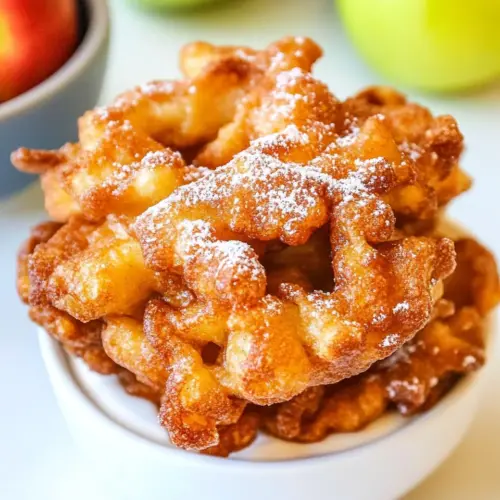
Apple Fritters
Apple Fritters are crispy edged and tender inside, studded with tart diced apples and kissed with cinnamon and a sweet vanilla glaze. This easy treat is great for weekend mornings or casual gatherings, delivering warm, comforting flavors with minimal fuss. Make a batch to impress friends or to enjoy a nostalgic bite that tastes like a bakery, right from your own kitchen.
Equipment
- Large Pot
- Thermometer
- Mixing Bowls
- Slotted spoon or spider
- Baking rack
Ingredients
- 1 cup all purpose flour Provides the structural base for the batter, supplying gluten and starch to create a tender but cohesive fritter dough; measure accurately for proper texture and rise. Works with leavening to form the framework that holds the apple pieces and keeps the fritters from becoming dense.
- 3 tbsp granulated sugar Adds sweetness and slight caramelization to the batter, balancing tart apples and enhancing overall flavor; dissolve well into the dry or wet ingredients for even distribution. Helps with browning during frying and contributes to the final taste profile.
- 2 tsp baking powder Leavens the batter by producing carbon dioxide when activated, helping fritters puff slightly and become light; mix evenly into the dry ingredients to avoid uneven pockets. Ensures a tender interior and prevents overly heavy, greasy fritters.
- 1 tsp ground cinnamon Provides warm, aromatic spice that complements apples and enhances the fritter's flavor profile; measure to taste but keep consistent for balanced spicing. Blends into the batter to give a classic apple-cinnamon character.
- 1/4 tsp salt Controls overall seasoning and balances sweetness, enhancing other flavors while regulating chemical reactions in the batter; use precisely to avoid overpowering taste. Helps strengthen gluten slightly and supports proper leavening action.
- 2 large eggs Contributes richness, structure, and moisture to the batter while adding fat and emulsification to bind ingredients; beat lightly for uniform incorporation. Helps create a tender crumb and supports browning during frying.
- 1/3 cup milk Adds liquid to hydrate dry ingredients and create a pourable batter; choose appropriate fat content for desired richness and consistency. Works with eggs and flour to achieve the correct batter viscosity for coating apples.
- 2 -3 Granny Smith apples, peeled, cored and diced into 1/4" size pieces approximately 2-3 cups Provides fresh, tart fruitiness and moisture while adding textural contrast; dice uniformly to ensure even cooking and distribution throughout the batter. Offers acidity and bite that balances sweetness and enhances overall flavor complexity.
- 3 -4 cups canola oil Serves as the frying medium to cook fritters evenly and achieve a crisp, golden exterior; heat to proper temperature and maintain it to prevent soggy or burned fritters. Choose a neutral oil with a high smoke point to preserve flavors and safety.
- 1 1/2 cups powdered sugar Creates a sweet glaze when mixed with milk and vanilla, adding a finishing layer of sweetness and visual appeal; sift if necessary to avoid lumps. Provides a smooth, glossy coating that complements the spiced apple interior.
- 1 tsp vanilla extract Imparts sweet, aromatic depth to the glaze or batter, rounding out flavors and enhancing overall taste; stir into the glaze base for even distribution. Complements cinnamon and apples while elevating the finished fritter's aroma.
- 3 tbsp milk Adjusts the glaze consistency to achieve a pourable or drippable texture, balancing thickness and transparency; add gradually until desired viscosity is reached. Helps the powdered sugar form a smooth coating that adheres well to the warm fritters.
Instructions
- Whisk together flour, sugar, baking powder, cinnamon, and salt in a large bowl. Set aside.: The dry mixture should smell faintly spiced and look homogenous with no streaks of flour remaining, which ensures even leavening and flavor; if you skip thorough whisking you risk pockets of baking powder or uneven cinnamon distribution, causing inconsistent rise and flavor.
- In a separate bowl, gently beat the eggs and milk together. Pour this into the dry mixture and stir until just combined. Fold in diced apples.: You should hear a slight scrape of spoon against bowl as you fold, and the batter should be lumpy not smooth, indicating you have not overworked the gluten; overmixing yields tough fritters, while underfolding leaves floury pockets, so stop when the batter looks cohesive and the apple pieces are evenly suspended.
- Heat the oil in a large pot to 375 degrees. Take care to monitor the temperature closely, if it's hotter, the outside of the fritters will cook too quickly, leaving the insides doughy. Carefully drop the batter by heaping spoonfuls into the hot oil. Do not overcrowd the pan, it's better to work in batches than to try and make these all at once. Depending on the thickness of your batter, you may want to flatten it out a little, so the fritter is not too thick. Cook to golden brown, approximately 2 minutes, then flip to cook the second side.: When the oil reaches temperature you will see a thin shimmer and a faint scent rather than smoke; if it is too cool the fritters will absorb oil and become greasy, too hot and the outside will darken before the inside cooks, so use a thermometer and adjust the burner to maintain 375 degrees.
- Remove each fritter as it is golden brown all over. The second side will likely take less time than the first. Transfer to a plate lined with paper towels or a baking rack over a cookie sheet.: Each spoonful should sizzle immediately and form a round, bubbly edge, a sound that signals proper frying; if the batter sinks without sizzling the oil is too cool, and if it spits violently the oil is too hot, either issue will affect texture and color.
- Prepare the glaze by whisking together powdered sugar, vanilla, and milk. Dip or drizzle glaze over each apple fritter then allow to cool slightly prior to serving.: The oil temperature will plunge if you add too many fritters, causing uneven cooking and greasy results; watch the surface for steady bubbling around fritters, which indicates consistent heat, and pause between batches to restore oil temperature.
- Depending on the thickness of your batter, you may want to flatten it out a little, so the fritter is not too thick: A slightly flattened shape encourages even cooking all the way through, and you should see the edges begin to set and color while the center still jiggles slightly; if fritters are too tall the exterior will darken before the center cooks, leaving a doughy interior.
- Cook to golden brown, approximately 2 minutes, then flip to cook the second side: Look for a warm honey color and listen for a steady, moderate sizzle; the second side typically takes less time because the fritter has already started to conduct heat inward, and flipping too soon or too often can deflate the fritter and interfere with browning.
- Remove each fritter as it is golden brown all over: Transfer to a plate lined with paper towels or a baking rack over a cookie sheet so excess oil drains and the base stays crisp; stacking fritters while hot traps steam and softens the crust, so give them space to rest.
- The second side will likely take less time than the first: Use visual clues more than a strict timer, noting the even golden color and a firmer feel when gently pressed; if you rely solely on time you may under or overcook depending on batch size and oil heat variability.
- Transfer to a plate lined with paper towels or a baking rack over a cookie sheet: The fritters should release a faint toasty aroma and feel slightly crisp when tapped; placing them directly on paper will capture excess oil, whereas a rack preserves the bottom crispness, which is preferable to prevent sogginess.
- Prepare the glaze by whisking together powdered sugar, vanilla, and milk: The glaze should be smooth and glossy, thick enough to coat a spoon yet thin enough to drizzle; lumps of sugar mean you need more whisking or a touch more milk, while an overly thin glaze will slide off instead of coating the fritters.
- Dip or drizzle glaze over each apple fritter then allow to cool slightly prior to serving: As the glaze hits the warm fritter it will set with a satin sheen and release a sweet vanilla scent; wait a few minutes so the glaze firms up slightly and the fritter interior remains warm without being scalding, and avoid glazing immediately if they are still soaking oil as the glaze will not adhere well.
Notes
- Swap fruit varieties: Try a mix of tart and sweet apples to modify sweetness and texture while keeping the batter the same.
- Adjust glaze thickness: Use a touch more milk for a drizzle or less for a coating that sets quicker on warm fritters.
- Control spice level: Increase or decrease the cinnamon to suit your preference, or add a pinch of nutmeg for a warmer note.
- Oil choice matters: Use neutral oils with high smoke points like canola to keep flavors clean and brownings even.
- Serving temperature: Serve slightly warm for the best contrast between crisp outside and tender inside, and rewarm gently if preparing ahead.