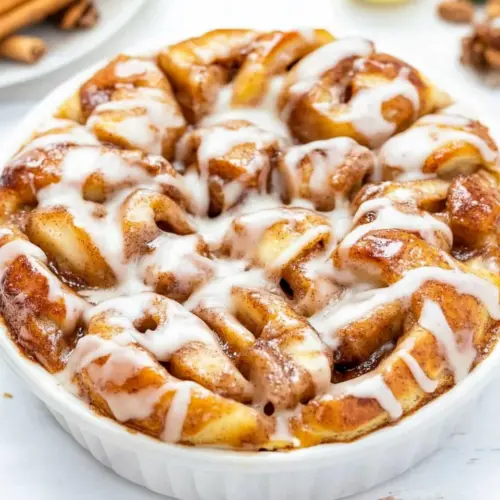
Apple Fritter Cinnamon Roll Bake
Apple Fritter Cinnamon Roll Bake blends soft, buttery cinnamon rolls with tender, spiced apples for a gooey, comforting brunch bake. It’s easy to assemble, carries warm cinnamon and caramel notes, and turns pantry staples into a crowd pleasing morning treat. Make it for weekend brunches or a cozy holiday breakfast to impress without the fuss.
Equipment
- 9 inch pie plate or pan
- Microwave
- Small Bowl
Ingredients
- 2 medium apples peeled, cored, and diced small (about 1 1/2 cups apples) Peel, core, and dice to provide tender fruit pieces that add natural sweetness and texture throughout the bake; small dice ensures even distribution and quicker cooking inside the rolls.
- 1 tablespoon brown sugar Sweeten and balance the apples with a touch of caramel-like flavor, helping to enhance the overall sweetness of the filling when combined with cinnamon and butter.
- 1/2 teaspoon ground cinnamon Season the diced apples to bring warm spice and aromatic depth, complementing the brown sugar and enhancing the classic apple-cinnamon profile in the dish.
- 1 tablespoon (5 ml) water Moisten the apple mixture to help dissolve the sugars and release juices, creating a saucy coating that helps the apples meld with the rolls as they bake.
- 1 can Pillsbury Grands! Cinnamon Rolls 5 rolls Provide the pre-made dough and cinnamon filling as the base structure for the bake, offering flaky layers and convenient cinnamon swirl elements that transform into golden rolls.
- 5 tablespoons unsalted butter melted Coat and baste the rolls and apple mixture with rich fat to promote browning, add a silky mouthfeel, and help the brown sugar caramelize for a fritter-like finish.
- 1/3 cup (67 g) packed brown sugar Create a sticky, caramelized layer beneath or on top of the rolls by melting into the butter and forming a sweet, gooey filling that mimics the texture of apple fritter glaze.
- 1 tablespoon (5 ml) heavy whipping cream or milk optional Add optional richness and slight creaminess to the glaze or sauce, smoothing flavors and helping to create a glossy, pourable finish when combined with the brown sugar and butter.
Instructions
- Preheat oven to 350°F. Spray a 9" pie plate or pan with nonstick cooking spray.: As you preheat, notice the kitchen warming up and the anticipation building. A properly preheated oven ensures even baking and helps the torn cinnamon rolls set as they soak up butter and apple juices. You should feel and smell a faint warmth from the oven once it reaches temperature, and the sound of a fan cycling can be reassuring. One common mistake is not allowing the oven enough time to fully preheat, which can cause the center to remain undercooked while the edges overbrown. Ensure your pan is prepared so you can assemble quickly once the apples are ready, because timing matters to capture the right texture.
- Place small diced apples, brown sugar, ground cinnamon, and 1 tablespoon of water in a small bowl. Stir. Cover loosely with plastic wrap and cook on high power for 2-3 minutes, or until apples are just slightly translucent. Drain well.: When you microwave the apples with sugar and cinnamon , steam rises and the kitchen fills with a spicy, sweet scent that hints at the finished bake. You want the pieces to be tender but not mushy, so watch for the translucent change in the fruit; that visual cue tells you they are warmed through. After draining, the pieces will glisten but should not be swimming in liquid. A common error is overcooking and ending up with mush, which will collapse the structure inside the casserole. The why here is simple, softened apples release sugars that meld with the brown sugar and create a syrup that soaks into torn dough, giving you those jam like pockets rather than raw fruit.
- While the apples are cooking, cut each cinnamon roll into 6 pieces. They’ll fall apart a little, that’s okay. Sprinkle the pieces evenly in the prepared pan. Once the apples are done, drain them well and sprinkle them over the cinnamon roll pieces.: As you tear the cinnamon rolls , notice the soft dough and the swirls of cinnamon within each piece. Spread them in the pan so they create an even base and pockets for the warm apples to nestle in. This distribution helps each serving have a good ratio of dough to fruit. If you crowd the pan unevenly, some sections can overbake while others stay underdone. The goal is a consistent layer that bakes into tender, connected sections with fruit tucked throughout, rather than a few dense clumps or large empty spaces.
- Stir the melted butter and brown sugar together, then pour over the top of the apples and cinnamon rolls. Bake for 28-33 minutes or until cooked through in the center.: Pouring warm butter mixed with brown sugar over the assembly creates a glossy, caramel like coating that will bubble and thicken as it bakes. You should hear a faint bubbling and see edges turn golden brown, while the center should look set and slightly puffed. The aroma will shift toward caramel and toasted sugar as the sugars brown. A typical pitfall is skipping the even pour, which can leave dry patches; try to distribute the mixture so everything gets a kiss of butter and sugar. The specific bake window allows the interior to cook without excessively crisping the top, producing a moist center and attractively caramelized edges.
- Just before serving, place the icing that came with the cinnamon rolls in a small bowl. Heat for about 10 seconds so it’s pourable. Stir in heavy whipping cream (or milk) to make it more of a glaze, then pour over the top of the casserole. Serve warm or room temperature.: Warming the packaged icing briefly and thinning it with a splash of heavy whipping cream or milk yields a silkier glaze that pours into crevices and forms a glossy finish. The aroma of sweet icing mixing with baked apples is irresistible, and the sheen on top makes the bake visually inviting. A mistake to avoid is overheating the icing, which can separate; 10 seconds is usually enough to loosen it. Pour slowly so the glaze settles into nooks, enhancing both appearance and flavor with each bite becoming pleasantly sweet and smooth.
- Store tightly covered in refrigerator for up to 2 days.: After cooling, the texture changes slightly as the sugars settle, and refrigeration helps preserve freshness. When chilled, the bake firms and can be sliced, and reheating in a warm oven or microwave brings back the gooey texture. Avoid leaving it uncovered as it can dry out, and a common slip is storing it at room temperature too long which shortens its shelf life. Proper storage keeps it safe to enjoy for the next day and helps the flavors meld even more.
Notes
- Use a different size of cinnamon rolls If you use a regular can of cinnamon rolls rather than the larger Grands, plan on about one and a half cans to achieve a similar depth in the pan, so the final texture is still lush and not overly thin.
- Add nuts for crunch Add chopped nuts mixed with the apples before baking if you want a textural contrast. They toast in the oven and add a pleasant crunch that offsets the soft, gooey interior.
- Try a shallower or deeper dish Changing pan depth will alter bake time. A shallower dish will crisp more at the edges, while a deeper pan yields a thicker, more pudding like center, so adjust baking time and check doneness visually.
- Swap milk for cream in the glaze Using heavy whipping cream creates a richer, silkier glaze, while milk keeps it lighter. Either will make the packaged icing more pourable and glossy.
- Double the apples for more fruit If you prefer a fruit forward bake, increase the apples and monitor the bake time. More fruit adds moisture, so watch the center for doneness and allow for a bit more time if needed.