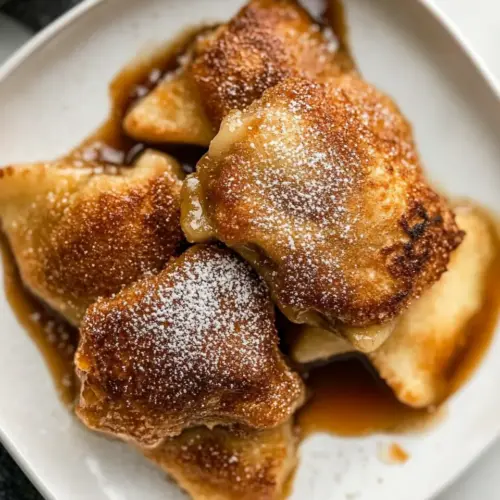
Apple Dumplings
Apple Dumplings is a cozy, easy dessert featuring tender apple slices wrapped in flaky crescent rolls, bathed in a buttery, cinnamon spiced syrup with a bright finish from Sprite. This comforting treat delivers warm caramel notes and a soft interior, perfect for an easy weeknight dessert or a simple holiday finale, and it always impresses without fussy technique.
Equipment
- 9×9 inch Baking Dish
- Medium Saucepan
- Oven
Ingredients
- 1 large apple Peel and core before slicing to create tender, sweet pieces that release moisture and provide the primary fruit flavor in the dumplings. Use a firm variety for the best texture so slices hold their shape during baking. Toss with sugar and spices to enhance natural sweetness and promote caramelization.
- 1 Crescent rolls Unfold and wrap around each filled apple slice to form a neat pocket that bakes into a flaky, golden crust. Provide structure and a buttery, slightly salty contrast to the sweet filling. Choose pre-made crescent dough for quick assembly and consistent results.
- 1/2 cup butter Melt and brush over the wrapped dumplings to encourage browning and add rich, silky mouthfeel that complements the pastry. Combine with sugars to create a syrupy coating that soaks into the crust during baking. Use unsalted or adjust other salt accordingly.
- 1/2 cup granulated sugar Sprinkle over apple slices and into the sugar-butter mixture to sweeten the fruit and promote caramelization as it bakes. Balance tartness from the apple and help create a sticky, glossy sauce. Adjust quantity slightly for desired sweetness.
- 1/2 cup brown sugar Add to the filling or sauce to deepen flavor with molasses notes and create a richer, more complex caramel when combined with butter and heat. Contribute moisture and a darker color to the finished dumplings. Mix thoroughly to ensure even distribution.
- 1 teaspoon cinnamon Sprinkle into the filling to impart warm, aromatic sweetness and enhance the apple's flavor with classic spiced notes. Work with the other spices to create a balanced spice profile without overpowering the fruit. Use as a primary warm spice in the mixture.
- 1/4 teaspoon nutmeg Grate or measure carefully to add a subtle, earthy warmth that complements cinnamon without dominating the profile. Sprinkle lightly in the filling or sauce to contribute depth and a nuanced autumnal character. Small quantities are effective due to its potency.
- 1 pinch cloves Pinch into the spice mix to add an aromatic, slightly bitter accent that rounds out the sweet and warm spices. Use sparingly to avoid overwhelming the blend, providing a traditional spiced-dessert complexity. Combine with cinnamon and nutmeg for balanced flavor.
- 1 teaspoon vanilla extract Stir into the butter-sugar sauce to lift flavors with sweet floral notes and enhance the overall aroma of the dumplings. Add towards the end of mixing to preserve its delicate profile while ensuring even distribution. Use a teaspoon for a subtle but noticeable boost.
- 8 ounces Sprite Pour to create a light, fizzy syrup that reacts with the sugars and butter, helping to form a glossy, slightly effervescent sauce as the dumplings bake. Provide moisture and a hint of citrus sweetness that brightens the dessert. Incorporate after mixing sugars and butter for best effect.
Instructions
- Preheat the oven to 350 degrees Fahrenheit. Spray a 9×9 inch baking dish with pan spray and set aside.: As the oven warms, you should feel a small pulse of kitchen heat and smell the faint metallic warmth from the racks if the oven is older. Preheating ensures the crescent rolls start baking immediately on contact, giving you that golden exterior rather than a slow rise that can make them doughy. I like to check the dial and give the oven an extra five minutes after it clicks so the temperature evens out. A common mistake is skipping preheat, which leads to inconsistent browning and longer cook times.
- Peel and core 1 large apple. Slice into 8 equal slices.: When you peel the apple , the aroma will brighten; fresh peeled fruit smells crisp and slightly floral. Use a steady hand to core the fruit so each slice has no seeds and then cut into even wedges so they cook uniformly. If slices vary wildly in thickness, some pieces will become mushy while others stay firm. To avoid that, I line the slices on a board and visually match them before placing them in the dough.
- Wrap each apple slice in one section of the 1 Crescent rolls dough, starting on the wide end.: As you wrap, you will feel the dough stretch and then spring back; handle it gently to keep it intact. The wide end provides a natural pocket to enclose the apple , and wrapping from wide to narrow helps seal the fruit so juices stay inside. The surface of the dough should be slightly cool to the touch, not tacky; if it is too warm, chill it briefly. A frequent error is over stretching the dough which causes it to tear and leak juices during baking.
- Lay the wrapped slices in the prepared pan, leaving about 1 inch between each dumpling.: Positioning them with space allows hot air to circulate and encourages even browning. As you arrange them, you might hear the soft thunk of dough meeting dish, and the tray will look orderly and inviting. If packed too tightly they steam instead of crisping, producing soggy sides. I recommend spacing them so they have room to puff and develop a golden edge.
- In a medium saucepan add 1/2 cup butter, 1/2 cup granulated sugar, 1/2 cup brown sugar, 1 teaspoon cinnamon, 1/4 teaspoon nutmeg, and 1 pinch cloves. Heat over medium heat until thick and bubbling. Remove from heat and stir in 1 teaspoon vanilla extract.: As the butter melts, you will hear a faint sizzle and smell rich, toasty notes as the sugars dissolve. Watch for the mixture to reach a steady, active bubble and thicken slightly, signaling the sugars are incorporated and the sauce will coat the back of a spoon. Remove it from heat before it darkens significantly to avoid a burnt flavor, and add the vanilla extract off the heat so its aroma remains bright. A common trouble spot is boiling too vigorously which can make the sauce too thick or caramelized.
- Pour the butter/sugar mixture over the dumplings, being sure to cover the top of each one.: When you spoon the warm syrup, you will hear a gentle glug and see the sauce gleam on the dough, creating a lacquered look. Coating the tops helps the crescent rolls develop glossy color and ensures the sugars seep down into the pan for that bottom syrup. Take care not to swamp the pieces; a steady, even pour is best. If you dump it all in one spot you risk uneven soaking which leaves some dumplings dry and others oversaturated.
- Pour 8 ounces Sprite into the pan, being careful to not pour on top of the dumplings.: Adding the Sprite at the edge creates a gentle pool that will bubble up and thinly surround the dumplings, supporting the syrup without washing the tops. You will notice tiny bubbles as the soda meets the warm sauce, and that effervescence helps keep the final syrup lighter. If you accidentally pour over the tops, dab gently with a paper towel to reposition any displaced dough. Pour slowly to avoid splashing the sugary mixture.
- Bake for 35-40 minutes, until the dumplings are a deep golden brown and the liquid in the pan has thickened into a syrup. Serve warm with vanilla ice cream.: While baking you should hear a faint crackle as the dough browns and smell the sugars caramelizing into a nutty, toffee like scent. The tops will take on a deep golden color, and the liquid should reduce to a glossy, spoonable syrup that clings to a spatula. Remove them when the centers of the dumplings feel tender to a fork and the edges are browned, because overbaking can dry the dough and underbaking leaves dough pale and raw. Let the pan rest briefly before serving so the syrup sets slightly, and top with ice cream if desired for a pleasing contrast of hot and cold.
Notes
- Chill the dough if it becomes sticky, wrap the crescent rolls gently around the apple slices; cold dough is easier to handle and tears less often, which helps keep juices contained during baking.
- Adjust the spice level to taste, if you prefer a bolder profile add a touch more cinnamon or an extra pinch of nutmeg, but add increments gradually since spices intensify when heated.
- Watch the syrup closely, when bubbling it should thicken to a glossy coat, remove from heat before it darkens to avoid a burnt flavor that can overwhelm the fruit.
- Pour the soda carefully, adding the Sprite to the pan edge helps maintain the appearance of the tops and ensures the syrup forms evenly under the dumplings.
- Serve warm with a cool accompaniment, pairing the hot dumplings with a scoop of ice cream offers contrast in temperature and texture, highlighting the syrup and the tender apple.