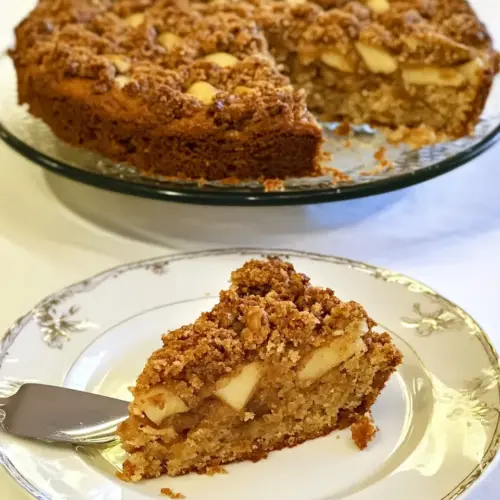
Apple Cinnamon Streusel Cake
Apple Cinnamon Streusel Cake is a cozy, easy to make dessert bursting with warm cinnamon and tender apple pieces, topped with a crunchy oat and pecan streusel. This moist cake uses simple pantry ingredients and yields a comforting treat perfect for brunch or a casual gathering, promising flaky streusel contrast and homey flavors that invite seconds.
Equipment
- Mixing Bowl
- Whisk
- 8 inch cake pan
- Small Bowl
- Oven
Ingredients
- 1 1/4 cups white whole-wheat flour Provide a sturdy, slightly nutty base for the cake and contributes whole-grain texture; measure accurately and spoon into the cup for even distribution. Combine with wet ingredients until just incorporated to avoid overmixing and maintain a tender crumb.
- 1 teaspoon baking powder Leaven gently by creating small air pockets that help the cake rise; sift or whisk into the dry mixture for even distribution. Reacts with acidic elements for lift and lightness in the finished cake.
- 1/2 teaspoon baking soda Activate quickly to increase lift and help the cake rise, especially when combined with acidic components in the batter. Use sparingly and ensure even mixing to avoid bitter pockets of soda.
- 1 teaspoon cinnamon Add warm, aromatic flavor and pair well with apples to enhance overall taste; sprinkle into the flour mixture for an even cinnamon presence. Balances sweetness and complements the cake's spice profile without overpowering.
- 1/2 teaspoons salt Season subtly to enhance all flavors and control sweetness perception; dissolve with the dry ingredients for uniform seasoning. Maintain specified quantity to avoid oversalting the delicate cake.
- 2 cups apple pieces thinly diced (Fuji or Gala are good choices) Provide moistness, natural sweetness, and tender apple texture while contributing fresh fruity flavor; choose firm apples and dice thinly for even distribution. Fold into the batter gently to prevent apple pieces from sinking and to keep texture consistent.
- 1/2 cup canola oil Introduce neutral fat to create moistness and tenderness while helping carry flavors and improve mouthfeel; combine with honey before adding to dry ingredients for smooth incorporation. Use measured amount to maintain the intended crumb and richness.
- 1/2 cup honey Sweeten naturally while adding moisture and slight floral notes; mix with oil for an even liquid sweetener that helps bind ingredients. Adjust carefully if substituting to keep batter consistency balanced.
- 1 eggs lightly beaten Bind ingredients and add structure through proteins while contributing richness and moisture; beat lightly before adding to prevent streaks. Incorporate just until combined to avoid toughening the cake.
- 1 teaspoon vanilla Enhance aromatic complexity and round out flavor with warm vanilla notes; stir into the wet mixture for even distribution. Use pure vanilla for best flavor and avoid overuse which can mask other delicate flavors.
- 1/2 pecans diced Contribute crunchy texture and toasty nut flavor to the cake or streusel topping; dice to the specified size for pleasant bite without large chunks. Fold in gently where indicated to prevent nuts from sinking and to maintain distribution.
- 2 tablespoons white whole-wheat flour Help form a crumbly streusel texture by adding small amount of flour to the topping; mix with oats, nuts, and sweetener for structure. Prevents the streusel from becoming too loose while providing a slight doughiness.
- 1/4 cup old-fashioned oats Add hearty chew and nutty oat flavor to the streusel while absorbing some liquid to create texture; use old-fashioned oats for good structure. Combine with pecans and flour to achieve a balanced crumble topping.
- 1/4 cup pecans finely diced Provide extra crunchy pecan pieces and intensified nutty flavor for the topping; finely dice to blend smoothly into the streusel. Sprinkle evenly over the top so each bite includes a bit of toasted nut character.
- 1 teaspoon cinnamon Introduce an additional touch of warm spice specifically to the streusel for enhanced aroma and cohesion with the cake; mix into the topping ingredients for consistent spice. Keeps the flavor profile unified between cake and topping.
- 1 tablespoon honey Sweeten and help bind streusel components together while adding a hint of floral sweetness; drizzle and mix into the topping to achieve clumping and shine. Use specified amount to avoid making the streusel soggy.
Instructions
- Preheat oven to 325 degrees.: The warm scent of the oven turning on is the first cue that baking is starting, and preheating ensures even rising and consistent crumb. You should feel the oven heat stabilize before you put the pan in, as a cold start can lead to uneven lift and a dense center. A common mistake is assuming the oven is hot enough immediately, so give it time to reach a steady temperature, and if your oven runs cool consider using an oven thermometer to confirm accuracy.
- In a small bowl combine streusel ingredients, set aside.: As you mix the white whole-wheat flour , old-fashioned oats , pecans , cinnamon , and honey for the streusel, notice how the oats and nuts create a rough, crumbly texture that will crisp up in the oven. This step builds contrast, and resting the streusel allows the flavors to marry while you prepare the batter. Avoid overworking this mix or it will become paste like instead of crumbly, which undermines the desired crunch.
- Whisk together ingredients in a small mixing bowl. In a large mixing bowl add canola oil, honey, egg, and vanilla, beat on medium speed until ingredients are well combined, about two minutes.: The act of whisking dry components creates a uniform base so pockets of baking powder or cinnamon do not concentrate. You'll see the mixture lighten in color and texture as air is incorporated, which helps a tender crumb. A frequent misstep is skipping this step, leading to inconsistency in flavor or rise, so take a moment to whisk until evenly blended.
- Add apples to dry ingredients, stir until combined. Add apples and dry ingredients to wet ingredients, stir to combine.: When you beat the canola oil , honey , egg , and vanilla , the batter will become glossy and slightly thickened, and the uniform emulsion of oil and honey helps the cake stay moist. Listen for a subtle change in sound as the mixture becomes smoother, and look for a sheen that indicates proper blending. A common issue is under mixing here, which can leave the cake uneven in texture, but over mixing at high speed can introduce too much air and cause cracking, so aim for a steady medium pace.
- Lightly oil an 8” round cake pan or 8” x 8” square cake pan. Pour batter into the pan, evenly sprinkle streusel over cake batter. Loosely cover with foil after 30 minutes of baking to prevent streusel from browning too quickly. Bake 45-50 minutes or until edges begin to brown and pull away from the side of the pan.: Tossing the diced apple with the dry mix helps distribute fruit so it does not sink to the bottom during baking. You will notice the apple pieces are coated and slightly dampened by the flour mixture, which reduces juice leaching in the pan. If you skip this coating step, apples often concentrate at the bottom, creating an uneven texture, so gently stir until each piece is evenly dusted.
- Allow to cool before serving.: As you fold the dry mixture and coated apple into the wet bowl, watch for a uniform batter streaked with apple, not a dry floury base. The sound will be a gentle scraping and the batter should look cohesive and slightly thick. Over stirring can lead to a tough cake because of gluten development, so stir just until you no longer see flour pockets; under stirring leaves uneven flavor pockets.
- Lightly oil an 8” round cake pan or 8” x 8” square cake pan.: Brushing the pan with a thin coat of oil ensures the cake releases cleanly and promotes even browning at the edges. I rub a little oil across the bottom and sides, and sometimes line the bottom with parchment for extra insurance. A common oversight is heavy greasing, which can cause oil pooling and greasy edges, so apply just a light, even layer.
- Pour batter into the pan, evenly sprinkle streusel over cake batter.: When the batter is in the pan you will see a glossy top ready to accept the streusel; sprinkle the topping in an even layer so every slice gets some crunch. Pressing the streusel is unnecessary and can compress the batter, so gently scatter and leave it airy. If you crowd the streusel into clumps, it can sink or burn in spots, so distribute it loosely for the best contrast.
- Loosely cover with foil after 30 minutes of baking to prevent streusel from browning too quickly.: At about 30 minutes the top will have set and the streusel may start to darken, so tenting foil protects the topping while the center continues to bake. You will notice a slowing of browning and the cake continuing to rise steadily after foiling. A mistake here is sealing the foil tightly, which traps steam and can soften the streusel, so keep the foil tented, not wrapped.
- Bake 45-50 minutes or until edges begin to brown and pull away from the side of the pan.: As the cake finishes, listen for diminished bubbling and look for golden edges that gently pull away, a sign the interior is set. You might also test with a toothpick in the center; a few moist crumbs are fine, but wet batter is not. Overbaking will dry the cake and make it crumbly, while underbaking leaves a gummy center, so rely on the edge cues in addition to a brief toothpick check.
- Allow to cool before serving.: Cooling lets the crumb settle and the crumb and streusel firm up so slices hold their shape, and it concentrates the flavors for a sweeter tasting bite. You will see steam fade and the top become slightly more stable to the touch. Serving too hot can cause the cake to fall apart and a washed out texture, so give it time to rest for cleaner slices and better mouthfeel.
Notes
- Swap apple varieties: Try a mix of tart and sweet apples to create balanced flavor, and expect slightly different moisture levels which may affect baking time by a few minutes.
- Adjust sweetness: Reduce the honey by one to two tablespoons if you prefer a less sweet cake, and watch the texture as honey also contributes to moisture.
- Nut free streusel: Omit the pecans and increase the oats slightly to maintain texture, noting the topping will be milder in flavor.
- Make mini cakes: Divide batter into a muffin tin for portable portions, reducing baking time and checking for doneness earlier to avoid drying out.
- Use brown rice or gluten free blend: Substitute a 1 to 1 gluten free flour blend for the white whole-wheat flour if needed, and expect slight differences in crumb and firmness.