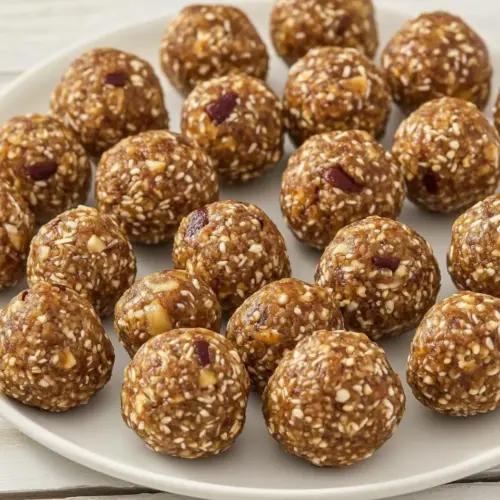
Apple Cinnamon Energy Balls
Apple Cinnamon Energy Balls are chewy, crunchy, and naturally sweet bites made with dates, freeze dried apples, and toasted walnuts. Quick to assemble and travel friendly, they make an easy snack for busy days or a nourishing pre workout boost. Try them for a fuss free energy boost that keeps you going.
Equipment
- Food Processor
- Mixing Bowl
Ingredients
- 11 each dates, Medjool Soak and blend to bind the mixture while adding deep caramel-like sweetness and moist texture to the balls. Medjool dates also provide natural sugars and fibrous body that help form cohesive energy bites without additional sweeteners.
- 1 cup apples, dried Add chewy concentrated apple flavor and natural fruit sweetness while contributing pleasant chew and subtle tartness. Dried apples intensify the fruit profile and help balance the dates with a lighter, bright note in each bite.
- 1/2 cup oats, dry Provide hearty structure and subtle nutty flavor while absorbing moisture to create a firmer, energy-dense texture. Dry oats also add slow-release carbohydrates and mild thickness that keeps the balls together during rolling.
- 1/2 cup pieces or chips walnuts Contribute crunchy texture and rich, buttery flavor while supplying healthy fats and added protein to the snack. Walnut pieces or chips enhance mouthfeel and offer an earthy counterpoint to the sweet fruit elements.
- 1/4 teaspoon cinnamon Deliver warm aromatic spice and a hint of earthiness that elevates the overall flavor profile with minimal quantity. Cinnamon ties the sweet and nutty components together and enhances perceived sweetness without extra sugar.
Instructions
- Add the oats, walnuts, cinnamon, and freeze-dried apples to a food processor, and pulse until the texture turns to a medium-coarse meal. Dump the dry ingredients into a mixing bowl.: You will notice a fragrant, toasty aroma as the walnuts break down and the cinnamon becomes airborne. The sound is a steady, light patter rather than a roar, indicating coarse rather than powder fine milling. Visually, you want a sandy texture with visible bits of walnut and flecks of apple, not a smooth flour. This coarse meal helps the mixture absorb moisture from the dates and prevents the final balls from becoming gummy. A common mistake is over-processing into a powder which makes the mixture dry and crumbly during binding. If that happens, reserve a small piece of date to reintroduce moisture later, or pulse less the next time.
- Remove the pits from the dates, and add them to the food processor. Run the processor for about two minutes, until the dates clump together in a single sticky ball. Place the ball in the mixing bowl with the remaining ingredients.: As the dates break down, you will hear the machine shift from crunching to a smoother, chunkier hum, and a glossy, sticky mass will form. The smell becomes deeply caramelized, almost toffee like. This sticky ball is crucial because it is the glue for everything else. If the dates are too dry the ball will not form, which is the most frequent pitfall. In that case, soak the dates in warm water for ten minutes and drain well before processing. Be mindful of the two minute guideline, as over-processing can melt the mixture and make it overly soft.
- Coat the date ball with the dry meal, then use your hands to continue kneading the dry ingredients into the sticky dates, until well combined.: When you start working by hand you will feel the texture change from slick and sticky to tacky and cohesive. The dry meal should cling to the surface, making it easier to manipulate. Trust the tactile cues here, your hands will tell you if the balance is right, with the mixture holding together without feeling wet. The scent will blend the nutty and fruity notes into a unified aroma. One trap is not kneading enough which results in pockets of dry oats; take a minute longer to ensure even distribution. Wash your hands first and consider a light dusting of oats on your palms to prevent sticking.
- Roll the mixture into balls. We like them just under an inch in diameter. Store in an airtight container at room temperature up to a week, or refrigerate or freeze for up to a month.: Rolling transforms texture into shape. Press gently to form compact spheres just under an inch in diameter for the ideal mouthfeel, which is firm yet yielding. You should feel slight resistance when compressing, and the surface will be matte with tiny flecks of apple and walnut visible. If the mixture is too sticky and won’t roll, chill it for fifteen to twenty minutes to firm up. Too much pressure will compact them into dense lumps, so aim for a light but steady roll. Keep a small bowl of water nearby to dampen your fingertips if sticking becomes a problem.
- Store in an airtight container at room temperature up to a week, or refrigerate or freeze for up to a month.: Storage changes the texture and longevity. At room temperature the balls remain pliable and ready to snack, while refrigeration firms them slightly, offering a chewier bite. Freezing preserves them for longer, and thawing brings back most of the original texture, though they may be a touch moister. Be sure they are fully cooled and dry before sealing to prevent condensation. A common oversight is storing them warm which traps steam and can cause a sticky, overly soft end product. Label containers with the date so you know when to use them.
Notes
- Swap the nuts carefully You can substitute the walnuts with other tree nuts if desired, but consider how the flavor will shift. Walnuts bring a slightly bitter, earthy note that balances the sweetness, whereas almonds or cashews will add creaminess. Toasting any nut briefly brings depth, however if you use a milder nut you may notice the overall taste skewing sweeter.
- Adjust the apple texture If you prefer chew over crisp, try a softer dried apple, but reduce the quantity slightly to avoid moisture imbalance. The crisp freeze dried version provides a pleasing contrast, while soft apples make the balls more cohesive and cake like.
- Control sweetness naturally Because dates are quite sweet, taste the mixture before rolling. If it is too sweet for your preference, add a bit more oats or walnuts to mellow the profile without adding sugar.
- Make them travel friendly To prevent sticking when transporting, chill the balls for at least thirty minutes and pack them in a single layer separated by parchment. This keeps them intact and easy to portion on the go.
- Batch and freeze These freeze well individually on a tray, then transfer to a sealed container. Freezing preserves freshness for up to a month and is perfect for prepping snacks ahead for busy weeks.