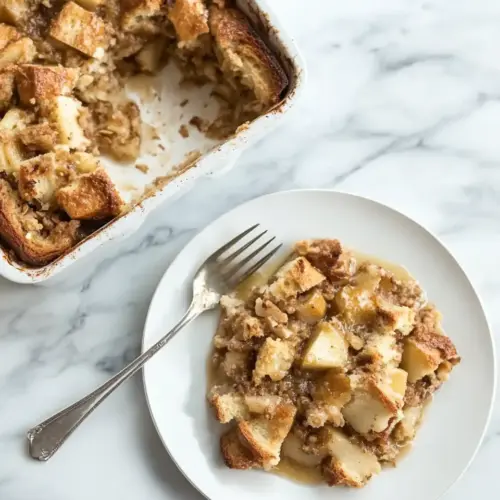
Apple Cardamom Bread Pudding
Apple Cardamom Bread Pudding is a creamy, warmly spiced baked classic with tender apple pockets and a custardy texture. This easy to make comfort dish works as a cozy breakfast or light dessert, offering aromatic cardamom and cinnamon notes. Perfect for an easy weeknight treat or a relaxed brunch, it invites you to bake once and enjoy leftovers through the next day.
Equipment
- Baking dish 8 x 8
- Whisk
- Mixing Bowl
Ingredients
- 6 slices whole-wheat bread (we like Dave's Killer Bread) Toasted or slightly stale slices provide structure and texture to the pudding; soak them well so they absorb the custard and hold together during baking. Opt for whole-wheat for nuttier flavor and added fiber, and tear or cube evenly to ensure uniform soaking. Press gently into the dish to create layers that will set into moist, hearty bread pudding.
- 1 1/2 cups coconut milk reduced-fat, or milk of your choice Creamy reduced-fat coconut milk contributes richness and subtle coconut notes while keeping the custard lighter than heavy cream; use full-fat if you want an ultra-rich result. Warm slightly before mixing to help dissolve spices and blend smoothly with eggs and applesauce. Adjust type of milk based on dietary needs while maintaining enough liquid to properly hydrate the bread.
- 3 eggs large, lightly beaten Lightly beaten large eggs act as the primary binder and set the custard, giving the pudding its sliceable, custardy texture once baked. Beat just until combined to avoid excess air, which can make the pudding overly spongy. Ensure eggs are room temperature to incorporate uniformly with the milk and applesauce.
- 1 cup applesauce unsweetened Unsweetened applesauce adds moisture, natural sweetness, and apple flavor while reducing the need for added sugar; it also contributes to a tender crumb and helps keep the pudding moist. Choose unsweetened to control sweetness level, and stir well so it disperses evenly through the custard. It complements the fresh apples, reinforcing the overall apple profile.
- 3/4 teaspoon ground cardamom Ground cardamom provides warm, floral-spicy complexity that elevates the apple and cinnamon flavors without overpowering them; measure carefully as it is potent. Whisk into the custard mixture so the aroma distributes evenly throughout the pudding. Consider adjusting slightly to taste if you prefer a more pronounced cardamom character.
- 1 teaspoon ground cinnamon Ground cinnamon offers classic warm sweetness and pairs beautifully with apples and cardamom, enhancing the overall flavor profile. Mix thoroughly into the milk-egg mixture to ensure consistent spice in every bite. Use high-quality cinnamon for a brighter, more aromatic result.
- 1/4 teaspoon ground nutmeg Ground nutmeg lends a subtle, nutty warmth and depth that rounds out the spice blend, providing aromatic background notes. Grate fresh if possible for the best flavor, and add sparingly because it can dominate when overused. Blend into the custard so its flavor permeates the pudding evenly.
- 1 cup apple peeled, cored, and chopped Peeled, cored, and chopped apple provides fresh texture, pockets of juiciness, and pronounced apple flavor that contrasts the soft bread. Choose a firm variety like Granny Smith or Honeycrisp for balance of tartness and texture, and chop uniformly so pieces bake evenly. Toss with a little cinnamon if desired before folding into the soaked bread.
Instructions
- Preheat the oven to 325° F. Grease an 8 x 8 baking dish with nonstick spray and set aside.: You will smell a faint warmth as the oven comes to temperature, which helps the custard start cooking evenly when it goes in. Preheating ensures the edges set at the same rate as the center, preventing an undercooked middle and overbrowned rim. If the oven is not fully preheated the bake time can extend significantly, so always wait until the temperature stabilizes. A common mistake is placing the dish in an oven that is still warming, which leads to uneven texture and longer baking time.
- Cut your bread into 1-inch cubes and place them in the prepared baking dish.: The cubes should be uniform so each piece soaks up custard consistently, creating a pleasing mosaic of texture. As you cut the bread you will notice the crumb density, and slightly stale slices will produce the best structure. Crowding the dish can prevent liquid from penetrating all pieces, so arrange cubes in a single even layer rather than tightly packed clumps.
- Meanwhile, in a large bowl, combine the coconut milk, eggs, applesauce, cardamom, cinnamon, and nutmeg. Beat the mixture with a whisk until everything is well combined.: The aroma of cardamom and cinnamon will become noticeable as you whisk, and the mixture should look homogenous and slightly glossy. This step is crucial to distribute spice and ensure the custard sets uniformly. Overwhisking can incorporate too much air, creating bubbles that alter the texture, so whisk just until smooth.
- Fold the apples into the mixture before pouring the contents over the bread cubes. Press the cubes down into the mixture to make sure each one soaks up the liquid.: You will hear a gentle plop as apple pieces sink, and visually you should see the custard fill gaps between cubes. Pressing ensures the bread absorbs evenly, which is why I press down with the back of a spoon or my hands covered in plastic wrap. Not pressing enough can leave dry pockets, while pressing too hard can crush the cubes and result in a denser set.
- Bake for 45 minutes, until the pudding is set and no longer jiggles when you shake the pan. You can also insert a knife into the middle of the pudding to make sure it comes out clean.: During baking the surface will turn a light golden color and the scent of spices will intensify. Listen for a faint bubbling sound at the edges as the custard comes to set. The center should feel firm when nudged and a skewer should come out mostly clean, perhaps with a few moist crumbs. Baking too little leaves a runny center, while baking too long dries the custard and makes the texture rubbery.
- Allow the pan to cool on a baking rack for at least 15 minutes before slicing.: Cooling lets the custard finish setting and makes for neater slices. You will notice steam easing away and the aroma will mellow. Cutting immediately can cause the pudding to break apart, so patience yields cleaner presentation. A mistake people make is slicing while piping hot, which leads to a loose, soupy interior.
- This pudding can be served hot or cold. Store it in the refrigerator (covered) for up to two days.: When served warm you will experience the fullest aroma and a tender, creamy mouthfeel. Chilled slices are firmer and great for packing or preparing ahead. Refrigeration stabilizes the custard but can dull some of the spice perfume, so I briefly reheat slices if I want that freshly baked scent. Be careful not to overheat in the microwave which might make the custard rubbery.
Notes
- Choose the right bread — Opt for a dense whole wheat bread or slightly stale loaf to prevent an overly soggy pudding, it provides structure and pleasant chew.
- Measure spices precisely — Cardamom is potent, so keep the amounts as written to avoid masking the apple flavor, more is not always better.
- Toast apples lightly for extra depth — If you prefer, sauté the chopped apple for a few minutes to concentrate sweetness, this adds caramelized notes but is optional.
- Let it cool before slicing — A 15 minute rest firms the custard and prevents a loose center, patience improves presentation.
- Reheat gently — Warm slices in a low oven or briefly in the microwave to revive aroma without drying, overheating makes the texture rubbery.