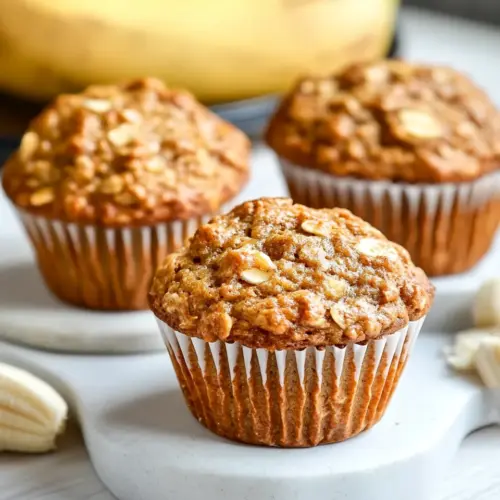
Apple Banana Muffins
Apple Banana Muffins are moist, naturally sweet, and easy to make with pantry staples. The blend of banana and apple creates a tender crumb and warm aroma, perfect for quick breakfasts or lunchbox snacks. These muffins are forgiving and kid friendly, ideal for busy mornings and casual gatherings, making them a recipe you'll reach for again and again.
Equipment
- Mixing Bowls
- Whisk
- Spatula
- Muffin Tin
- Grater
Ingredients
- 1 1/2 cups all purpose flour Provide structure and bulk to the muffins by forming the gluten network when mixed and baked; sifts well with leaveners for even texture and helps absorb liquids to create a tender crumb.
- 1/2 cup old fashioned oats Add chew, whole-grain flavor, and a pleasing texture contrast while contributing fiber and helping retain moisture so muffins stay soft longer; toast lightly for deeper nuttiness before mixing if desired.
- 2 teaspoons baking powder Leaven the batter by releasing gases when heated, creating lift and lightness; balances density from the flour and oats to produce a tender, risen muffin without excessive spreading.
- 1/2 teaspoon baking soda React with acidic components to produce additional leavening and fine crumb, helping muffins rise and develop a slightly open texture; also aids browning and neutralizes excess acidity.
- 1/2 teaspoon kosher salt Enhance and balance flavors while strengthening gluten slightly and promoting proper chemical reactions among leavening agents; also contributes to overall seasoning for a well-rounded taste.
- 1 teaspoon ground cinnamon Provide warm, aromatic spice and depth of flavor that complements fruit; blends into the batter to give a consistent fragrant note and accentuate sweetness.
- 3 tablespoons vegetable or canola oil Supply fat for moistness, tenderness, and richness while helping carry flavors and creating a soft mouthfeel; emulsifies with wet ingredients to disperse fats evenly throughout the batter.
- 1/2 cup agave or honey Provide sweetness and additional moisture while contributing a mild floral or caramel note depending on choice, and help keep muffins tender and shelf-stable.
- 1 egg Bind wet and dry ingredients together, contribute lift and structure through coagulation during baking, and add richness and color to the crumb for a cohesive muffin texture.
- 1/2 cup milk Dilute batter to proper consistency, hydrate dry ingredients, and contribute to tenderness; milk also adds a bit of protein and sugars that assist browning and flavor development.
- 2 ripe bananas, mashed Contribute natural sweetness, moisture, and banana flavor while acting as a binder and providing softening enzymes that tenderize the crumb; mashed fruit helps reduce the need for added fat.
- 1 medium apple, peeled and grated Add crisp, fresh fruit flavor, subtle acidity, and additional moisture while providing small pieces that distribute throughout the muffins for texture and bright aromatic notes.
Instructions
- Preheat oven to 350 degrees.: As the oven warms you will start to notice a faint dry warmth and a subtle hum from the heating element, which primes the environment for even rise and a golden top. Preheating ensures that when batter hits the tin, the exterior sets quickly and supports internal rise. A key reason for doing this first is to avoid underbaked interiors or uneven domes on the muffins. If you skip proper preheating, the muffins can bake unevenly and remain dense. Make sure your oven actually reaches 350 degrees by waiting until the dial or digital readout indicates it is fully up to temperature. A common mistake is turning the oven on and immediately placing the tray inside, which often yields flat or soggy results.
- Combine the first 6 ingredients in a bowl and mix.: You will see the dry mix take on a uniform color and texture, and a soft floury scent will arise. Mixing the all purpose flour , old fashioned oats , baking powder , baking soda , kosher salt , and ground cinnamon ensures even distribution of rising agents and spice, which translates to consistent lift and flavor in every muffin. This step matters because uneven pockets of leavening or salt can make some muffins overproof while others stay flat. Stir gently to combine, using a whisk to aerate slightly, but avoid overworking. A common error is aggressively sifting or mixing into a paste, which can activate the leaveners prematurely or compress the oats.
- In a separate bowl, whisk the remaining ingredients together.: As you whisk, the mix of vegetable or canola oil , agave or honey , egg , milk , mashed banana , and grated apple will become glossy and homogenous, and you may notice the aroma shift toward fruity sweetness. Properly combining the wet ingredients helps them emulsify so the batter holds moisture and bakes into a tender crumb. The integration of oil and liquid is important because it coats the flour and limits gluten formation, preventing toughness. A troubleshooting note is to ensure the banana is mashed well enough that there are not large chunks which can cause uneven texture. If the mixture separates momentarily, a few vigorous stirs will bring it back together.
- Slowly add the flour mixture into the wet ingredients and stir until just combined.: You will see streaks of flour fade into the wet batter and the mixture will thicken, with little pockets of oats and fruit dispersed through it. The reason for slow addition is to minimize gluten development, preserving a soft crumb. Stirring just until combined keeps the muffins tender, while overmixing develops gluten and leads to dense, chewy results. A tip is to use a spatula and fold gently until no large dry streaks remain. Avoid vigorous beating or prolonged mixing, which is the most common mistake in muffin making.
- Grease a mini or regular muffin tin or line it with muffin cups and fill each cup 3/4 full with the batter.: When you fill the cups you should see batter mounded slightly above the rim for a pretty dome after baking, and the surface will have visible specks of banana and apple . Proper greasing or lining prevents sticking, and filling to three quarters gives the right balance of volume for rise without overflow. This step matters because underfilled cups produce tiny, flat muffins while overfilled cups can spill and bake unevenly. If you use a regular tin for mini measurements, the bake time will differ, so be mindful. A common error is overfilling which creates messy tops and inconsistent centers.
- Bake for 14 minutes for mini muffins or 20 minutes for regular muffins or until a toothpick comes out clean.: As the muffins bake you will notice the aroma intensify, the tops turning a warm golden brown and sometimes developing thin cracks that signal a tender interior. The sound will be quiet, but the visual cues are strong, such as edges pulling slightly from the tin. Baking to the correct endpoint matters because it ensures structure set in the interior while the exterior remains soft and not dry. When testing with a toothpick look for crumbs that are moist but not wet, which indicates doneness. A common mistake is removing them too early which yields gummy crumbs, or leaving them in too long which dries them out. Rotate the tray halfway through if your oven has hot spots to promote even coloration and texture.
Notes
- Room temperature eggs: Letting the egg sit at room temperature for about 10 minutes helps it integrate smoothly with other wet ingredients, producing a more uniform batter.
- Check oven accuracy: An oven thermometer ensures your 350 degrees reading is accurate, preventing underbaked or overbaked muffins due to temperature variance.
- Peeled and grated apple technique: Peel then grate the apple on the small side of the box grater so it blends into the batter and distributes moisture evenly without large chunks.
- Do not overmix: Fold the dry ingredients into the wet just until combined to avoid gluten development that leads to dense texture, stop when you still see a few streaks.
- Cooling pause: Let muffins rest in the tin for five to ten minutes before transferring to a rack, this helps them set and prevents breakage when unmolding.