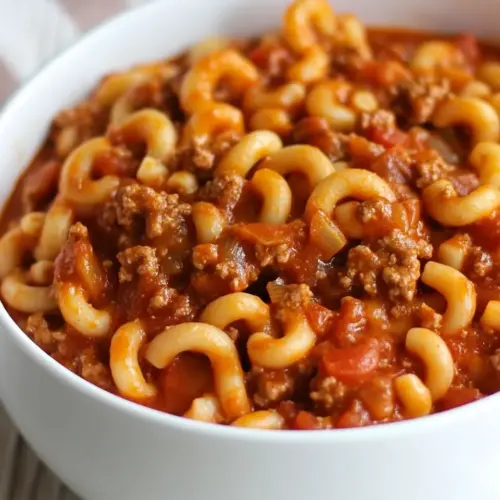
American Goulash
American Goulash is a hearty, saucy comfort bowl with savory ground beef, tender macaroni pasta, and bright crushed tomatoes. This easy weeknight dinner is both creamy and satisfying, perfect for family meals and casual gatherings. Quick to make and full of nostalgic flavor, it’s a reliable recipe to warm the table and please a crowd.
Equipment
- Heavy pot
- Dutch Oven
- Spatula
Ingredients
- 1 tbsp olive oil Heat and coat the pan to prevent sticking and add a fruity base for sautéing aromatics and browning meat.
- 1 lb lean ground beef 90/10 Brown and crumble to provide rich protein, savory flavor, and meaty texture that forms the sauce backbone.
- 1 medium onion, finely chopped Sauté until softened to add sweetness and depth; contributes moisture and a pleasant onion aroma to the sauce.
- 1 carrot, grated Grate finely to melt into the sauce, adding subtle sweetness, moisture, and extra vegetable nutrients.
- 1 celery stick, finely chopped Chop finely to add aromatic savory notes and slight crunch that balances the sweetness of carrot and onion.
- 3 garlic cloves, minced Mince and cook briefly to release pungent, aromatic compounds that enhance overall flavor complexity.
- 2 tsp fine sea salt, or to taste Season evenly to enhance and balance flavors throughout the dish; adjust to taste during cooking.
- 1 tsp dried oregano leaves Sprinkle dried leaves to introduce herbal, slightly peppery notes that complement tomato and beef flavors.
- 1/2 tsp freshly ground black pepper, or to taste Grind freshly to add warm, sharp heat and brighten the overall seasoning profile of the dish.
- 1/4 tsp granulated sugar, or more to taste Add a small amount to balance acidity from tomatoes and enhance perceived sweetness without overpowering.
- 28 oz crushed tomatoes Pour in to create the saucy base, providing acid, body, and tomato flavor that defines the dish.
- 2 tbsp tomato paste Stir in concentrated paste to intensify tomato richness, thicken the sauce, and deepen the color.
- 1 tbsp Worcestershire sauce Drizzle to contribute umami depth and a savory, tangy background note that amplifies beefiness.
- 2 cups chicken stock Pour in to add savory liquid for simmering, building depth, and preventing the sauce from drying out.
- 1 cup water plus more as needed for cooking Add to adjust consistency while cooking and provide additional liquid for pasta to absorb.
- 2 cups macaroni pasta, 10 oz, or any small pasta you prefer Boil and simmer until tender to provide comforting starch that soaks up sauce and makes the dish hearty.
- 1/4 cup parmesan cheese, freshly grated, plus more to serve Grate and finish to add salty, nutty complexity and a creamy finish when sprinkled over the served dish.
Instructions
- Set a heavy pot or 5 1/2 Qt Dutch oven over medium/high heat and add 1 Tbsp olive oil. Add ground beef to the hot pot and break it up with a spatula for 1 minute.: You will hear the oil begin to ripple and see a faint shimmer across the surface, which signals the pan is ready. This visual cue matters because adding ground beef to a properly heated pan encourages quick searing, creating browned bits that enrich the sauce. If you add meat to a cool pot, it will steam instead of brown, producing a flatter flavor. A common mistake is using too much oil, which can prevent proper browning and make the meat greasy. Keep the heat steady, not screaming hot, so the oil does not smoke.
- Add carrot, onion, celery and garlic and stir until vegetables are softened, 5 minutes. Season with salt, oregano, pepper and sugar and stir to combine.: Listen for a satisfying sizzle as the meat hits the pan; that sound tells you Maillard reactions are starting. As you break the meat into chunks, watch for edges taking on a deep brown color, which adds complexity. The reason this step is important is that browning concentrates savory flavors, lending the sauce depth. Avoid stirring constantly, which prevents good sear formation. A pitfall here is overcrowding the pot; if everything steams, you lose browning, so give the meat room to make contact with the hot surface.
- Add crushed tomatoes, tomato paste, Worcestershire sauce, chicken stock and water. Bring to a boil then reduce heat to a simmer, cover and cook for 20 minutes.: You will notice the pan exhale a sweet, aromatic steam as the onion and garlic soften and the carrot starts to melt into the mix. Softened vegetables are key because they create a cohesive sauce base and release natural sugars that round out acidity. Stir enough to prevent sticking, but let the vegetables sit briefly between stirs so they can brown slightly. A frequent error is cooking over too high heat, which can brown garlic too fast and lead to bitterness, so lower the heat if you smell the garlic scorching.
- Add macaroni and stir to combine. Reduce heat to a simmer, cover and cook 20 minutes, stirring occasionally, especially towards the beginning of cooking pasta so it doesn’t settle and get stuck to the bottom of the pot. Add more hot water 1/4 cup at a time or as needed if the mixture seems dry. It should remain very moist and saucy.: At this point the kitchen fills with an earthy, herby scent as the dried oregano warms. Seasoning early helps layers of flavor develop, and the pinch of sugar smooths acidic notes from the tomatoes later on. It is important to season in increments because tomatoes can concentrate flavors as they reduce, so hold back a bit of salt until the end. A common mistake is over salting at the start, which is hard to reverse once liquids reduce.
- Stir in parmesan cheese and season with salt and pepper to taste if needed. Serve with more parmesan.: When you pour in the crushed tomatoes and chicken stock , the pot releases a robust tomato steam and the mixture loosens into a simmering sauce. The tomato paste enriches color and body while the Worcestershire sauce layers in savory umami. This addition is crucial because it forms the liquid medium that will cook the pasta and meld flavors. Avoid adding cold stock straight from the fridge, which can stall the simmer; instead let liquids warm slightly or bring to a gentle boil after adding. Also, be cautious with sudden high heat that can cause splattering.
- Bring to a boil then reduce heat to a simmer, cover and cook for 20 minutes: You should see steady bubbles across the surface before lowering the heat to a gentle simmer, which releases a mellow, developed tomato aroma. Covering the pot traps steam and helps flavors marry while preventing too rapid evaporation. This resting simmer is essential so the sauce can deepen and the ingredients soften. If you let it boil too hard, you risk breaking down textures and concentrating saltiness. A common misstep is lifting the lid too often, which slows cooking and cools the pot.
- Add macaroni and stir to combine: The moment you add the macaroni pasta , the sauce will take on a thicker, grainy look as dry pasta hits the liquid. Stirring here prevents the pasta from settling and sticking to the bottom, and ensures each piece gets surrounded by sauce so it cooks evenly. This technique matters because directly cooking pasta in the sauce allows the starch to thicken it naturally. Forgetting to stir, especially in the first few minutes, will lead to sticking and unevenly cooked pasta.
- Reduce heat to a simmer, cover and cook 20 minutes, stirring occasionally especially towards the beginning of cooking pasta so it doesn’t settle and get stuck to the bottom of the pot: As the pasta softens, you will hear a gentler bubbling and see the sauce thicken as starch is released. Occasional stirring is crucial early on when the pasta is most likely to cling together or to the pot. This slow simmer gives the pasta time to absorb flavor while the sauce gently reduces to the proper consistency. A typical error is under stirring early, which results in clumps of stuck pasta that are hard to salvage.
- Add more hot water 1/4 cup at a time or as needed if the mixture seems dry: If the sauce looks like it is pulling away from the pasta or becoming too thick, adding hot water loosens the texture and keeps the dish saucy. You want a spoonable consistency, not a dry casserole. Adding small increments prevents making it too thin, and using hot water keeps the cooking temperature steady. People often add too much at once, which dilutes flavor, so add conservatively and give the dish a minute to absorb before adding more.
- It should remain very moist and saucy: Aim for a glossy, cohesive mixture that clings to each piece of macaroni pasta , with sauce pooling slightly in the bowl. The ideal texture is rich but not soupy, and when you tilt a spoon you should see a ribbon of sauce. Achieving that balance matters because texture defines the eating experience. A mistake here is letting the pot reduce to dryness, which makes the dish gummy rather than comforting.
- Stir in parmesan cheese and season with salt and pepper to taste if needed: The aroma will shift to a savory, slightly nutty finish as the parmesan cheese melts in, rounding the sauce and adding silkiness. Tasting and adjusting salt and black pepper at the end ensures the flavors are balanced after reduction. This final seasoning step is crucial because flavors concentrate while cooking, so a late adjustment gets it right. Overlooking this tasting step is a common oversight that can leave the dish under seasoned.
- Serve with more parmesan: As you ladle the warm American Goulash into bowls, offer extra freshly grated parmesan cheese for finishing. The cheese melts slightly on contact, lending a pleasant creaminess and visual appeal. Serving right away preserves the intended texture and warmth. A common mistake is letting it sit too long before serving, which cools the dish and changes the mouthfeel.
Notes
- Control fat level: If you prefer a leaner finished dish, choose 90 10 lean ground beef as listed, and drain any visible fat after initial browning to keep the sauce from tasting greasy.
- Boost umami: Stir in the tablespoon of Worcestershire sauce as directed to deepen savory flavor, and consider a light extra splash if your tomatoes taste flat after simmering.
- Manage sauce thickness: Add the hot water in 1/4 cup increments while the pasta cooks to reach a glossy, saucy texture rather than a dry finish.
- Adapt the pasta: Any small shape works, but adjust the cooking time slightly if you swap to a larger or thicker pasta so it still finishes tender in the sauce.
- Finish with cheese: Freshly grated parmesan cheese melts more evenly than pregrated varieties and adds a creamier, less grainy finish when folded in off heat.
- Leftover handling: Cool quickly and store in an airtight container in the refrigerator for three to five days, or freeze portions for up to three months; add a splash of hot water when reheating to restore sauciness.