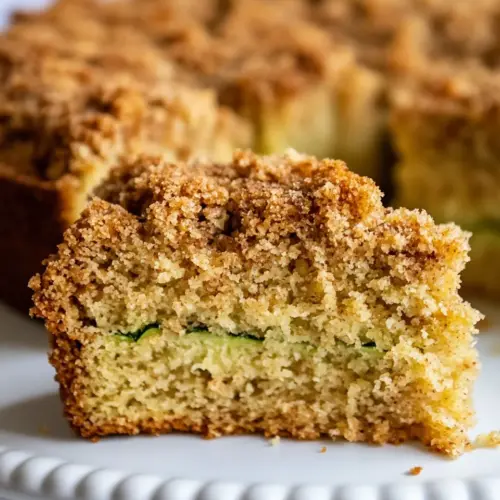
Almond Flour Zucchini Crumb Cake
Almond Flour Zucchini Crumb Cake is a tender, moist, nut forward cake with a crisp cinnamon crumb topping. The grated zucchini keeps the crumb soft while almond flour creates a rich texture, making this an easy weeknight dessert or brunch star. It’s naturally gluten free and forgiving, so it’s worth making when you crave something cozy and slightly rustic.
Equipment
- Oven
- 8 inch baking pan
- Parchment Paper
- Box grater
- Mixing Bowls
- Spatula
- Instant read thermometer
Ingredients
- 4 large eggs Beaten thoroughly to incorporate air and provide structure and lift to the cake batter; eggs also add moisture and help bind the almond and tapioca flours together for a tender crumb.
- 1/3 cup coconut oil melted Melted gently and folded in to add richness, moisture, and a subtle coconut aroma while helping create a soft, tender texture in the crumb cake.
- 1.5 tsp vanilla extract Added for aromatic sweetness and depth, enhancing the overall flavor profile with warm, familiar vanilla notes that complement the zucchini and almond.
- 2 cups (245 g) almond flour, leveled Measured and leveled to serve as the primary dry base, contributing a moist, nutty texture and structure while supplying protein and a slight natural sweetness.
- 1/2 cup (60 g) tapioca flour, leveled Leveled to provide starch and lightness, helping to mimic the texture of wheat flour by adding chew and tenderness while improving batter cohesion.
- 1/2 cup granulated sugar Sprinkled in for sweetness and caramelization during baking, balancing flavors and aiding in crust browning to create a pleasant contrast to the tender interior.
- 1/2 tsp ground cinnamon Ground and mixed into the batter to impart warm spice and complexity, pairing well with zucchini and brown sugar to create a cozy, bakery-style flavor.
- 1.5 tsp baking powder Added to the dry mixture to provide chemical leavening and ensure the cake rises properly, contributing to a light and airy texture.
- 1/2 tsp sea salt Scattered into the dry ingredients to enhance flavor balance, heighten other tastes, and regulate yeast-free leavening reactions while preserving overall seasoning.
- 1 heaping cup (130 g) grated zucchini (1 medium-sized zucchini squash) Grated finely and folded in to introduce moisture, subtle vegetal sweetness, and tender texture while keeping the cake light due to its high water content.
- 2/3 cup (70 g) almond flour Measured separately to be used in the crumb topping, supplying additional nutty, tender texture and reinforcing the almond flavor contrast against the zucchini cake.
- 2 tbsp brown sugar or coconut sugar Sprinkled into the crumb topping to add a deeper, caramel-like sweetness and slight molasses flavor that complements the nuts and spices.
- 3 tbsp coconut oil melted Melted and mixed into the topping to bind the crumb components, add richness and crispness when baked, and deliver a subtle coconut taste.
- 2 tsp ground cinnamon Mixed into the topping to bring concentrated warm spice, enhancing the crumb's flavor and echoing the cinnamon used in the cake batter for harmony.
- Pinch sea salt Added sparingly to the topping to balance sweetness and elevate other flavors, ensuring the crumb topping is well-seasoned and not overly sweet.
Instructions
- Preheat the oven to 350 degrees Fahrenheit and line an 8” x 8” baking dish with parchment paper. You can also use an 8-inch round pan.: When you open the oven and feel the steady warmth it should be even across the rack, which ensures uniform rise and browning. A properly preheated oven creates the initial lift from the baking powder and gives the exterior its first set, producing a delicate crust. You should hear no unusual noises from the oven, just the steady hum; if the oven is cooler than expected, the cake may spread instead of rising, so wait until it reaches temperature. Lining the pan with parchment paper makes lifting the cake out effortless, and it prevents the bottom from overbrowning. A common mistake is skipping parchment, which can make the cake stick and crumble when removed.
- Chop the ends off of the zucchini and grate it using a box grater or a food processor. You will need one heaping cup of zucchini. There’s no need to drain the zucchini before adding it to the batter. It can go in as is.: The act of grating releases fresh green aromas and a faint vegetal sweetness; the zucchini will look moist and ribboned. Leaving the moisture in is intentional, because it hydrates the batter and yields a tender crumb after baking. If the shreds look extremely watery, pat them lightly, but do not press out all the juice. Over-draining removes the beneficial moisture and can produce a dry cake. Using a food processor will be faster and produces finer shreds, while a box grater gives you more texture in the cake.
- In a large bowl, stir together the dry ingredients (almond flour, tapioca flour, sugar, cinnamon, baking powder, and sea salt) until combined.: At this stage you will notice the almond flour has a slightly sandy, pale texture while the tapioca flour looks very fine and powdery. Mixing the dry ingredients evenly distributes the baking powder and cinnamon , which prevents pockets of uneven flavor or lift. Stir until the mixture is uniform in color and texture, then run a fingertip through to feel for any lumps, breaking them up gently. A typical error is to under-mix, leading to uneven rising or salty pockets, so take the extra few seconds to combine thoroughly.
- Mix the eggs and melted coconut oil (or butter) in a mixing bowl until well-combined (wet ingredients).: Whisking the eggs with the warm but not hot coconut oil creates a glossy, homogenous mixture. The aroma will be slightly sweet and toasty from the oil; if you use butter the smell will be richer. This wet mix helps emulsify the batter, encouraging even distribution of fat and moisture for a consistent crumb. If the oil is too hot it can cook the eggs, so allow melted fat to cool briefly before combining. A common mistake is hurriedly pouring hot oil into eggs, which causes scrambling and an uneven batter.
- Pour the dry ingredients into the bowl with the wet ingredients and mix until a thick batter forms. The cake batter will be very thick. This is normal.: When you fold the dry into the wet, the batter should grab the spoon and move slowly rather than pour; this thickness comes from the almond flour and the added starch. You will feel resistance when stirring and see a cohesive mass that holds its shape. This texture is desirable because it helps suspend the grated zucchini and ensures a dense but tender crumb. Avoid overmixing which can break down the structure and lead to a gummy texture. If the batter seems too dry, check your measurements; slight adjustments can help, but the aim is a thick batter.
- Stir in the shredded zucchini until it is well-distributed throughout the batter.: As you fold in the zucchini , watch for an even speckling of green bits and an audible change in the batter from quite smooth to subtly textured. The zucchini will add moistness and tiny pockets of steam that expand during baking, contributing to a soft interior. Ensure the shreds are spread uniformly to avoid concentrated pockets of moisture. Overstirring here can make the batter heavy, so fold gently until the zucchini is just incorporated.
- Transfer the batter to the prepared cake pan and spread it into an even layer.: Spoon the thick batter into the lined pan, then use a spatula to press it into a flat, even layer; you should see a smooth top without large air pockets. An even layer promotes uniform baking so the edges do not overcook while the center finishes. Tap the pan lightly on the counter to release trapped air bubbles, and smooth the surface. A common mistake is leaving the batter uneven, which yields high edges and an undercooked middle.
- In a small bowl, combine the ingredients for the cinnamon topping and mix until well-combined.: When you mix the topping ingredients, you will smell the warm cinnamon and sense the nutty almond flour. The melted coconut oil binds the dry elements creating pebble like crumbs. Make sure the brown sugar or coconut sugar is evenly moistened so the topping bakes into crisp clusters. If the topping feels too greasy, add a touch more almond flour to absorb excess oil; if too dry, a little more melted fat will help it clump properly.
- Sprinkle the topping over the cake batter. Cover the cake pan with aluminum foil and bake on the center rack of the oven for 30 minutes. Remove the foil and bake for another 20 to 30 minutes, or until the zucchini cake is golden brown around the edges and tests clean in the center.: As the cake bakes under foil you will notice gentle steam escaping and a soft rise. The foil keeps the topping from browning too quickly while allowing the interior to cook through. After removing the foil the topping should toast and the edges will take on a deep golden hue, releasing a sweet, toasty aroma. Check around 20 minutes after removing the foil; if the top is not yet golden, continue to bake while monitoring closely. A common error is leaving the foil on too long which prevents the topping from crisping.
- Cakes are fully cooked once they have reached an internal temperature of 190 to 200 degrees Fahrenheit. You can use an instant read thermometer (or meat thermometer) to verify the internal temperature for doneness if you’d like.: The thermometer will give a precise cue: when the center reads between 190 to 200 degrees Fahrenheit the crumb is set and the starches have gelatinized properly. You might also insert a toothpick which should come out clean or with a few moist crumbs. If the cake is underdone the center will wiggle and feel very soft to the touch; return it to the oven in 5 minute increments. Avoid overbaking which dries out the crumb and makes the cake crumbly.
- Allow the zucchini crumb cake to cool for at least 30 minutes before slicing and serving.: Cooling lets residual steam redistribute so the cake firms up and slices cleanly, with the topping remaining crisp rather than soggy. The aroma will continue to develop as it cools and the texture becomes more cohesive. If you slice too soon the cake can fall apart; patience yields neat slices and a more pleasant mouthfeel. I like to cool it on a wire rack to prevent the bottom from becoming damp.
Notes
- Butter swap: Replace the coconut oil in the cake with 1 stick of unsalted butter if you prefer a richer, more traditional flavor; for the topping, use 3 tablespoons melted butter as suggested in the notes.
- Sweetener choices: Use white sugar, brown sugar, coconut sugar, or a sugar free substitute according to taste; be aware that different sweeteners affect browning and moisture, so expect slight texture changes.
- Pan options: You can bake this in an 8-inch round pan instead of an 8 by 8 inch square pan; adjust baking time slightly and watch for the golden edge and clean toothpick test.
- Topping texture: For larger clusters on top, press the crumb mixture together slightly with your fingers before sprinkling; for a finer dusting, break the topping up into very small pieces.
- Grating method: If you prefer finer zucchini distribution use the food processor; for more visible shreds and a rustic appearance, use a box grater.