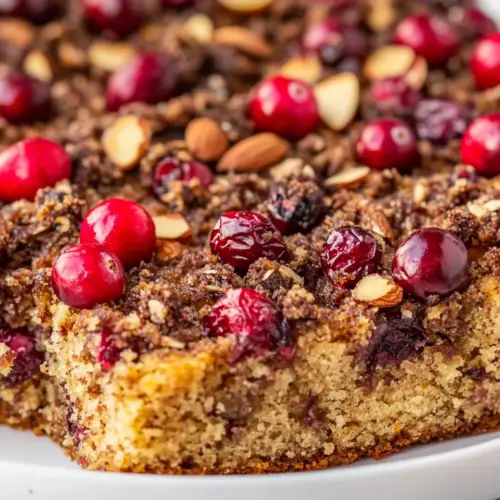
Almond Flour Cranberry Orange Coffee Cake
Almond Flour Cranberry Orange Coffee Cake is a tender, slightly nutty cake kissed with bright orange zest and studded with tart cranberries, finished with a crunchy pecan streusel. It bakes up moist yet structured, perfect for a cozy brunch or holiday morning. Make it for a simple festive treat that feels special without being fussy.
Equipment
- 8 inch baking pan
Ingredients
- 3 large eggs Whisk to provide structure and lift in the cake batter; eggs also help bind the almond and tapioca flours while contributing moisture and a tender crumb. Beaten until combined, they incorporate air that aids in achieving a light, cohesive texture throughout the cake.
- 1/2 cup coconut oil melted, or avocado oil Pour melted oil to add healthy fat, moisture, and richness; coconut or avocado oil imparts a subtle flavor while keeping the cake moist and tender. Use when warm to blend smoothly with eggs and syrups for an even batter.
- 1/2 cup pure maple syrup Sweeten naturally and add depth of flavor with pure maple syrup; it also contributes liquid to the batter and helps create a slightly caramelized crust during baking. Measure carefully to balance sweetness with the tart cranberries and citrus notes.
- 1 tsp vanilla extract Stir in extract to enhance overall flavor and provide a warm, familiar aroma; vanilla brings out the sweetness of the maple and complements the almond and pecan components. Add with the wet ingredients to distribute its flavor evenly throughout the cake.
- 2 cups almond flour leveled Sift or level to form the primary structure of the cake using finely ground almond flour; it delivers a moist, tender crumb and nutty flavor suitable for gluten-free baking. Combine with other dry ingredients to ensure even texture and proper binding with the wet components.
- 1/2 cup tapioca flour leveled Spoon and level to lighten texture and provide a mild, elastic lift; tapioca flour helps bind gluten-free batters and adds chewiness while improving sliceability. Use measured amounts to avoid gummy results and to balance the almond flour's density.
- 1/2 tsp ground cinnamon Sprinkle ground spice to add warm aromatic complexity and subtle sweetness; cinnamon complements orange zest and cranberries while enhancing the cake's overall flavor profile. Mix into the dry ingredients to distribute the spice evenly.
- 1.5 tsp baking powder Measure to leaven the batter and create lift; baking powder introduces air bubbles that expand during baking, producing a lighter crumb in almond-based cakes. Ensure freshness for reliable rising and mix thoroughly with flours to avoid uneven pockets.
- 1/2 tsp sea salt Season lightly to balance sweetness and enhance flavor; sea salt intensifies the nutty almond and maple notes while rounding out the cake's taste. Dissolve with the wet ingredients for even distribution throughout the batter.
- 1 tbsp orange zest Grate zest to provide concentrated citrus oils and bright aroma that lift the cake's flavor; orange zest adds a fresh, tangy note that pairs especially well with cranberries and cinnamon. Add to wet ingredients to release oils and maximize fragrance.
- 1 cup fresh cranberries halved Toss fresh cranberries to deliver tart, juicy bursts that contrast the cake's sweetness and add texture; halving ensures even distribution and prevents large pockets of moisture. Gently fold into batter to avoid breaking and bleeding too much color.
- 2/3 cup almond flour Fold in additional almond flour for the topping or streusel to create a nutty, cohesive crumb; this extra almond flour helps the pecans and coconut sugar bind into a crunchy layer. Combine with melted fat and spices to form a textured topping.
- 3/4 cup raw pecans chopped Chop pecans to contribute crunch, toasty flavor, and a buttery richness; raw pecans in the topping provide a pleasant contrast to the tender cake interior. Distribute evenly in the streusel so each slice has balanced nutty bites.
- 2/3 cup coconut sugar Sprinkle coconut sugar to sweeten the topping with a caramel-like flavor and slightly crunchy texture; it browns nicely under heat and complements the maple-sweetened cake. Mix with flours and spices to create a cohesive streusel.
- 5 tbsp coconut oil melted or melted butter Melt to bind the streusel ingredients and add richness; melted coconut oil or butter coats the pecans and sugar, helping the topping crisp while delivering additional moisture and flavor. Pour over dry topping components and work together to form clusters.
- 1 1/2 tbsp ground cinnamon Mix ground spice to intensify the streusel's warm, aromatic character; additional cinnamon in the topping deepens the cake's spice profile and complements the pecans and orange zest. Combine thoroughly so the flavor is evenly distributed across the crumble.
- Pinch sea salt Add a pinch to slightly enhance and balance the sweetness of the streusel; a small amount of sea salt amplifies flavors and offsets sugar for a more complex taste. Sprinkle sparingly to avoid overt salinity while boosting overall flavor harmony.
Instructions
- Preheat the oven to 350 degrees Fahrenheit and line a 8-inch square pan with parchment paper. You can also use an 8-inch round pan or a 9-inch cake pan.: The first sensory cue you will notice is warmth spreading in the kitchen as the oven comes up to temperature, and the faint scent of dry heat. This temperature is important because it offers steady, moderate heat so the cake cooks through without burning the streusel. Lining the pan with parchment ensures easy release and preserves the streusel on top, preventing tearing. A common mistake is skipping the parchment which can cause the cake to stick; also make sure the oven rack is in the center for even cooking.
- In a small bowl, stir together the ingredients for the streusel topping and set aside until ready to use.: As you toss the chopped pecans , extra almond flour , coconut sugar , melted coconut oil , cinnamon, and a pinch of sea salt , you will smell toasty nut and brown sugar notes even before baking. Mixing the streusel ahead allows the oil to coat the dry ingredients, creating clumps that bake into crisp golden morsels. If you overwork it you can end up with a paste rather than a crumble, so mix just until combined and loose.
- Add the oil, eggs, pure maple syrup, and vanilla extract to a large mixing bowl and mix to combine the wet ingredients.: When you whisk the eggs with the melted coconut oil , pure maple syrup , and vanilla extract , the mixture should look glossy and uniform. The friction of whisking incorporates air and makes the batter lighter, contributing to a more tender cake. If your oil is too hot it can cook the eggs, so let it cool slightly before adding. Avoid under mixing, because uneven wet ingredients lead to pockets of oil or dense bits in the final cake.
- In a separate bowl, stir together the almond flour, tapioca flour, cinnamon, baking powder, and sea salt (dry ingredients).: Combine the dry elements until evenly distributed, and you will notice the nutty aroma of almond flour with a hint of spice. This dry mix ensures that the rising agent and spices are evenly spread, preventing odd pockets of baking powder. A frequent error is not leveling cups properly, which alters the texture; spoon and level to keep the ratio accurate.
- Pour the dry mixture into the bowl with the wet mixture and mix until a smooth batter forms.: As you fold the dry into the wet, the batter will thicken and take on a uniform, slightly thick consistency that spreads well. The goal here is a smooth batter without over mixing, because overworking can create a dense crumb. If you still see tiny bits of dry flour, give it a few gentle stirs. Scrape the sides of the bowl to incorporate everything evenly, or you may end up with dry pockets in the cake.
- Cut the fresh cranberries in half, then toss them in 1 teaspoon of tapioca flour to prevent them from sinking during the baking process.: You will feel the slight firmness of the halved cranberries , and dusting them with tapioca flour gives them a dry coating that helps suspend them in the batter. This step avoids the frustration of fruit sinking to the bottom, which can make the cake unbalanced. A mistake is skipping the dusting, which often results in uneven fruit distribution and dense spots at the bottom of the pan.
- Stir in the orange zest and cranberries into the coffee cake batter.: When you fold in the vibrant orange zest and halved cranberries , you will see flecks of citrus and pops of red dispersing through the batter. The zest releases fragrant oils that perfume the batter, brightening every bite. Mix gently to avoid breaking the berries, which could tint the batter and create streaks rather than intact fruit pockets.
- Pour half of the coffee cake batter into the prepared pan and spread it into an even layer. Sprinkle half of the streusel topping mixture over the cake batter. Repeat for the remaining batter and the remaining crumble topping.: The batter should spread smoothly and hold its shape without being runny. Spread it to the edges so the cake bakes evenly, and then sprinkle half of the streusel topping mixture over the cake batter . Repeat for the remaining batter and the remaining crumble topping. The visual of alternating batter and streusel creates distinct layers that bake into a marbled, crunchy top. Pressing the streusel too firmly can cause it to sink, so sprinkle gently.
- Cover the pan with aluminum foil and bake on the center rack of the oven for 30 minutes. Remove the foil and bake for another 15 to 20 minutes, or until the cake has set up and is golden brown around the edges.: Covering with foil traps steam, which helps the center set without over browning the streusel. You will hear the faint sound of gentle bubbling as moisture is released. After 30 minutes, remove the foil and continue baking so the top can crisp and brown. Leaving the foil on for the entire bake can leave the streusel pale and soft.
- This coffee cake will be fully baked once it reaches an internal temperature of 190 degrees F. You can insert a meat thermometer into the center of the cake to verify for doneness if you have a thermometer on hand.: During this uncovered phase the streusel will toast and the cake edges will darken to a lovely golden tone. Visual cues include a slightly pulled away edge and a springy center. If you rely on color alone, note that ovens vary; use a thermometer or the following step to confirm doneness to avoid an undercooked center.
- This coffee cake will be fully baked once it reaches an internal temperature of 190 degrees F: Use a thermometer inserted into the center, and you should see 190 degrees F for a fully set cake. The thermometer gives the most reliable confirmation, ensuring moist but not raw crumb. A common mistake is removing the cake too early; it may seem set on top but still be gummy inside. If you do not have a thermometer, check that a toothpick comes out with a few moist crumbs, not wet batter.
Notes
- Measure flours correctly: Spoon almond flour into the cup and level it to avoid packing, which makes the cake dense and heavy.
- Warm the coconut oil moderately: Melt coconut oil until liquid but not hot, so it blends smoothly with the eggs without cooking them.
- Use fresh leavening: Check the potency of your baking powder; old baking powder reduces rise and yields a flatter cake.
- Prep the fruit carefully: Halve the cranberries and toss in a teaspoon of tapioca flour to help them stay suspended in the batter.
- Protect the streusel: If your kitchen is warm, refrigerate the streusel briefly so it retains texture and does not dissolve into the batter while baking.