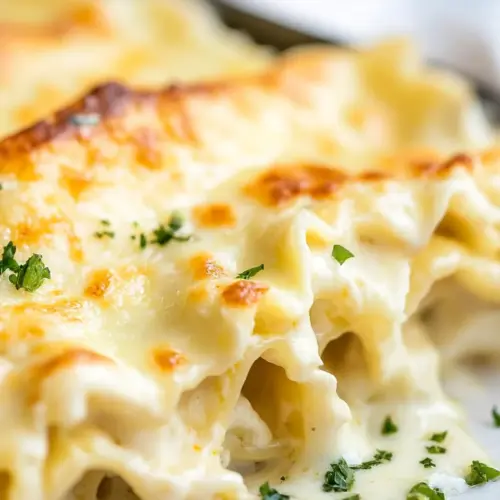
Alfredo Chicken Lasagna Roll Ups
Alfredo Chicken Lasagna Roll Ups deliver a creamy, cheesy filling wrapped in tender lasagna noodles, perfect for an easy weeknight dinner. The rich alfredo sauce, shredded chicken, and gooey mozzarella make each bite satisfying and comforting, with a golden broiled top for texture. This dish is both simple to assemble and impressive to serve, a solid reason to try it tonight.
Equipment
- 9x13 casserole dish
- Baking Sheet
- Skillet
Ingredients
- 12 uncooked lasagna noodles Boil until al dente and use as the outer pasta sheets to create individual roll ups; break or trim if necessary to fit the baking dish and layer evenly for assembly.
- 1 teaspoon salt Season to enhance the pasta water and overall dish flavor; dissolve into the boiling water early so the noodles absorb balanced seasoning while cooking.
- 3/4 cup butter Melt slowly to form a rich base for the Alfredo sauce; cook gently to release butterfat and provide a silky mouthfeel that carries other flavors.
- 3 cloves garlic Mince finely and sauté briefly to infuse the butter with aromatic depth; adjust quantity to control the garlic intensity in the creamy sauce.
- 1 tablespoon all-purpose flour Whisk into melted butter to create a roux and thicken the sauce; cook briefly to remove raw flour taste before adding the milk and cream.
- 1 1/2 cups milk 2% or whole Warm gradually and whisk into the roux to build body and a smooth, creamy béchamel-style Alfredo; choose dairy fat level based on desired richness.
- 1 cup heavy whipping cream Combine with milk and whisk into the roux to increase creaminess and contribute a luxurious texture to the sauce; add warm to prevent separation.
- 3/4 cup parmesan Grate finely and fold into the sauce to provide savory, nutty umami and help thicken the mixture; reserve a small amount for topping if desired.
- 1/2 teaspoon salt Season the sauce or pasta further to balance overall taste; add cautiously since Parmesan already contributes saltiness to avoid over-salting.
- 1/4 teaspoon ground black pepper Grind freshly and add to the sauce to provide a subtle peppery lift; adjust to taste to prevent overpowering the delicate cream flavors.
- 1 teaspoon ground nutmeg optional Sprinkle in sparingly to add warm, aromatic complexity; include only if desired to introduce a subtle, sweet-spicy note that complements dairy.
- 3 cups cooked shredded chicken Shred and fold into the filling or layer inside the noodle rolls to add substantial protein and texture; use pre-cooked chicken for convenience and even distribution.
- 2 cups shredded mozzarella cheese Scatter inside the rolls and over the assembled pan to create gooey, melty pockets of cheese; choose a full-melting mozzarella for ideal stringiness.
- 2 tablespoons chopped fresh parsley for garnish Chop finely and sprinkle over the finished dish to add a bright, herbaceous contrast and fresh color that cuts through the richness of the Alfredo sauce.
Instructions
- Cook the noodles according to the package instructions to al dente with 1 teaspoon of salt, drain and keep in a pot with room temp water. This will help the noodles not stick together.: You will notice the steam rising and the pasta becoming pliable but still with bite, which is the al dente stage. Drain them carefully and immediately transfer to a pot of room temperature water so they do not stick together, stirring gently if they start to cling. The sensory sign is that each noodle remains intact when lifted, not falling apart or overly soft. This technique matters because overcooked noodles will tear when you roll them, leading to leaking filling and a less tidy presentation. A common mistake is letting the noodles cool on a tray where they dry out, which makes rolling difficult. If this happens, briefly dip a noodle in warm water before assembling.
- Preheat the oven to 375°F/190°C, and spray a 9×13 inch pan with cooking spray and set aside.: As the oven warms you should feel a steady heat building in the air, and the preheated oven ensures the rolls bake evenly once assembled. Prepare the baking dish so it is ready to receive the rolls, and use a dish that matches the volume so the rolls fit snugly without overcrowding. This matters because a properly sized pan allows sauce circulation and even bubbling of the cheese. A common error is skipping the preheat, which can increase bake time and alter the texture; always wait until the oven reaches temperature before putting the dish in.
- Over medium heat, melt butter in a pan, then sauté the garlic until fragrant (about 1 minute). Add the flour, and cook it for 1 minute. Add the milk and heavy cream. Allow the mixture to simmer for 2 minutes, then add the parmesan cheese, salt, pepper, and nutmeg if using. Whisk and cook until the cheese is melted and the sauce is thickened. If the sauce thickens too much, add a little bit of milk to loosen it but this is unlikely to happen.: Right away you will smell the butter and garlic blooming, a warm, savory note that signals the sauce is on its way. When you add the flour, it should sizzle briefly and form a smooth paste, which when combined with the milk becomes the base of a silky alfredo . As the mixture simmers small bubbles will form around the edges and the sauce will visibly thicken, coating the back of a spoon. This step matters because a properly cooked roux removes the raw flour flavor and creates a stable sauce that clings to the filling. One common mistake is overheating so the milk scalds or the sauce becomes grainy; keep the heat moderate and whisk continually while the parmesan melts. If your sauce tightens too much, add a splash of milk to reintroduce silkiness.
- Spoon a thin layer of sauce onto the bottom of the baking dish (about 1/2 a cup).: You will spread a glossy, pale blanket that prevents the rolls from sticking and creates a moist base that will steam the bottoms as they bake. The sauce should be spread evenly so the rolls rest on a lubricated surface rather than a dry pan. This matters because it avoids sticking and helps the rolls heat through uniformly. A typical misstep is using too little sauce and having the bottoms dry out, so err on the side of a thin, generous smear rather than a bare pan.
- In a bowl, mix together 1 cup of alfredo sauce with the shredded chicken and 1 cup of mozzarella cheese. Season with salt and pepper.: You will feel the warmth of the sauce slightly soften the mozzarella and coat the shredded chicken , creating a cohesive, scoopable filling. Stir until everything is evenly combined so each roll receives the same balance of creamy sauce and tender chicken . This blending matters to ensure consistent flavor and texture across all rolls. A common mistake is under-seasoning the filling; taste and adjust with a pinch of salt and pepper before assembling.
- Arrange the noodles in a single layer over a baking sheet.: The noodles should lie flat and separated so you can easily add filling to each one. Laying them in a single layer also helps you inspect for any broken pieces and makes the rolling process faster. This matters because working with an orderly row of noodles reduces tearing and speeds assembly. Avoid stacking them, which causes sticking; if any noodle cools and firms up, briefly rewarm it in warm water to regain flexibility.
- Divide the alfredo chicken mixture between the cooked noodles.: Use a spoon or small scoop to place an even portion near one edge of each noodle so the roll will close neatly. The filling should be moist and slightly glossy, indicating good sauce distribution, but not so wet that it seeps out during rolling. This portioning matters for presentation and cooking uniformity, ensuring each roll bakes at the same rate. A frequent error is overfilling, which can cause the rolls to burst; leave a bit of noodle edge free for a tidy seam.
- Roll each noodle up, and arrange in the baking dish seam side down.: As you roll, you should feel gentle resistance from the filling and see the noodle wrap snugly. Placing them seam side down helps keep them intact and encourages a clean top for the final cheese layer. This orientation matters for maintaining shape and preventing the filling from spilling into the sauce. A common mistake is rolling too loosely, which creates gaps and uneven baking; aim for a snug, but not overly tight, roll.
- Cover with the remaining alfredo sauce, remaining cheese, and bake until warmed through (about 20 minutes). Place under the broiler for a few minutes just to get some color on the cheese.: During baking you will notice the sauce bubbling gently at the edges and the cheese melting into a glossy blanket over the rolls. The oven heat finishes melding flavors and warms the interior thoroughly, while a short broil creates those golden, slightly blistered spots that add texture. This final bake matters to meld flavors and achieve an appealing top. Avoid leaving it too long under the broiler, which can char the cheese; watch closely and remove once you see even golden color.
Notes
- Make ahead advantage Prepare the rolls up to the point of baking and refrigerate for up to 24 hours, this allows flavors to meld and saves time on serving day.
- Swap dairy with care If you choose lower fat milk, expect a slightly less decadent sauce. Using whole milk and real cream yields the classic silky texture.
- Cheese handling Freshly grated parmesan and mozzarella melt more smoothly, avoid pre-shredded for best texture and flavor.
- Texture control Cook the noodles to al dente so they hold up while rolling and baking without becoming mushy.
- Broiling caution Finish under the broiler very briefly for color only, then remove to prevent a burnt flavor that masks the sauce nuances.