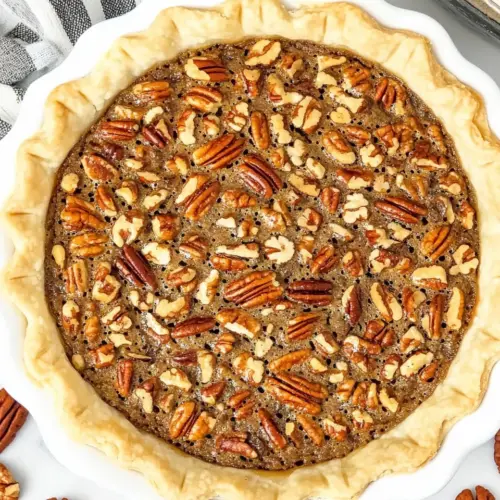
Air Fryer Pecan Pie
Air Fryer Pecan Pie brings a creamy, glossy custard and crispy pecans together in an easy to make, speedy dessert. This small batch pie bakes quickly with toasted nut aroma and a buttery crust, perfect for easy weeknight desserts or a charming addition to holiday spreads. Try it when you want big flavor with less oven time for a convincing reason to make it.
Equipment
- Philips XXL Air Fryer
- 8 inch pie plate
Ingredients
- 1 refrigerated pie crust, softened Soften the refrigerated pie crust to make it pliable for pressing into the air fryer-safe pan; chilling briefly before shaping can prevent tearing. Use it as the structural base to hold the pecan filling and ensure even browning during the short air frying time.
- 3/4 cup corn syrup Provide sweetness and a viscous texture by using corn syrup to bind the filling ingredients into a glossy, sticky custard; it helps create the characteristic chewy interior of pecan pie. Add it gradually while whisking to ensure a smooth consistency without separation.
- 1/2 cup brown sugar Contribute deep, molasses-like sweetness and tenderizing moisture with brown sugar; its flavor intensifies the caramel notes in the filling. Combine it thoroughly with the syrup and eggs so it dissolves and incorporates evenly during baking.
- 1 tsp vanilla Enhance overall flavor with vanilla, offering warm aromatic notes that round out the sweet filling. Stir it into the mixture toward the end of mixing to preserve its delicate fragrance.
- 2 eggs Bind the filling ingredients and create a custard-like set by whisking in eggs; they provide structure and a rich mouthfeel once cooked. Temper them with a bit of the warm syrup if needed to avoid curdling and ensure a smooth filling.
- 1 cup chopped pecans Add crunchy texture and nutty flavor using chopped pecans; they are the centerpiece of the pie and distribute throughout the filling for bite and visual appeal. Toasting them lightly beforehand can amplify aroma and deepen flavor.
- dash cinnamon, if desired Brighten and complement sweetness with a dash of cinnamon if desired, introducing warm, spicy undertones to the pie. Sprinkle sparingly and taste the filling before adding more to avoid overpowering the pecan flavor.
Instructions
- Carefully place pie crust in an 8-inch pie plate. Fold the edges of the dough under itself, so that the folded edges sit on the rim of the pie pan. Crimp edges with a fork, if desired.: Right away you will feel the dough relax as it warms slightly, and its pliability is a cue that it is ready to shape. Press the crust gently into the plate so it conforms to the curves without tearing, and tuck any excess under itself to build a neat rim. The reason this matters is that a properly seated crust prevents the filling from seeping under and ensures even browning on the bottom. If you press too hard you can compress the layers and lose flakiness, so be gentle and work with small movements. A common mistake is handling cold crust roughly which leads to cracks, so soften only briefly until workable.
- Whisk together corn syrup, brown sugar, vanilla, eggs, and cinnamon if using. Stir in chopped pecans. Pour filling into prepared pie crust. Place pie in the air fryer basket.: As you fold the edge under, you should notice the dough becoming firmer at the rim, creating a defined border that will brown attractively in the air fryer. This fold gives the filling a stable barrier and helps the pie hold shape when sliced. It also concentrates density at the edge so the crust bakes to a pleasantly crisp finish while the interior remains tender. Avoid making the rim too thick by folding too much dough at once, since a bulky edge can overcook before the filling sets. If your fold looks uneven, gently press with a fork to even it out for a clean appearance.
- Bake at 325ºF for 25 to 27 minutes.: The subtle ridges from crimping give the pie a classic look, and you will see little shadows form where the tines touch, which is visually appealing once baked. Crimping also helps seal the edges and discourages the filling from escaping during the bake. When I crimp, I press just enough to form a pattern without flattening the rim, preserving flakiness. Watch out for overworking the dough here; too many motions will warm the butter and make the crust tough. If the fork slips, pause and let the dough chill briefly to regain firmness.
- Whisk together corn syrup brown sugar vanilla eggs and cinnamon if using: As you whisk, the mixture becomes glossy and homogenous, a sign that the sugars are integrating with the eggs to form a stable custard base. The sound changes slightly to a soft swish, and visually you want a smooth, pale batter without streaks of yolk. Thorough mixing ensures even sweetness and consistent setting during bake, which directly affects texture. If you notice graininess from the sugar, whisk longer until it dissolves, or let the mixture rest briefly so the syrup dissolves the sugar. A pitfall is under mixing which can leave pockets of sugar, creating gritty spots in the filling.
- Stir in chopped pecans: When you fold the pecans into the mixture, watch for even distribution so every slice has nutty bites. The pecans will glisten slightly as they pick up syrup, signaling good coating and binding. Integrating the nuts at this stage allows them to toast gently during the bake, deepening their flavor. If pieces are too large, they can create uneven slices, so aim for a consistent chop. Avoid overmixing which can break the pecans into dust and lose texture, and taste a small bit to check seasoning before pouring.
- Pour filling into prepared pie crust: The filling should flow smoothly and settle level in the crust, and you will see a glossy surface that hints at the final sheen after baking. Pour slowly to avoid displacing the crust or creating air pockets, and tap the plate on the counter gently to release trapped bubbles. This step matters because a level fill bakes evenly, preventing one side from setting faster than the other. If you see bubbles rise, run a knife around the edge to pop them; leftover air can cause cracks in the top during cooling.
- Place pie in the air fryer basket: Sliding the pie into the basket you will notice the compact heat environment which concentrates browning. Center the pie so air flows freely around it, avoiding contact with the basket sides. Proper placement ensures even cooking and prevents hot spots that can overbrown the crust. If the basket is crowded or the plate touches walls, the pie may bake unevenly, so clear space first. A common oversight is placing the pie off center which causes one side to cook faster.
- Bake at 325ºF for 25 to 27 minutes: During baking you will see the filling turn from glossy liquid to a set custard with a slight jiggle in the center, and the edges will develop a warm brown tone. The aroma will shift toward caramel and toasted nuts, a reliable sensory cue that the sugars are finishing. This temperature and window allow the filling to set gently, preventing cracking and overbrowning. If the top browns too quickly, lower the temperature slightly and prolong the time so the interior reaches doneness without burning. A frequent mistake is removing it too early when it still looks underdone; remember it will firm as it cools. Use a gentle shake to assess doneness, not a knife poke which can make the set uneven.
Notes
- Boost texture by scattering a few larger pecan halves on top before baking so you get a dramatic crunchy crown and attractive presentation.
- Add warmth by including the optional dash of cinnamon in the filling, which complements the brown sugar and amplifies autumnal notes.
- Adjust sweetness by measuring the corn syrup precisely if you prefer a slightly less sweet pie, and consider using light corn syrup for a milder profile.
- Presentation trick slice the pie after it has chilled for at least 30 minutes to get neat wedges that hold their shape on the plate.
- Make ahead bake the pie a day before serving and store loosely covered at room temperature or refrigerated following the storage notes to simplify entertaining day logistics.