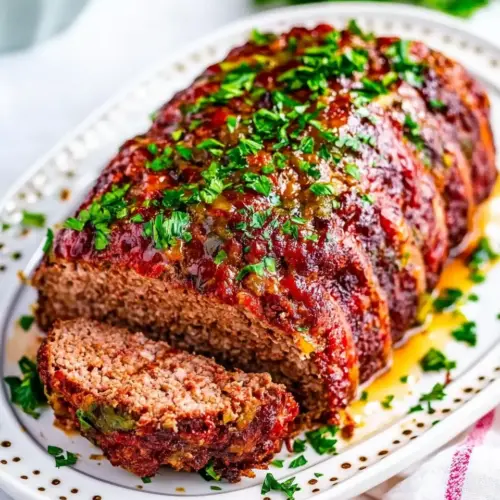
Air Fryer Meatloaf
Air Fryer Meatloaf brings a classic, cozy dinner to your table with a juicy interior and a caramelized, tangy glaze. This easy weeknight dinner is fast, flavorful, and perfect for small kitchens using an air fryer. Expect rich beefy aromas, a tender crumb, and a sticky-sweet top that makes each slice irresistible, giving you a reliable reason to cook it tonight.
Equipment
- Air Fryer
- Skillet
- Mixing Bowl
- Foil
- Meat Thermometer
Ingredients
- 1 medium onion minced Sautéed until translucent to add sweetness and a tender, aromatic base to the meatloaf mixture; mincing ensures even distribution and quick cooking, helping bind flavors throughout. Provides moisture and a savory backbone that complements the beef and seasonings during air frying.
- 1 tbsp olive oil Used to sauté the onion and develop flavor through gentle browning; olive oil contributes healthy fat and helps carry aromatic compounds into the meatloaf. Also prevents sticking in the pan and enhances overall mouthfeel of the finished loaf.
- 1 pound ground beef Mixed as the primary protein and structure for the meatloaf; ground beef supplies richness, juiciness, and the meaty flavor central to the dish. Its fat content influences final texture and moisture, so using the specified pound maintains recipe balance.
- 1 large egg Whisked into the mixture to bind breadcrumbs and meat together, helping the loaf hold its shape while cooking; the egg also contributes tenderness and a slight boost of richness. Incorporation distributes proteins and emulsifies fats for a cohesive texture.
- 1/4 cup bread crumbs Stirred in to absorb moisture and provide structure, helping the meatloaf firm up without becoming dense; breadcrumbs also capture juices and prevent crumbling. Quantity controls final tenderness and ensures even slicing after air frying.
- 1 tbsp ketchup Folded into the meat mixture to add a hint of tomato sweetness and tang; ketchup also provides moisture and helps create a glossy glaze when combined with other topping ingredients. Small amounts meld with seasonings for balanced flavor.
- 1 tsp Dijon mustard Whisked into the mixture to introduce sharp, tangy depth that brightens the overall flavor profile; Dijon mustard also aids in emulsifying the mixture slightly. Its concentrated flavor helps cut through richness without overpowering the beef.
- 1 tsp seasoning salt Sprinkled through the mixture to season uniformly and add a balanced salty, herby note; seasoning salt brings convenience by combining multiple spices. Proper distribution prevents bland spots and complements the other aromatics.
- 1/2 tsp garlic powder Added to impart a mellow garlic flavor without the texture of fresh garlic; garlic powder blends smoothly into the mixture and enhances savory depth. Its concentrated form ensures consistent flavor throughout the meatloaf.
- 1 tbsp freshly chopped parsley Chopped and folded in to contribute fresh herbaceous brightness, lifting the richness of the beef; parsley adds color and a subtle, clean finish. Fresh herbs also enhance perceived freshness and balance heavier flavors.
- 1/2 cup milk Poured in to moisten the mixture and help hydrate breadcrumbs, contributing to a tender loaf; milk also adds a slight creaminess and helps dissolve savory components. Proper amount prevents dryness and ensures cohesive texture when cooked.
- 2 tbsp ketchup Brushed on top or mixed in as an additional tomato-sweet element to create a glaze-like layer during air frying; this extra ketchup deepens color and sticky-sweet flavor on the surface. It caramelizes slightly in the hot air, giving a pleasant finish.
- 2 tsp brown sugar Sprinkled into the glaze or mixture to introduce caramelized sweetness that balances acidity and savory notes; brown sugar helps develop a shiny, slightly sticky crust when heated. The small amount intensifies browning and rounds flavors.
- 1 tsp Dijon mustard Whisked into the glaze or mixture to reinforce tangy mustard flavor and maintain flavor continuity with the interior; Dijon helps cut sweetness and enhances savory balance. Repeating this element ensures the topping echoes the loaf's internal seasoning.
- 1/2 tsp garlic powder Included to deepen the garlic presence in both the meat and glaze, ensuring cohesive aromatic flavor; garlic powder in the topping caramelizes slightly and melds with sugars. Doubling its use guarantees a noticeable but not overpowering garlic character.
Instructions
- Saute minced onion in 1 tablespoon of olive oil. Make a foil sling, place it in the air fryer- this will make it easier to lift the meatloaf out of the pan later. You do not need to line the whole basket with foil.: As the onion hits the hot olive oil , you will hear a gentle sizzle and soon smell a sweet, savory aroma as the edges turn translucent. This process softens the sharp bite and releases sugars, which blend into the meat for a mellow, cohesive flavor. If the onion browns too fast it can develop bitter notes, so keep the heat moderate and stir often until soft and fragrant, about a few minutes. Avoid overcrowding the pan, which can steam the onion instead of sautéing it, leaving raw texture.
- Use your hands to mix the ground beef, egg, bread crumbs, ketchup, mustard, seasoning salt, pepper, garlic powder, parsley, milk, and sauteed onion. Form this mixture into a loaf about 6 inches long, 4 inches wide, and 2 inches high.: When you form a simple foil sling, you create a clean way to lift the loaf, and you will notice less sticking and easier cleanup. The foil will warm quickly and reflect heat, helping the bottom brown without burning. Be careful not to cover the airflow vents of the air fryer , as obstructing circulation can lead to uneven cooking. If you skip the sling, use sturdy lifters designed for the basket to avoid dropping the loaf.
- Place the meatloaf onto the foil sling. Bake the meatloaf for 15 minutes at 370 degrees. During this cooking time, make the glaze.: Working by hand is tactile and practical, letting you feel when the mixture is cohesive but not overworked; you will detect the mixture coming together as it holds shape without becoming dense. As you fold, the aromas of ground beef and onion meld with the tang of ketchup and Dijon mustard , creating a balanced scent. Overmixing will compact proteins and make the loaf tough, so stop once ingredients are evenly distributed. If the mixture feels too wet, add a touch more bread crumbs ; if it seems dry, a splash more milk will help.
- In a small bowl, mix together the ketchup, brown sugar, mustard, and garlic powder. Pour the glaze over the top of the meatloaf. Return the meatloaf to the air fryer and bake for another 15 minutes or until a meat thermometer reaches 160 degrees.: Shape the loaf gently so the surface is smooth and compact, which helps even cooking and neat slicing later; you should feel a slightly firm but springy texture. The visual cue is a uniform exterior with no large cracks that could let juices escape. Press too hard and the loaf will become dense, press too little and it may crumble during cutting. Aim for an even thickness so the center reaches the correct temperature at the same time as the edges.
- When the meatloaf is finished cooking, rest it on the counter for 5-10 minutes before cutting it with a sharp serrated knife.: Lowering the loaf onto the sling, you will notice the weight sits evenly and the foil supports lifting when done. This placement prevents direct contact with accessory pans and encourages hot air to crisp the exterior while keeping the interior moist. If the loaf is too close to the heating element it may overbrown on top, so center it in the basket. Use caution when handling the sling to avoid tearing it, which can make removal difficult.
- Bake the meatloaf for 15 minutes at 370 degrees.: In the air fryer you will hear a light fan hum as hot air circulates, and the exterior will begin to take on color. The initial 15 minutes create a sealed crust that traps juices, so the interior remains tender. Watch the edges for a deepening tan as a sign of progress, and resist the urge to open the basket repeatedly, which releases heat and lengthens cook time. If the exterior browns too quickly, lower the temperature slightly to allow the center to catch up.
- During this cooking time, make the glaze.: Mixing the glaze ingredients yields a glossy, fragrant sauce that will caramelize attractively. The brown sugar dissolves into the ketchup , and the Dijon mustard adds a bright backbone. Doing this while the loaf starts cooking ensures the glaze is ready when you need it, preserving timing and allowing the flavors to meld. If the glaze is too thin, a tiny pinch more brown sugar will thicken it, but avoid making it gritty with too much sugar.
- In a small bowl, mix together the ketchup, brown sugar, mustard, and garlic powder.: As you whisk, the texture becomes smooth and the scent becomes a sweet tang with a hint of savory garlic powder . This combination will form the shiny finish the moment it warms on top of the loaf. Taste and adjust if your ketchup brand is very sweet or very tart, keeping the balance in mind. Using a bowl large enough to whisk vigorously avoids missed pockets of dry sugar.
- Pour the glaze over the top of the meatloaf.: The glaze should adhere and begin to gloss over the surface, creating a barrier that will caramelize and add textural contrast. You will see a wet, ruby sheen that, after reheating, turns sticky and slightly browned. Be careful not to pool glaze at the base where it can drip and burn; spread it evenly with a spoon or brush for uniform coverage. If you over-glaze, the top can become overly sweet or form a thick crust that detracts from the tender interior.
- Return the meatloaf to the air fryer and bake for another 15 minutes or until a meat thermometer reaches 160 degrees.: During this final stage you will notice gentle bubbling of the glaze and a deepening color. The internal temperature is the reliable cue for doneness, ensuring safety and juiciness. When the thermometer hits 160 degrees , the meat will be cooked through yet still moist if not overcooked. A common error is relying solely on time rather than temperature, which can leave the center underdone or make the loaf dry from overcooking.
- When the meatloaf is finished cooking, rest it on the counter for 5 to 10 minutes before cutting it with a sharp serrated knife.: As it rests, juices redistribute and the loaf firms, which helps you get clean slices rather than a crumbly mess. You will notice the aroma mellow and the juices stay within the slice instead of running out. Cutting too soon will cause loss of moisture and messy presentation. Use a sharp serrated knife and let gravity and a gentle saw motion do the work for tidy portions.
Notes
- Support the loaf for easy removal Use a simple foil sling to lift the loaf straight out of the basket without disturbing its shape, which also cuts down on cleanup and prevents tearing when you transfer to a cutting board.
- Temper your milk If your chilled milk is very cold, let it sit a few minutes so it absorbs more evenly into the bread crumbs, avoiding pockets of dryness that create uneven texture.
- Measure seasonings carefully Stick to the listed amounts for seasoning salt and garlic powder to maintain balance, since small changes can swing the flavor toward salty or pungent quickly in a compact loaf.
- Use a thermometer for accuracy Rely on an instant read thermometer to hit 160 degrees internal, this is the most dependable way to ensure safety while preserving juiciness.
- Keep the glaze balanced Taste the glaze before applying; if your ketchup is very sweet, cut the brown sugar slightly to prevent an overly sweet crust that overpowers the meat.
- Store slices properly Cool slices fully before wrapping tightly in plastic or foil and refrigerate for up to four days, or freeze for longer storage, reheating in the air fryer for a few minutes to refresh texture.