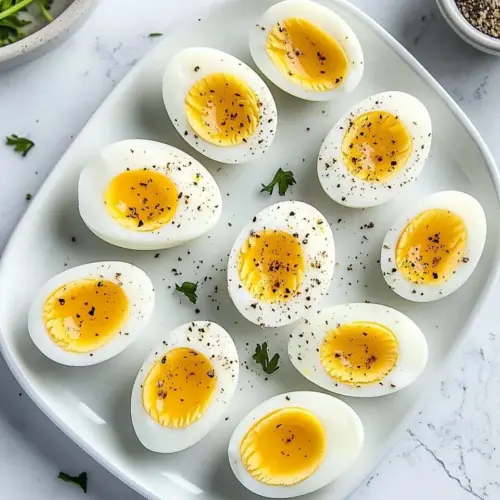
Air Fryer Hard Boiled Eggs
Air Fryer Hard Boiled Eggs are an easy, hands off way to make perfectly set yolks and tender whites. This simple method gives consistently creamy texture with minimal cleanup, ideal for quick breakfasts and meal prep. Make a batch for the week, and enjoy effortless protein that brightens salads and snacks, a smart choice for easy weeknight mornings.
Equipment
- Air Fryer
- Air fryer mesh basket
- Bowl
Ingredients
- 8 large eggs Provide structure and protein while cooking through evenly in the air fryer; use large eggs to yield firm whites and creamy yolks. Ensure eggs are at room temperature or briefly rest before cooking to reduce cracking and promote consistent results. Arrange eggs in a single layer in the basket to allow hot air circulation and even heat exposure. Cool promptly in an ice bath after cooking to stop the cooking process and make peeling easier.
Instructions
- Place your eggs in your air fryer mesh basket, leaving space between them so that they are not touching.: The moment you set the eggs into the basket you will notice the cool, smooth shell under your fingertips, and spacing is crucial so hot air circulates evenly. If the eggs are touching, some will finish sooner and others later, leading to uneven yolks. A common misstep is overcrowding, which muffles airflow and yields inconsistent doneness, so give each egg a little breathing room. You want to hear the subtle metallic click of the basket as you slide it into the air fryer , and visually confirm none are nested against one another. That visual cue is a quick check to avoid uneven cooking. If you see eggs leaning or touching, rearrange them with tongs so each sits on its own spot.
- Cook at 350 ℉ for 12 minutes. Then, turn off the air fryer and let the eggs rest inside for 10 minutes.: As the appliance powers on, expect a soft hum that grows steady, and after a few minutes you may smell a faint toasty warmth that is normal, not burnt. The set temperature ensures the interior proteins of the eggs coagulate slowly for a tender yolk, rather than seizing up rapidly. A common mistake is bumping the temperature higher to rush things, which yields chalky yolks, so resist that urge. Watch the clock rather than opening the basket early, because every interruption lets heat escape and lengthens cooking. Visually there is no dramatic change to the shell, but you'll sense the appliance warmth when you briefly lift the basket for a glance. Trust the time and temperature for consistent doneness across all eight eggs .
- Transfer the eggs to cold water for 10 minutes to cool.: The residual heat phase is where gentle carryover cooking finishes the yolks to a creamy texture, and you will feel the appliance remain warm to the touch. This rest period prevents overcooking by allowing internal temperatures to equalize slowly, which keeps yolks from developing a gray halo. One pitfall is removing the eggs immediately when the timer stops, causing uneven finish and a firmer white near the shell, so let them sit undisturbed. During this time the internal steam continues to work, and that quiet, gradual finish is why the method is forgiving. If you skip this wait, peelability can suffer because the interior has not relaxed, making shells cling more tightly.
- Once eggs are cooled, you can peel them if you like. Serve immediately or transfer to an airtight container to store in the fridge.: When you plunge the warm eggs into a bowl of cold water, you will hear a soft plop and feel the temperature drop as the shells cool, which helps stop cooking immediately. The cold shock contracts the interior slightly, separating the membrane from the shell for easier peeling, and you will notice tiny beads of condensation form on the shells. A frequent error is using lukewarm water, which does not stop cooking effectively, so always use cold or add ice cubes if needed. While they sit, the contrast between warm interior and cool exterior promotes neat peeling and preserves yolk color. Keep them in the bath for the full ten minutes to ensure they are fully chilled to the center.
- Once eggs are cooled, you can peel them if you like: You will feel the outer shell give way under a gentle tap, and the membrane should lift cleanly, revealing a smooth, pale white and a vibrant yolk inside. For easiest peeling, start by cracking the wider end where an air pocket forms, then roll the egg gently to loosen the shell, which helps the membrane detach. A common slip is peeling straight from the pointy end where there is less air space, making removal messier, so begin at the broader end. The texture of the white should be tender and springy, not rubbery, and the yolk should be uniformly colored without a dry outer ring. If you plan to store them unpeeled, pat dry and refrigerate in an airtight container to preserve freshness.
- Serve immediately or transfer to an airtight container to store in the fridge: When you plate a peeled egg , you will appreciate the smooth cross section and creamy mouthfeel of the yolk, ideal for salads or quick snacks, and storing extras keeps mornings effortless. Use a container that seals well to avoid fridge odors, and label with the date as hard cooked eggs are best within about one week. A typical mistake is leaving them uncooled before refrigeration which can raise fridge temperature briefly and affect other foods, so cool them completely first. Proper storage maintains texture, so you'll get the same pleasing bite days later when you slice one onto toast or pack it for lunch.
Notes
- Adjust doneness by time: To shift yolk texture slightly softer, reduce the cook time by one to two minutes, but keep the ten minute rest so the interior finishes gently.
- Batch size tips: If your air fryer is compact, cook fewer eggs per cycle to maintain airflow and consistent doneness.
- Cooling method: Add ice to the cold bath for a faster chill if you need to peel immediately for plating, ensuring the interior stops cooking quickly.
- Peeling technique: Tap gently and roll the egg on the counter to loosen shell pieces, starting at the wider end where the air pocket helps separate membrane.
- Storage strategy: Label an airtight container with the cook date, and place unpeeled eggs in the coldest part of the fridge to maintain freshness up to a week.