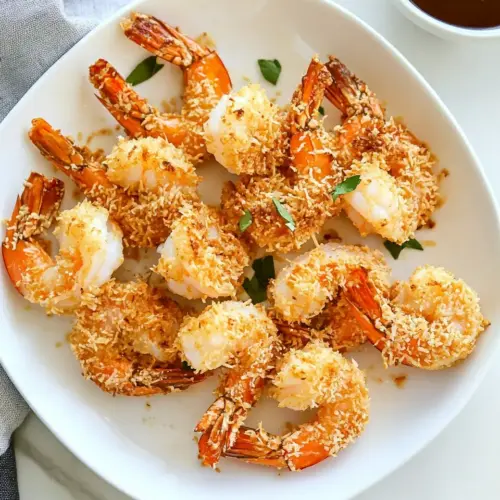
Air Fryer Coconut Shrimp
Air Fryer Coconut Shrimp delivers crunchy golden coating and juicy shrimp in under 20 minutes. This easy, crispy appetizer blends toasted coconut and panko for texture and a hint of sweetness, perfect for parties or an easy weeknight treat. Make it for summer gatherings or quick entertaining when you want big flavor with minimal fuss.
Equipment
- Air Fryer
- Mixing Bowls
- Tongs
- Paper towels
Ingredients
- 1 cup panko breadcrumbs Provide a crispy, airy coating when toasted and adhere well to wet dredges; panko breadcrumbs deliver a light, crunchy texture that contrasts the tender shrimp. Use to create an even breading layer in the air fryer, helping achieve golden browning without heavy oil. Can be seasoned lightly to boost overall flavor and appearance.
- 1/2 cups sweetened desiccated coconut flakes Add a sweet, tropical crunch that complements savory seafood while promoting caramelized edges during cooking. Sweetened desiccated coconut flakes contribute both flavor and texture, pairing with panko to form a balanced, crunchy crust. Must be pressed onto the shrimp firmly to ensure even adherence and prevent burning in the air fryer.
- 2 eggs Bind the dry coatings and help create a cohesive batter that sticks to the shrimp when dredged. Beaten eggs provide moisture and protein that set during cooking to lock panko and coconut onto the prawns. Whisking briefly ensures smooth consistency for uniform coating.
- 2 teaspoons sugar Enhance the crust's subtle sweetness and promote light caramelization on the coconut and breadcrumbs. Sugar subtly balances savory elements and can magnify the tropical notes from the coconut flakes when sprinkled into the coating mix. Use sparingly to avoid excessive browning in a high-heat air fryer.
- 7 oz jumbo shrimp, or tiger prawn, peeled with the tail on. Supply the main protein and centerpiece of the dish, offering meaty texture and delicate seafood flavor that pairs well with the coconut crust. Peeled jumbo shrimp with tails on cook quickly and retain moisture in the air fryer, while the tail provides an attractive handle for serving. Choose fresh or properly thawed prawns for best texture and food safety.
Instructions
- In a bowl, combine the panko breadcrumbs and sweetened desiccated coconut flakes. Mix well and set aside.: The aroma at this stage is purely promising, the dry mix should smell faintly sweet and nutty from the coconut flakes . Use a spoon to fluff the mixture so the panko breadcrumbs stay light and separate, that helps achieve an airy crust. You will notice small clumps if the coconut flakes are humid, so break them up with your fingers. If you compact the mixture, the coating will become dense and the crust may not crisp properly. A common pitfall is not mixing evenly, which results in some shrimp having mostly coconut and others mostly panko, so take a moment to ensure a uniform blend.
- In a separate bowl, beat the eggs and sugar together until well combined. Set aside.: You should see a glossy, slightly frothy liquid when the eggs and sugar are well combined, and it will smell clean and sweet. The mixture should coat the back of a spoon, which indicates it will cling to the shrimp effectively. If the eggs are cold, they may not emulsify as well, so bringing them to room temperature can help. Avoid under mixing, because pockets of unincorporated sugar can create uneven browning when air fried.
- Pat the shrimp dry with paper towels to remove any moisture. Dip each shrimp into the egg mixture, ensuring it's fully coated. Then, roll it in the panko-coconut mixture, pressing lightly to adhere. Shake off any excess. Dip the shrimp into the egg mixture once more, then roll it in the panko mixture again for a second coating.: At this point you will feel the texture shift from slick to tacky as the egg binds the dry mix to the shrimp . Press gently but firmly so the panko breadcrumbs and coconut flakes grip the surface, which creates that satisfying crunch after cooking. After the first coat, the second dip builds thickness and resilience, so the crust stays intact in the air fryer. A telltale visual cue is an even matte coating over the shrimp with no bare spots; if you see gaps, reapply a small amount of coating. The most frequent mistake here is leaving the shrimp too wet, which will slide off the mixture and create blobs rather than an even crust.
- Place the coated shrimp in a single layer in the air fryer basket. Set the air fryer to 375°F (190°C) and air fry for 5 minutes.: When you lay the shrimp in the basket, you should hear a faint clack as they settle against each other, and the arrangement should allow air to circulate around each piece. At 375°F the initial heat begins to set the coating, and you should detect the faint caramelizing scent of the sugar and coconut flakes as they warm. The single layer is essential for even crisping; overcrowding traps steam and yields soggy spots. A common error is piling them up to save time, but that prevents that signature golden exterior from forming properly.
- After 5 minutes, flip the shrimp over and air fry at 375°F (190°C) for 3 minutes, until golden and crispy.: Flipping reveals a quick visual check, you want both sides to be evenly golden with flecks of toasted coconut flakes . The sound changes to a faint crackle as moisture escapes and the crust hardens. This step ensures balanced browning and even internal temperature, which keeps the shrimp tender. If you leave them too long without flipping, one side can overbrown while the other remains pale. Be mindful of the final color, because slight variations in air fryer models may require an extra 30 to 60 seconds to achieve that perfect golden hue.
- Take the shrimp out of the air fryer and serve with chili sauce or your favorite dipping sauce.: Remove the shrimp when they look glossy golden and feel crisp to the touch, and they will continue to set as they cool for a minute. The aroma at this point is sweet toasted coconut with a hint of caramelized sugar , and the interior of the shrimp will be springy and opaque. Let them rest briefly on a rack so steam does not soften the crust, and serve immediately for best texture. A slip many cooks make is plating them directly onto a flat surface where steam accumulates and softens the coating, so give them a little airflow before serving.
Notes
- Pat Dry First: Thoroughly drying the shrimp removes surface moisture that would otherwise prevent the coating from sticking and crisping, which ensures an even, golden crust.
- Room Temperature Eggs: Using room temperature eggs improves adhesion and creates a slightly more consistent coating, reducing the chance of gaps in the crust.
- Single Layer Cooking: Arrange the shrimp in a single layer so hot air circulates freely, if you crowd the basket you risk steaming rather than crisping.
- Double Coat for Crunch: The double dip into the egg and panko mixture builds a resilient crust that holds up while air frying, giving you that satisfying crackle when you bite in.
- Rest on a Rack: Let the cooked shrimp rest briefly on a wire rack to let any residual steam escape, this keeps the bottom from going soft and preserves the texture.
- Watch Your Air Fryer Model: All air fryers run a bit differently, so if your first batch looks underdone, add 30 to 60 seconds rather than a full additional minute to prevent overshooting.