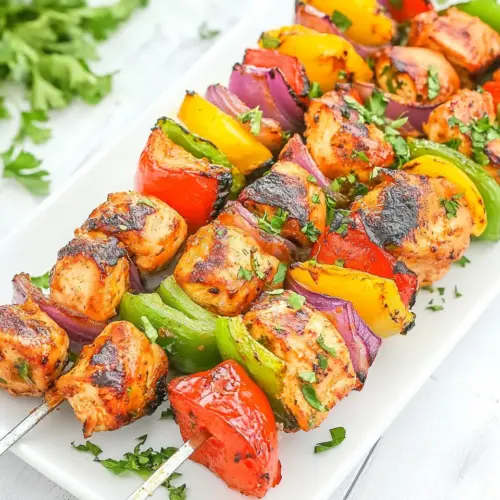
Air Fryer Chicken Kabobs
Air Fryer Chicken Kabobs deliver sweet sticky glaze and crisp tender vegetables in an easy weeknight dinner. Juicy chicken bites marinated in honey and soy sauce caramelize beautifully in the air fryer, yielding bright, flavorful skewers perfect for family meals or casual entertaining.
Equipment
- Air Fryer
- Mixing Bowl
- Skewers
- Brush
Ingredients
- 2 boneless skinless chicken breasts cubed into 2" pieces Cut into 2-inch cubes to ensure even cooking and quick air-frying; provides the primary protein and hearty texture for the kabobs. Marinating or coating the pieces allows flavors to penetrate each cube for juicy results.
- 3 tablespoons honey Adds a touch of sweetness that balances salty and savory elements; helps create a glossy, caramelized finish when exposed to high heat. Can be mixed into the marinade to build a subtle glaze during cooking.
- 1/2 cup soy sauce Contributes a salty, umami-rich base that seasons the chicken and vegetables; acts as the primary savory component in the marinade. Thinner or low-sodium versions can be used to adjust overall saltiness without altering texture.
- 2 tablespoons olive oil Delivers fat for moistness and helps emulsify the marinade so flavors cling to the chicken and vegetables. Also promotes browning and prevents sticking during air-frying when brushed on kabob pieces.
- 1 teaspoon minced garlic Provides a concentrated garlic flavor that infuses the marinade and complements the honey-soy combination. Minced form distributes evenly, allowing small bursts of savory pungency throughout the dish.
- 1/2 teaspoon salt Seasons for taste and enhances other flavors while controlling overall saltiness of the dish; helps draw moisture out slightly for improved texture when used sparingly. Can be adjusted to dietary preference while monitoring soy sauce salt contribution.
- 1/4 teaspoon pepper Adds mild heat and a subtle earthy bite to balance sweetness and salt; used in small quantity to enhance overall flavor without overpowering. Freshly ground pepper offers a brighter aroma compared to pre-ground varieties.
- 1/2 teaspoon paprika Imparts a warm, slightly smoky flavor and a gentle color to the marinade, reinforcing savory notes. Works well to add depth without adding heat or altering moisture levels significantly.
- 1 zucchini chopped Chopped for even-sized pieces that cook at a similar rate as the chicken; provides a tender yet slightly firm bite with a mild, fresh flavor. Absorbs marinade flavors and offers a pleasant contrast in texture and color on the kabobs.
- 1/2 red onion cut into large chunks Cut into large chunks so they hold together on skewers and char nicely in the air fryer; contributes a sweet-sharp flavor and slight crunch when cooked. Adds visual appeal and a savory-sweet component to each bite.
- 1 yellow bell pepper cut into large chunks Cut into large chunks to maintain structure on skewers and deliver crisp-tender texture after air-frying; brings sweet, bright notes to balance savory elements. Retains juices and provides a colorful, crunchy contrast on the kabobs.
- 1 green bell pepper cut into large chunks Cut into large chunks to match cooking time of other vegetables and chicken; offers a slightly bitter, grassy flavor that pairs well with the sweet and savory marinade. Adds color variety and a fresh, crisp texture when cooked briefly.
- 1 cup cherry tomatoes halved Halved to cook quickly and evenly while retaining juiciness; offers bursts of sweet acidity that brighten the overall dish. Small size allows tomatoes to blister slightly in the air fryer, enhancing flavor.
- 2 tablespoons chopped cilantro for garnish Chopped and sprinkled as a finishing garnish to introduce a fresh, herbal brightness that enhances all components. Adds color contrast and a light, citrusy undertone that lifts the dish just before serving.
Instructions
- In a small mixing bowl, combine honey, soy sauce, olive oil, garlic, and seasonings. Mix until well blended.: The air will fill with a sweet savory aroma as the liquids mingle, a sign the flavors are marrying; the oil creates a sheen while the garlic perfume becomes noticeable, promising depth. This emulsified mixture helps the chicken and vegetables take on flavor evenly, and whisking until smooth ensures no pockets of dry seasoning remain. A common mistake here is under mixing, which leaves concentrated salty or sweet spots in the sauce, so take an extra 30 seconds to fully combine.
- Pour the mixture over the chicken, reserving about 1/4 cup for later. Cover and allow to marinate for 30 minutes to 1 hour.: As the marinade meets the cubed chicken , you will hear a faint slap as pieces are moved around, and the meat will shine as it soaks up the liquid; this is when the honey starts clinging to the surface. Reserving sauce for basting preserves a clean glaze for finishing, keeping cross contamination at bay. Avoid overpacking the bowl, because crowding reduces contact with the marinade and leads to uneven flavor absorption.
- When the chicken is ready, begin to assemble your kabobs. Add a piece of chicken, followed by tomatoes, zucchini, onion, and peppers. Or create a combination of your choice.: The chicken progressively darkens as the soy sauce penetrates, and the scent of garlic intensifies; this resting lets the salt begin breaking down muscle fibers for tender results. I prefer at least 30 minutes if I’m short on time, but an hour yields a deeper taste. A typical error is marinating too long, which can overly soften the surface texture, so don’t exceed the upper window unless you like a very tender exterior.
- When all of your kabobs are assembled, place 3-4 (depending on your air fryer size) in the bottom of the air fryer.: Threading is tactile and satisfying, you will feel the resistance of the meat slide against the skewer, followed by the give of a tomato or pepper; arranging them in an alternating pattern helps distribute juices. The visual of contrasting colors also boosts appetite, and it ensures balanced cooking as protein and veg share space. Be mindful not to pack pieces too tightly, which prevents heat circulation and can yield steamed rather than roasted textures.
- Air fry the kabobs at 375°F for 15 minutes. Halfway through, flip the kabobs, brushing the other side of the chicken pieces with the remaining sauce.: As each piece lands on the skewer you will notice how the tomato’s glossy red contrasts with the matte of the zucchini and the sheen on the chicken . Alternating items ensures fats and juices from the chicken baste the vegetables while they cook, enhancing flavor. A frequent mistake is placing too many tomatoes next to each other, which can release excess liquid and make the skewer soggy in spots, so space them thoughtfully.
- When the kabobs are done, serve immediately as a main course or appetizer.: Mixing the order changes every bite, and experimenting lets you discover favorite pairings, like more peppers for crunch or additional tomatoes for juiciness. This personalization matters because it tunes the final plate to your texture and taste preferences. Just remember to keep pieces similar in size so no single element finishes much earlier or later than the rest.
- When all of your kabobs are assembled, place 3 to 4 in the bottom of the air fryer: You'll hear a light clink as they rest in the basket, and leaving a little space between skewers allows hot air to circulate, producing even browning and crisp edges. Resist the urge to crowd the basket, it slows cooking and reduces the desirable concentration of heat. A common oversight is overfilling the basket, which results in uneven doneness and less appealing texture.
- Air fry the kabobs at 375°F for 15 minutes: During the first minutes you’ll notice steam rising and a gentle sizzle as the marinade starts to concentrate on the surface; by the midpoint the edges of the chicken will take on golden brown notes. This temperature gives a good balance between browning and thorough cooking, avoiding dried out meat. Avoid opening the fryer repeatedly, as heat loss interrupts the cooking rhythm and lengthens cook time.
- Halfway through, flip the kabobs, brushing the other side of the chicken pieces with the remaining sauce: Flipping reveals how much browning has developed, and brushing fresh sauce refreshes the glaze, creating sticky, shiny spots that catch the light. This step intensifies flavor and produces a caramelized surface, which elevates the eating experience. A mistake to avoid is using sauce that touched raw chicken for basting, which risks contamination; always use the reserved portion.
- When the kabobs are done, serve immediately as a main course or appetizer: The finished skewers smell fragrant and have a glossy coating, the vegetables should be tender with crisp edges and the chicken will be juicy and lightly caramelized; serving right away preserves the best texture and temperature. Letting them sit too long causes the glaze to tack and the veggies to lose their bite, so move them to the table promptly for peak enjoyment.
Notes
- Trim and cube evenly: Cut the chicken into consistent two inch pieces to ensure even cooking in the air fryer. Even sizing prevents some pieces from drying while others finish underdone.
- Marinate for flavor depth: Allow at least 30 minutes for the chicken to develop flavor, though up to an hour is fine. This gives the soy sauce and honey time to penetrate, yielding juicier meat.
- Reserve basting sauce: Set aside about a quarter cup of marinade before touching raw chicken, so you can brush clean sauce on during cooking without risk of contamination.
- Space skewers properly: Place only three to four skewers per batch in most air fryers to maintain heat circulation. Overcrowding causes steaming and uneven browning.
- Rotate and brush halfway: Flip the skewers and brush with reserved sauce at the midpoint for glossy, caramelized surfaces and balanced flavor.
- Measure skewer length: Test wooden skewers in your air fryer before assembling to avoid chopping or unsafe overhang that could burn during cooking.