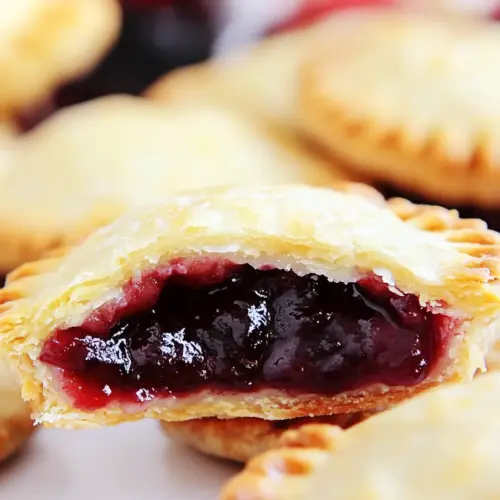
Air Fryer Cherry Hand Pies
Air Fryer Cherry Hand Pies offer a crispy, golden crust surrounding glossy, slightly tart cherry filling. This easy treat is perfect for quick desserts or grab and go snacks, delivering flaky texture and bright flavor that makes for an irresistible easy weeknight dessert or party finger food, and it's a wonderful reason to bake something homemade today.
Equipment
- Air Fryer
- Mixing Bowl
- Cookie Cutter
- Fork
- Basting Brush
Ingredients
- 2 refrigerator pie crusts Chill and unroll to provide an easy-to-shape pastry base for the hand pies; works as both top and bottom crusts, creating a flaky texture when baked. Handle gently to prevent tearing, and keep cold until rolling to ensure optimal flakiness during air frying.
- 1 1/2 cup cherry pie filling Add sweetness and fruit filling to give the hand pies a classic cherry flavor and moist interior; spoon evenly to avoid overfilling and leaking during cooking. Drain excess syrup if necessary to reduce sogginess and ensure the crust crisps properly.
- 1 large egg Beat briefly to create an egg wash that promotes a golden, glossy finish on the crust and helps seal the pie edges. Whisk thoroughly with water to ensure even application and a smooth, attractive surface after air frying.
- 1 tablespoon water Combine with the beaten egg to thin the wash for easier brushing and to improve adherence for sealing the crust edges. Use sparingly to control shine and browning intensity without making the dough too wet.
- 2 tablespoons white granulated sugar Sprinkle over the tops of assembled hand pies to add a sweet, crunchy finish and enhance visual appeal after cooking. Apply evenly for consistent caramelization and to complement the fruit filling's sweetness.
- Cooking spray Coat the air fryer basket lightly to prevent sticking and promote even browning of the crust without adding excess fat. Use a fine mist for best results and avoid heavy application that could alter texture.
Instructions
- First, thaw the pie crusts per the directions on the package.: The dough should be pliable but still cool to the touch, with a faint chill that keeps it from sticking as you roll. You will notice it becoming soft enough to unroll without tearing, and the surface should feel slightly tacky not wet. Thawing properly matters because over thawed pastry becomes sticky and tears easily, while under thawed pastry cracks when rolled. A common mistake is rushing this step, which leads to ragged edges; if the crust seems too cold to work, let it sit for a few more minutes wrapped in plastic so it remains moist and workable.
- Roll out the pie dough on a lightly floured surface and using a cookie cutter cut out 3 or more 5-inch circles from each crust. Discard the scraps.: As you press the cutter into the dough you'll see clean, defined circles with smooth edges, and the dough will lift off the surface without stretching. The flour acts as a barrier so the pastry does not stick while rolling. Proper thickness helps the crust puff and flake during cooking, while rolling too thin will make the pies fragile. One trap is over flouring which dries the dough; brush away excess flour before filling so you maintain the intended moisture balance.
- Add 2 tablespoons of cherry pie filling to the center of the circles leaving about a 1/2 inch border.: The filling should sit as a glossy, slightly domed spoonful in the dough center, not flattened out to the edges. This border is essential for sealing and prevents leaking as the filling softens during cooking. If you add too much filling, juices will escape and cause soggy bottoms and sticky messes in the basket. A neat mound that stays contained when the dough is folded is the right amount.
- Next, dip a fingertip into some water and run it around the edges of the circles. After that, fold them to create a half-moon shape.: The water creates a light adhesive that helps the two halves bind together when you fold, producing a secure seal. Your fingertip will leave a slightly damp ring that looks matte against the dough, signaling the right place to press. Not wetting the edge enough can lead to fills popping open, so be sure the ring is consistent but not saturated.
- Using your finger pinch the edges together. Crimp the edges together using a fork.: When the dough halves meet they should align cleanly, forming a curved edge with the filling safely enclosed, and any excess dough should tuck in rather than bulge. Folding concentrates heat inside the pocket and helps the filling heat evenly. Folding too loosely will allow steam to escape and reduce flakiness, so press gently along the seam for a tight join, but avoid smashing the filling out.
- In a small bowl, whisk the egg with the water and use the egg wash to brush the surface of the hand pies.: Pinching compresses the seam so the pies hold their shape during cooking and prevents leakage. The edge will show small compressed ridges where the dough bonds, which helps trap steam and encourages even browning. A common error is pinching unevenly, creating weak spots; aim for consistent pressure along the whole seam for a reliable seal.
- Sprinkle with sugar and make 3 small incision cuts on the top.: Pressing a fork along the rim creates a decorative, uniform crimp that further strengthens the seal and gives a classic hand pie look. You should hear a gentle push as the tines compact the dough, and the edge will take on a patterned impression. Avoid pressing too hard which can flatten the pie or force out filling; moderate, even tines impressions are best.
- Preheat the air fryer to 360 degrees F.: The wash should look glossy when brushed on and will transform to a deep golden sheen as the pies cook, signaling even browning. Use a light, sweeping motion so the wash covers without pooling in crevices. Too heavy an application can drip into the basket and create uneven coloration, so wipe away excess from the brush and aim for a thin, even coat.
- Spray the basket with oil spray. Arrange the pies, in one single layer not touching each other. If needed cook in batches.: The sugar will glint on the surface and melt slightly into a subtle crunch, while the vent cuts allow steam to escape so the filling heats without bursting the pastry. The cuts should be shallow slashes, evenly spaced, so they steam rather than leak. Making them too deep invites leakage, while none at all can cause tops to split unpredictably as pressure builds.
- Air fry for 9-10 minutes, or until golden brown.: A properly preheated air fryer gives a quick blast of hot circulating air that crisps the surface and sets the crust before the filling becomes too runny. You'll hear a faint hum and notice the basket is evenly warmed, which helps the first batch brown uniformly. Skipping preheat can lead to greasy, under crisped bottoms, so wait until the fryer indicates it has reached temperature.
- Spray the basket with oil spray: A light mist ensures the pies release cleanly after cooking and that the bottoms brown without sticking. The sheen should be barely visible, just enough to coat the metal. Excess oil pools can cause smoking or uneven browning, so spray sparingly and wipe away any large droplets.
- Arrange the pies, in one single layer not touching each other: Spacing allows hot air to circulate around each pie so edges crisp and tops color evenly, and you should see tiny pockets of airflow between them. Crowding will result in uneven cooking and soggy sides, so cook in batches if necessary. A telltale sign of overcrowding is uneven color and soft edges on pies pushed together.
- If needed cook in batches: Running multiple batches keeps each pie receiving direct heat and crisping appropriately, which is especially important if your basket is small. You will maintain consistent texture by doing this, even if it takes extra minutes overall. A mistake is trying to rush all at once, which leads to variable results; patience here ensures each pie turns out as intended.
- Air fry for 9 to 10 minutes, or until golden brown: Listen for a light sizzling and look for a deep golden brown color on the tops and edges, that indicator shows the crust is fully cooked and the filling is bubbly. The scent will be warm and slightly caramelized from the sugars, and the texture should be crisp to the touch. Overcooking will darken the crust and dry the filling, so remove them as soon as a uniform golden hue appears and the vents show gentle bubbling.
Notes
- Swap the sugar finish Change the sprinkle to coarse sanding sugar for extra sparkle and crunch, it gives a festive look and a satisfying initial bite.
- Vary the filling amount Adjust the filling to your preference; less for a flakier pastry dominated bite, more for a jam packed center, but avoid overfilling which causes leaks.
- Brush with more egg wash For a deeper glossy finish brush twice lightly, but let the first layer set a moment so the second does not pool.
- Chill pies before air frying Briefly chilling the sealed pies firms the edges and reduces the chance of them opening while cooking.
- Use decorative cutters Swap the round cutter for themed shapes for holidays or parties to make them instantly festive and kid friendly.