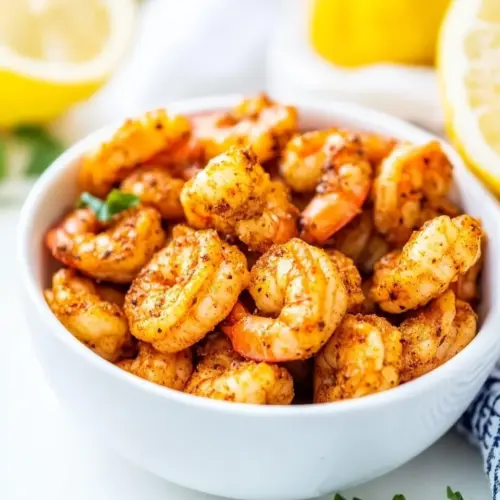
Air Fryer Cajun Shrimp
Air Fryer Cajun Shrimp bursts with smoky paprika, warming cayenne pepper, and a buttery finish for a quick and crispy easy weeknight dinner. This vibrant, spicy dish comes together in minutes in your air fryer, perfect for summer nights and casual entertaining. Try it when you want flavor without fuss, you'll be glad you did.
Equipment
- Air Fryer
Ingredients
- 1 1/4 pounds large shrimp, peeled and deveined Provide a firm, meaty base for the dish and deliver a quick-cooking protein that takes on spices rapidly; ensure shrimp are peeled and deveined for even cooking and clean presentation, and patting them dry helps the seasoning adhere and promotes a crisp exterior in the air fryer.
- 1 teaspoon paprika Add a warm, smoky sweetness that anchors the Cajun spice blend; paprika contributes color and mild aroma without overpowering the other seasonings, balancing heat from cayenne while enhancing the overall visual appeal of the shrimp.
- 1/2 teaspoon dried oregano Introduce an earthy, slightly bitter herbal note that complements the thyme and parsley; dried oregano helps round out the spice mix and provides subtle Mediterranean complexity that pairs well with garlic and paprika.
- 1/2 teaspoon dried thyme Contribute a fragrant, slightly minty and lemony aroma that brightens the seasoning mix; dried thyme works with oregano to create depth and pairs especially well with seafood for a more rounded herbal profile.
- 1/2 teaspoon garlic powder Provide savory umami and a mellow onion/garlic backbone without fresh produce; garlic powder disperses evenly over the shrimp, infusing them with a robust garlicky flavor that melds with the other dry spices.
- 1/4 to 1/2 teaspoon cayenne pepper Deliver adjustable heat and a bright, peppery kick that defines the Cajun character; cayenne pepper should be measured to taste to control spiciness while adding a sharp warmth that complements paprika and black pepper.
- 1/4 teaspoon salt Season for balance by enhancing overall flavor perception and helping other spices pop; salt should be used judiciously to avoid over-salting the naturally briny shrimp while ensuring the blend is well-rounded.
- 1/4 teaspoon black pepper Add a sharp, biting note that lifts and intensifies the spice blend; black pepper brings mild heat and aromatic complexity, working in concert with cayenne and paprika for layered spiciness.
- 1 tablespoon olive oil Coat and bind the spices while adding a light fruity richness that helps carry flavors; olive oil aids even seasoning distribution, promotes browning in the air fryer, and keeps shrimp from drying out.
- 2 tablespoons melted butter Enrich and add a silky, buttery finish that heightens richness and mouthfeel; melted butter contributes a luxurious flavor that complements the olive oil and helps the spices adhere during cooking and serving.
- 1 teaspoon chopped fresh parsley Provide a fresh, herbaceous finishing touch that lifts the cooked shrimp; chopped fresh parsley adds color, subtle grassy notes, and a clean contrast to the rich butter and bold Cajun spices.
- lemon slices for serving Offer bright acidity and a refreshing counterpoint for serving; lemon slices allow diners to squeeze fresh juice over the shrimp, cutting through richness and enhancing the seafood’s natural flavors.
Instructions
- Rinse shrimp and pat dry with paper towels. Place in a medium bowl.: The moment you rinse and pat the shrimp , you will notice the surface go from glossy to satin as excess water is removed, which is crucial for proper browning. I press gently with paper towels until the surface feels tacky but not wet, because moisture turns into steam and prevents the spices from crisping. Smell the shrimp briefly; it should have a clean, slightly briny scent. A common pitfall is skipping the drying step, which leads to steamed, rubbery texture instead of crisp edges.
- Sprinkle paprika, oregano, thyme, garlic powder, cayenne pepper, salt and pepper on shrimp.: After adding the spices, you'll see the bowl transform into a colorful mosaic. I toss the spices evenly with my fingers to ensure each shrimp gets a thin coat, which helps develop a consistent crust. The aroma should shift to warm and savory with hints of smoke and herb. If you notice clumps, break them apart so one bite does not become overly spicy. Over seasoning in a single spot is a frequent mistake.
- Drizzle shrimp with olive oil. Use a fork to mix evenly.: The tiny sheen from the olive oil allows spices to adhere and encourages browning in the air fryer . As you mix with a fork, the shrimp will glisten and the spices will bind into a uniform paste. You should be able to see an even coat on each piece. Watch out for using too much oil, which can pool at the bottom and cause uneven cooking or smoking in the appliance.
- Preheat air fryer to 400 degrees. Spray the air fryer basket with oil.: Preheating until the basket is hot helps the shrimp begin to sizzle on contact, creating immediate searing. When you spray the basket lightly, you reduce sticking while preserving crisping. Put your hand near the basket briefly to sense warmth, not heat, so you know it's ready. A common error is skipping preheat, which often leads to underbrowned, unevenly cooked shrimp.
- Add shrimp to air fryer basket. Air fry at 400 degrees for 5 to 6 minutes, shaking the basket halfway through.: As the shrimp cook, they will curl and change from translucent gray to opaque white with pink highlights, and you may hear a gentle sizzling as the spice crust forms. I shake the basket once to promote even browning and to flip any pieces that overlap. Keep the cook time tight; overcooking produces a rubbery bite. If some pieces look thicker, separate them so they cook evenly rather than crowding the basket.
- Transfer to serving plate. Pour melted butter over shrimp and sprinkle with parsley. Squeeze lemon juice over shrimp if desired.: The final pour of warm melted butter will gloss the surface and round out the spices, creating a silky mouthfeel. Freshly chopped parsley adds a green brightness, and a squeeze of lemon lifts the whole dish with acidity. Listen for the subtle hiss as butter hits the hot shrimp, and take a moment to smell the mix of fat and spice. Avoid letting the shrimp rest too long after buttering, because they will cool and lose the crisp edge that makes them delightful.
Notes
- Check shrimp dryness, patting thoroughly with paper towels prevents steaming and ensures crispy edges in the air fryer.
- Measure spices, especially the cayenne pepper, so the heat stays balanced and does not overpower the buttery finish.
- Use a light oil mist in the basket to reduce sticking without adding excess oil that could smoke at high heat.
- Do not overcrowd the basket; arrange shrimp in a single layer for even air circulation and browning.
- Watch for color change rather than relying solely on time, shrimp are done when they turn opaque with pink highlights.