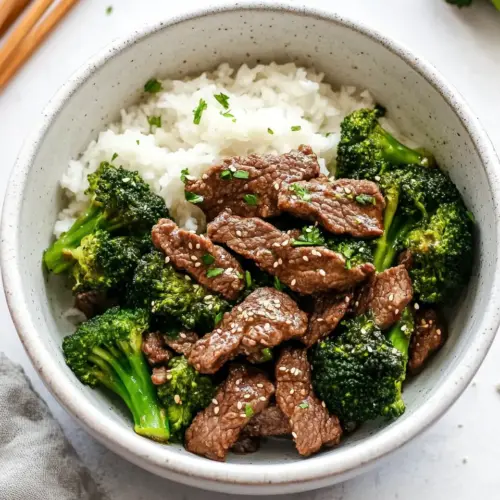
Air Fryer Beef and Broccoli
Air Fryer Beef and Broccoli is a crispy, savory, and easy weeknight dinner that combines tender sliced beef with bright broccoli and a glossy sesame soy glaze. Quick to prep and fast to cook, this flavorful recipe uses pantry staples and an air fryer to deliver bold umami and crisp textures, making it an ideal go to for busy nights and family meals.
Equipment
- Air Fryer Parchment Paper
- Air Fryer 5.8 QT
Ingredients
- 1 pounds trip steak, thinly sliced Thinly sliced to cook quickly and absorb sauce; provides the primary protein and savory flavor for the dish. Helps create tender beef bites when marinated and air fried, contributing to the overall texture and mouthfeel.
- 4 cloves garlic, minced Minced to infuse sharp, aromatic pungency throughout the sauce and meat; enhances depth and savory complexity. Releases juices that meld with soy and sesame, balancing richness with bright, garlicky notes.
- 1/3 cup low sodium soy sauce Used to supply salty, umami-rich backbone to the marinade and sauce; balances sweet and spicy elements. Adds complexity and depth so the beef and broccoli are seasoned evenly during cooking.
- 1/4 cup water Added to adjust sauce consistency and dilute stronger flavors; helps create a cohesive liquid for marinating and coating. Provides enough moisture for steam in the air fryer to slightly tenderize the beef.
- 2 tablespoons sesame oil Used to introduce a nutty, toasted aroma and richness to the sauce; enhances savory flavors. Contributes mouthfeel and fragrance that complements ginger and garlic in the overall profile.
- 2 teaspoons grated ginger Grated to deliver fresh, zesty heat and aromatic brightness; cuts through richness with sharp, citrusy notes. Works with garlic and soy to provide authentic savory balance and a subtle spicy warmth.
- 1 teaspoons sriracha Added sparingly to introduce heat and a touch of sweetness; elevates the flavor profile without overpowering. Blends into the marinade to provide gentle chili kick that complements umami elements.
- 1 pound raw broccoli florets Used to provide vegetable freshness, crunch, and a bright green color to the dish; balances the protein and sauce. Steams slightly in the air fryer while retaining bite, offering contrast in texture.
- 1 teaspoons olive oil Used to lightly coat broccoli for even oil coverage and to prevent sticking; contributes subtle richness. Ensures better browning and flavor development on florets when air fried.
- 1/2 teaspoon cornstarch Mixed into the sauce to thicken and help it cling to beef and broccoli; creates a glossy finish. Activates with water or pan juices to provide a silky, cohesive coating for each bite.
Instructions
- Add sliced steak to a medium sized mixing bowl.: The aroma of raw beef is faint but fresh, and the texture should feel firm and slightly cool to the touch. When you spread the slices in a bowl, they should lay flat without folding, which helps the marinade adhere. A common error is using pieces that are unevenly thick, which causes inconsistent cooking. Pat the beef dry with a paper towel before adding it to the bowl for better browning later.
- In a small bowl whisk together garlic, soy sauce, water, sesame oil, ginger, and sriracha.: As you whisk, the scent of garlic and ginger will blossom, and you will notice sesame oil streaks blending into the darker soy sauce . The mixture should look glossy and well combined. This step builds the core flavor, so taste a tiny bit to check balance, but avoid over salting. A misstep here is skipping the whisking, which can leave uneven pockets of strong seasoning.
- Pour HALF of the soy sauce mixture over the steak, stir to combine, cover, and refrigerate for at least 30 minutes.: The beef will begin to take on color and the marinade smell will deepen as it rests. You should feel the cool bowl warm slightly as the flavors start to penetrate. Marinating too briefly produces less depth, and marinating too long can change the texture, so aim for the recommended time. Covering tightly prevents refrigerator odors from mingling with the beef .
- Reserve the remaining soy sauce mixture for the sauce.: The reserved sauce will become your finishing glaze, so keep it separate and chilled until needed. It should look identical to the portion used for the marinade, glossy and aromatic. A common oversight is discarding the reserved portion, which leaves the dish without a cohesive glaze.
- Once marinated, place the steak into the air fryer basket and cook at 375 degrees F. for 8 minutes.: As the air fryer works, you will hear a soft sizzle and soon smell caramelized edges where the beef meets heat. Watch for a light crust forming and slightly darkened edges rather than a uniform gray. Under cooking yields chewy beef , and over cooking dries it out, so monitor the final minute for doneness.
- Add the broccoli florets to a bowl, drizzle with olive oil and toss to combine and coat.: The broccoli should glisten lightly after tossing, with no large pools of oil. This coating promotes even browning and prevents steaming in the basket. Avoid over oiling, which causes limp, oily florets instead of crisp, roasted pieces.
- After the steak has cooked for 8 minutes, add the broccoli to the basket, and cook for another 4 minutes.: You will notice a change in aroma when the broccoli starts to char slightly, a bright green with toasted tips. The sound profile shifts too, with a livelier sizzle as moisture exits the florets. Be careful not to overcrowd the basket, as that can lead to steaming rather than crisping.
- In a small bowl whisk together the reserved soy sauce mixture and cornstarch.: The texture should become smooth and slightly opaque, with no visible starch lumps. When you stir, the mixture will thicken when heated and turn glossy, which is the visual cue you want. If you add the cornstarch dry without mixing, it will clump and make uneven sauce pockets.
- Microwave on high for 1 minute. At this point the sauce should be thick enough to coat the back of a spoon. If too thick add a splash of water or if too thin cook for another 15-30 seconds.: The sound here is subtle bubbling as starch activates and the sauce thickens, and the scent becomes concentrated. After one minute, test the viscosity by coating the back of a spoon; it should cling but still pour slowly. If it becomes gummy, add a splash of water and reheat gently, and if it remains thin, heat in 15 to 30 second bursts until thicker.
- Remove the steak and broccoli from the air fryer, toss in the thickened sauce, and serve over rice.: When you combine them, the sauce should glaze each piece with a shiny coating that amplifies aroma and mouthfeel. You will see the beef edges glisten and the broccoli appear lacquered, which signals readiness. A common mistake is letting the dish sit too long before serving, which causes the sauce to congeal and the textures to soften.
Notes
- Control the basket load: Cooking in smaller batches ensures both the beef and broccoli get hot air circulation and crisp up rather than steam.
- Prep ingredients evenly: Slice the beef and the broccoli into similar sizes so they cook uniformly within the short air fry time.
- Use fresh aromatics: Fresh minced garlic and grated ginger create a brighter marinade than dried powders and make a noticeable difference.
- Reserve sauce wisely: Keep the reserved marinade separate until after marinating to avoid contamination and to ensure a glossy finishing sauce when thickened.
- Adjust heat cautiously: If you want more spice, add extra sriracha to the reserved sauce so the heat is evenly distributed when tossed.