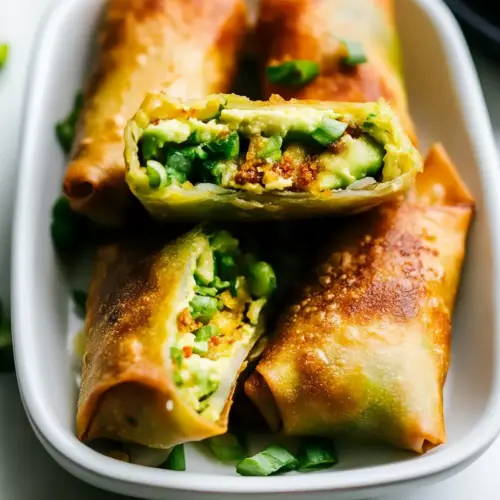
Air Fryer Avocado Egg Rolls
Air Fryer Avocado Egg Rolls are creamy, crispy, and incredibly easy to make. These golden parcels combine creamy avocado, fresh tomato, zingy lime, and bright cilantro for an irresistible appetizer or snack. Perfect for easy weeknight dinners or summer gatherings, they crisp up in the air fryer for a lighter, crunchy bite. Try them for a quick, crowd pleasing treat.
Equipment
- Air Fryer
- Mixing Bowl
- Fork
- Tongs
Ingredients
- 3 avocados diced Provide creamy texture and moist filling while offering rich, buttery flavor that binds other elements together. Dice into small, even pieces to ensure consistent pockets of avocado that crisp slightly during air frying when wrapped.
- 1/4 cup red onion diced Add sharp, pungent contrast and crunchy bite that balances the avocado’s creaminess. Dice finely to distribute bursts of onion flavor throughout the egg roll filling without overpowering other ingredients.
- 1 Roma tomato diced Contribute fresh juiciness and mild acidity to brighten the overall flavor profile and add small pockets of tomato sweetness. Dice into small pieces so the tomato integrates well with avocado without making the filling overly watery.
- 3 tbsp chopped fresh cilantro leaves Introduce herbaceous, citrusy notes that lift and freshen the filling while complementing the avocado and lime. Chop leaves finely and fold in gently to maintain a balanced, aromatic finish.
- 1 teaspoon garlic powder Provide warm, savory undertone and subtle garlic flavor without adding moisture, enhancing the overall savory profile. Measure carefully and sprinkle evenly to avoid overpowering the delicate avocado and cilantro.
- Juice of 1 lime Add bright acidity and tang that prevents the avocado from tasting flat while complementing cilantro and tomato. Squeeze fresh lime juice over the diced avocado to preserve color and balance richness.
- salt and pepper to taste Season to taste to enhance and unify all flavors, cutting through richness and bringing out subtle notes. Add sparingly and adjust as you combine the filling to maintain balance.
- 8 egg roll wrappers Encapsulate the filling and create a crispy exterior when cooked in the air fryer, providing structure and convenience. Use wrappers as directed, sealing edges well to prevent filling leakage during cooking.
- olive oil spray Enable light browning and crisping of the egg roll exterior with minimal added fat, helping achieve a golden finish in the air fryer. Apply a light, even mist before cooking to promote even color and texture.
Instructions
- In a medium bowl, add the avocado and mash to desired consistency. Add the onion, tomato, cilantro, garlic powder, lime juice and salt and pepper to taste.: The bowl will soon smell faintly green and buttery, and the sound is quiet as your fork breaks down the avocado into a plush mass. Mash until you reach a texture you like, whether chunky or almost smooth, because texture defines the mouthfeel when paired with the crisp wrapper. I prefer a slightly chunky mash so bits of avocado remain intact and provide contrast. One common mistake is overmashing into a paste which can make the filling slippery and harder to keep inside the wrapper, so stop while you still see small pieces.
- Place the avocado mixture in the center of each wrapper. Using your finger, rub the edges with water. Bring the bottom edge of the wrapper and roll it tightly over the filling. Fold in the sides and continue to roll up the wrapper and press to seal. Repeat until you have used all of the wrappers.: As you stir these in, inhale a bright citrusy lift and a herbal, almost grassy scent from the cilantro . The diced Roma tomato and red onion introduce visual flecks of red and purple that promise fresh bites. Fold gently to avoid pulverizing the tomato, which would release extra juices and risk soggy wrappers. A frequent error is adding too much lime at once; add half, taste, then finish, because acid can flatten the creamy profile if overapplied.
- Spray the basket of the air fryer with olive oil spray. Place the egg rolls in the basket and lightly spray the tops of the egg rolls with the olive oil spray. Cook at 400 degrees for 6 minutes. Then flip the egg rolls and cook for an additional 6 minutes.: When you set the filling down, you want to hear nothing, but see a neat mound no wider than the center third of the wrapper. The wrapper should lie flat and dry at the edges, which ensures a clean seal when you moisten and fold. If the filling is too wet, blot it slightly; excess moisture is the biggest reason wrappers fail to crisp. Avoid overfilling, as this causes tearing and leakage during cooking.
- Using your finger, rub the edges with water: Lightly wetting the perimeter creates a glue that holds the wrapper shut when you roll. The sensation is cool and tacky, and you should see the paper sheen of the wrapper change slightly where it is moistened. Be economical with water, as too much will make the wrapper soggy and difficult to crisp. A typical mistake is dunking rather than dabbing, which undermines the seal.
- Bring the bottom edge of the wrapper and roll it tightly over the filling: As you roll, feel the wrapper pull snugly against the filling, then fold the sides inwards so the filling is fully enclosed. Rolling tightly keeps the filling compact and prevents air pockets that inflate and split during cooking. You should notice a smooth, taut surface when the roll is sealed. If you roll loosely the wrapper may open or cook unevenly, so keep tension as you roll.
- Fold in the sides and continue to roll up the wrapper and press to seal: Folding creates neat ends that lock in the filling; press the edges with the pad of your finger so they adhere firmly. The finished roll should look cylindrical and tidy, with none of the filling peeking out, because exposed bits will char. A common mistake is to tuck too little, leaving gaps that blow open in the air fryer, so tuck and press firmly.
- Repeat until you have used all of the wrappers: As you progress, you will find a rhythm, and your rolls will become neater and faster. Keep assembled rolls covered with a slightly damp towel to prevent the wrappers from drying out while you work on the rest. If a wrapper dries and becomes brittle it can crack when folded, so maintaining humidity is essential. One pitfall is leaving them exposed, which causes cracking and breakage during frying.
- Spray the basket of the air fryer with olive oil spray: The spray forms a fine shimmer on the basket surface, and this small step stops the rolls from sticking and promotes uniform browning. You should hear a faint sizzle the first few seconds as the oil heats, and the aroma will be subtle and warm. Avoid heavy coating because pooled oil under the rolls can create greasy bottoms rather than crisp shells.
- Place the egg rolls in the basket and lightly spray the tops of the egg rolls with the olive oil spray: Arrange them spaced apart so hot air circulates on all sides, and the surface will glisten from the light spray. This even mist encourages a uniform golden color and a fragile crunch. Overlapping or crowding produces uneven browning and soft patches, which is an easy misstep when you try to cook too many at once.
- Cook at 400 degrees for 6 minutes: During these initial minutes you will notice the scent shift toward toasty notes as the wrapper begins to crisp and brown. Listen for a faint popping as pockets of air form and the exterior tightens. This is the stage where structure is built, so precise temperature matters to avoid undercooked, limp exteriors. A common mistake is opening the basket too often, which lets heat escape and can prevent the crust from forming properly.
- Then flip the egg rolls and cook for an additional 6 minutes: After flipping, the other side will take on the same golden sheen and the overall crunch will become uniform. You may hear a light crackle as the surface reaches its final crispness, and the filling will emit a warm, ripe aroma without burning. If one side finishes faster than the other, rotate placement for even color. A frequent error is skipping the flip, which leaves one side pale and softer, undermining the overall texture.
Notes
- Choose ripe but firm avocados, they are easier to dice and will hold texture inside the wrapper. If too ripe they will become mushy and leak during rolling.
- Pat tomatoes dry, especially if they are juicy, to prevent the filling from becoming watery. Use a paper towel to remove extra moisture before mixing into the avocado.
- Keep wrappers moist with a damp towel so they remain pliable while you assemble. Dry wrappers crack and tear when folded, which leads to leaks in the air fryer.
- Spray lightly—a gentle mist of olive oil spray achieves crispness without adding heaviness. Excess oil can make the bottom of the rolls soggy instead of crisp.
- Work in batches if needed to avoid crowding the air fryer basket. Proper air flow is essential for even browning and a consistent crunchy texture.
- Taste and adjust seasoning after mixing, as lime juice and salt levels can vary with avocado ripeness and tomato juiciness.