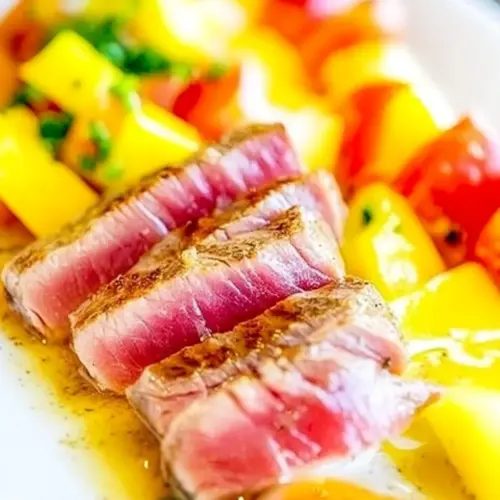
Ahi Tuna Steak Recipe
Ahi Tuna Steak Recipe combines a glossy maple Dijon glaze with a quick high heat sear for a tender, slightly seared center and caramelized exterior. This easy weeknight dinner is both elegant and approachable, with bright lemon notes and a satisfying umami finish. Perfect when you want something fast yet impressive, it’s a delicious reason to cook tonight.
Equipment
- Non-Stick Skillet
- Mixing dish
- Tongs
- Cutting Board
- Sharp Knife
Ingredients
- 25 oz . Ahi tuna steaks Provide rich, meaty protein and firm texture to serve as the main component of the dish, holding up well to quick searing; pairs beautifully with sweet and acidic glazes to balance flavors. Handle gently and sear briefly to preserve a rare center, ensuring tender, juicy results suitable for a restaurant-style presentation.
- 3 tbsp . maple syrup Add glossy sweetness and caramelization to the exterior during searing, helping create a flavorful crust that contrasts the tuna's savory profile. Combine with acidic and savory elements to form a balanced glaze that enhances umami without overpowering the fish.
- 2 tbsp . olive oil Contribute healthy fats and assist in even heat transfer during cooking, preventing sticking while adding a subtle, peppery fruitiness to the seared surface. Use sparingly to maintain a clean sear and support the glaze adhesion on the tuna steaks.
- 1 tbsp . lemon juice Bring bright acidity to cut through the richness of the fish and glaze, elevating overall freshness and balancing flavors. Squeeze just before cooking or finishing to preserve lively citrus notes that brighten each bite.
- 1 1/2 tbsp . Dijon mustard Introduce tangy creaminess and emulsifying properties to help bind the glaze ingredients together, lending a subtle sharpness that complements both sweet and savory components. Whisk thoroughly with liquids to create a smooth, cohesive coating for the tuna.
- 1/4 tsp . salt Enhance overall flavor by providing a subtle saline lift that amplifies natural umami and balances sweetness, ensuring the dish is savory rather than cloying. Sprinkle lightly and taste as you go to prevent over-salting delicate seafood.
- 1/4 tsp . pepper Impart a mild heat and aromatic depth that rounds out seasoning without overwhelming the fish, creating gentle contrast to sweet and acidic elements. Grind fresh if possible to maximize fragrance and finish the tuna with a delicate peppery bite.
Instructions
- Take the Ahi Tuna out of the refrigerator. Remove the packaging, and set aside.: The moment you take the ahi tuna steaks out, feel their temperature and firmness, they should be cool but not frozen. Letting them sit briefly at room temperature for a few minutes relaxes the muscle fibers so the steak sears evenly rather than cracking under heat, and you may notice a faint ocean aroma that tells you the fish is fresh. A common mistake is searing fish straight from the fridge, which produces uneven cooking and can over chill the center while the outside burns. If the steaks are wet, pat them dry with paper towels now to encourage proper browning and to prevent the marinade from sliding off.
- In a large dish, mix all of the marinade ingredients together. Reserve about four tablespoons of the marinade. Add the tuna steaks to the dish, and turn them until they’re well-coated. Set aside, and let them rest at room temperature for about 20-30 minutes.: As you whisk the maple syrup , olive oil , lemon juice , Dijon mustard , salt , and pepper , notice the syrup thinning and the mustard emulsifying into a glossy sauce. Reserving some marinade gives you a bright finishing drizzle later. When the ahi tuna steaks bathe in this mixture, the flavors cling to the fibers, and the sugar begins to soften the surface for better caramelization. Letting the steaks rest in the marinade at room temperature encourages even cooking, but avoid marinating too long or the acid will start to firm the flesh, altering the texture. A pitfall is over crowding the dish, which prevents even coating; turn the steaks gently to ensure full coverage.
- Heat up a non-stick skillet over high heat. Sear the tuna steaks for about 1-3 minutes on each side, or until the steaks reach their desired doneness.: When the skillet is scorching, it should shimmer and may smoke faintly, that is the signal to add the steaks. Place each ahi tuna steak down and listen for an immediate, lively sizzle, that sound means the sugars in the reserved glaze and the proteins are meeting heat and developing color. For a rare center, aim for about 1 minute per side, for medium rare up to 3 minutes, watching the edge color creep inward as a visual cue. Use a pair of tongs to flip once confidently, a hesitant poke releases juices. The big trap here is a pan that is not hot enough, which yields a dull, stewed texture rather than a crisp sear, or conversely a pan that is too hot for the oil and burns the glaze; find the happy medium where the surface browns quickly without smoking excessively.
- Place the cooked steaks on a cutting board, and slice against the grain into 1/2-inch thick slices. Transfer the steak slices to a serving plate and drizzle with the reserved maple-mustard marinade. Serve immediately.: After cooking, the steaks need a short pause to relax, about one to two minutes, so the juices redistribute and the texture becomes tender. On the cutting board, notice how the exterior holds a caramelized sheen while the interior maintains a translucent pink center, that contrast is the hallmark of success. Slice perpendicular to the muscle fibers to shorten them, producing clean, tender bites. If you slice immediately or with the grain, pieces can be chewy and stringy; take the moment to find the grain direction before cutting. Aim for even 1 2 inch slices for consistent presentation and mouthfeel.
- Transfer the steak slices to a serving plate and drizzle with the reserved maple mustard marinade.: The finishing drizzle brings a burst of concentrated flavor, and the reserved marinade adds shine and a lively finish. As you spoon it over, notice the aroma of citrus and mustard rise, and how the thin glaze clings to the edges of the slices. This final touch revives any surface moisture lost during searing and ties the dish together visually. A common error is pouring too much glaze, which can overwhelm the delicate fish; a light coating is all you need to enhance the flavor and provide balance.
- Serve immediately.: Timing is everything here, serve the Ahi Tuna Steak Recipe while the outside is still warm and the center slightly cool to the touch, that temperature interplay heightens texture and flavor. Presenting right away preserves the crisped edges and the glossy finish of the glaze. If you wait too long, the exterior will soften and the dish loses its contrast; use warm plates if you want to keep everything at an optimal temperature for a minute or two. I like to watch the first bite look on guests faces because this quick recipe delivers a magnitude of flavor with very little time investment.
Notes
- Use fresh quality tuna, because the flavor and texture depend on it; look for firm flesh and a clean scent to ensure the best result.
- Do not over marinate, the acid in the lemon juice can change the tuna's texture if left too long, so stick to the suggested time to preserve the silky center.
- Heat the pan well, you'll know it's ready when a drop of water dances and evaporates quickly, this prevents the fish from sticking and creates a glossy crust.
- Slice carefully, using a sharp knife and cutting against the grain yields clean pieces and an ideal mouthfeel for each bite.
- Keep the reserved glaze separate from the raw marinade and use it sparingly to finish the plate with brightness and shine.