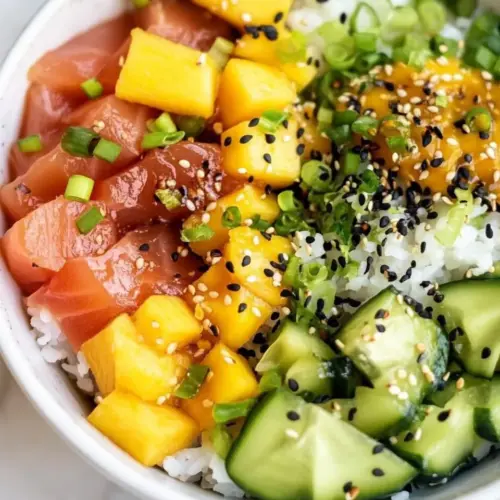
Ahi Poke Bowl with Mango
Ahi Poke Bowl with Mango brings creamy avocado, sweet mango, and silky ahi together with toasty sesame and bright lime for an easy weeknight dinner or light lunch. This fresh bowl is colorful, healthy, and full of texture, making it perfect for warm weather meals and casual entertaining. Try it for a fast, impressive meal you will want to repeat.
Equipment
- Medium Bowl
- Cutting Board
- Sharp Knife
Ingredients
- 1/2 pounds ushi grade tuna, cut into 3/4-inch cubes Provide tender, sushi-grade tuna cubes that form the protein centerpiece of the poke, offering a clean, briny flavor and satisfying texture when marinated briefly.
- 2 tablespoons thinly sliced white onion Add sharp, slightly pungent crunch and mild sweetness through thinly sliced white onion, balancing the richness of the tuna and adding aromatic bite.
- 1/4 cup chopped scallions Contribute fresh, mild oniony brightness with chopped scallions that uplift the poke with green color and a subtle crisp texture.
- 1 tablespoon reduced sodium soy sauce or gluten-free tamari Impart savory umami and balanced saltiness with reduced sodium soy sauce or gluten-free tamari, which seasons the fish without overpowering other flavors.
- 1/2 teaspoons sesame oil Deliver a toasted, nutty aroma with sesame oil that enriches the marinade and provides depth to the overall flavor profile.
- 1/4 teaspoons sriracha Introduce a spicy, garlicky heat with sriracha in small measure to enliven the poke and add a touch of chili-forward complexity.
- 1 medium mango Bring a sweet, juicy tropical contrast with ripe mango, adding vibrant color, soft texture, and a fruity counterpoint to the savory tuna.
- 1 small Hass avocado, 4 ounces Provide creamy richness and buttery texture with a small Hass avocado, offering healthy fats that mellow heat and add silkiness to each bite.
- 1/2 medium cucumber Add a cool, crisp, watery crunch with half a medium cucumber that lightens the bowl and refreshes the palate between rich bites.
- 1/2 -1 small jalapeno, to taste Contribute adjustable heat and bright, vegetal spice with half to one small jalapeno, allowing control over the bowl’s spiciness to taste.
- 2 scallions Offer extra fresh green onion flavor with additional scallions for garnish or layering, enhancing aroma and visual appeal with thinly sliced rounds.
- 1 cup cooked brown rice Serve as a hearty, whole-grain base with cooked brown rice that anchors the bowl, providing chewiness and neutral starch to absorb sauces.
- 2 tablespoons chopped roasted Macadamia nuts Provide a crunchy, buttery note with chopped roasted macadamia nuts that add textural contrast and a slightly sweet, nutty flavor.
- 1 teaspoon toasted sesame seeds Add subtle crunch and a toasty finish with toasted sesame seeds that enhance nutty aromas and visually finish the dish.
- Lime wedges, for serving Offer bright acidity with lime wedges for squeezing over the bowl to lift flavors, cut richness, and add lively citrus brightness.
- Reduced sodium soy or gluten-free tamari, for serving (optional) Supply optional extra seasoning with reduced sodium soy or gluten-free tamari for serving, allowing diners to adjust saltiness to preference.
- Sriracha, for serving (optional) Provide optional extra heat with sriracha for serving, enabling guests to intensify spice level and personalize their bowl.
Instructions
- In a medium bowl, combine tuna with onion, scallions, soy sauce, sesame oil and sriracha.: The aroma here should be a gentle perfume of sesame oil and soy mingling with the clean sea scent of the tuna . Use a medium bowl so the pieces have room to be coated evenly, and mix with a light hand to avoid bruising the fish. The why is simple, this step lets the flavors penetrate the surface of the tuna without cooking it, drawing out umami for a harmonious bite. A good troubleshooting tip is to check salt levels now, since soy sauce concentrates saltiness later; add sparingly. Avoid overmixing, which turns the cubes into ragged pieces and changes the texture.
- Gently toss to combine and set aside while you prepare the bowls.: You should hear only the whisper of fish moving in the bowl as you fold everything together, and visually the cubes should glisten with sauce. This gentle toss ensures each cube is glossed without breaking down, and resting allows the dressing to marry with the tuna . The reason for setting it aside is to let the flavors bloom, creating depth without heat. If it appears watery after resting, drain a little liquid rather than over salting. A common misstep is leaving it too long at room temperature; keep it chilled if your kitchen is warm.
- Peel, seed and cube the mango and avocado. Peel, halve, seed and thinly slice the cucumber. Thinly slice the jalapeno and scallions.: As you cut, notice the sweet perfume of the mango and the silky sheen of the avocado . Uniform cubes help balance each spoonful, so aim for similar sizes to the tuna . The crisp sound of the cucumber slices is a great cue for freshness, and thin slicing of jalapeno disperses heat evenly. The why here is texture balance; matching sizes keeps eating effortless. If your avocado is browning, work quickly and add lime to slow oxidation. Avoid cutting pieces that are wildly different in size which leads to inconsistent bites.
- In 2 bowls, layer 1/2 the rice, 1/2 the tuna, mango, avocado, cucumber, jalapeno and scallions.: The visual layering should be colorful and inviting, with warm rice anchoring cool toppings. As you assemble, press the rice gently into the bowl so it forms a base, then arrange toppings for contrast and accessibility. Layering in this order allows the tuna juices to mingle with but not soak through the entire bowl. This technique matters because it preserves texture, keeping crunchy elements crisp. If you notice the rice is soggy, pat it dry before assembling. A mistake I see often is piling ingredients without thought to distribution, resulting in uneven bites.
- Top with Macadamia nuts and sesame seeds and serve with lime wedges and extra sauce on the side, if desired.: The final sounds and textures are rewarding, the soft spooning of a bowl and the slight crunch of chopped macadamias. Toasted sesame seeds should add a warm nuttiness and flecked look. Serving lime wedges allows diners to brighten the bowl at will, and extra sauce accommodates personal salt preference. This finishing touch matters because it adds last minute freshness and a satisfying crunch. If the nuts are stale the bowl loses a key contrast, so always taste them first. Avoid pre tossing everything together, which can flatten the layered textures and aromas.
Notes
- Protein swap: Try salmon or albacore if you prefer a fattier fish, or cooked shrimp for those who do not want raw seafood; the seasoning works the same but adjust marinating time for delicate textures.
- Vegetarian option: Use firm tofu, pressed and cubed, marinated briefly in the soy and sesame mix to absorb flavor, then add mango and seeds for similar contrasts.
- Rice alternatives: Use sushi rice for a stickier base or mixed greens for a lighter bowl; note that different bases change mouthfeel so tweak dressing amounts accordingly.
- Nut choice: If macadamia nuts are unavailable, substitute toasted almonds or cashews to keep buttery crunch, but roast them first to match flavor depth.
- Heat control: Remove jalapeno seeds and ribs to lower heat, or replace with thinly sliced mild peppers for color without spice.
- Make ahead note: Keep the tuna dressed but separate from other components up to one hour before serving to maintain texture and avoid sogginess.