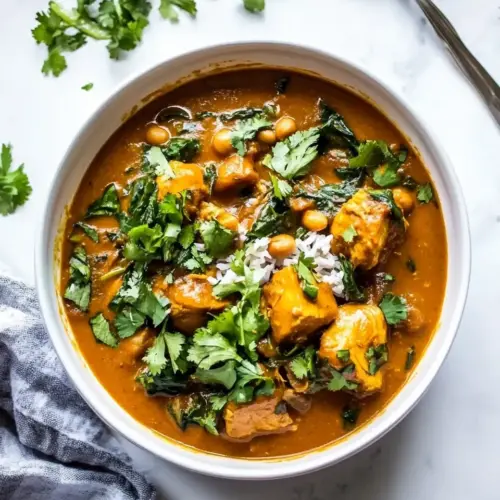
African Chicken Peanut Stew
African Chicken Peanut Stew is a creamy, savory bowl with tender chicken, sweet potatoes, and a rich peanut broth. This easy weeknight dinner is comforting and flavorful, offering warm spices and bright herbs for balance. Serve it over rice for a filling family meal that also makes excellent leftovers and meal prep.
Equipment
- Creamy Natural Peanut Butter
- 8 Inch Chef Knife
- 5.5 Quart Pot
Ingredients
- 1 tablespoon extra virgin olive oil Adds richness and a fruity, peppery base for sautéing aromatics and browning chicken while contributing healthy monounsaturated fats to the stew.
- 1 small yellow onion, diced Provides a sweet, savory foundation when softened; diced texture melts into the broth and adds natural sugars that balance the dish's heat and acidity.
- 1 serrano chili, minced, seeded Imparts bright, sharp heat and a fresh chili flavor; minced and seeded to control spiciness while contributing aromatic oils to the stew.
- 1 pound boneless skinless chicken thighs, 1-inch dice Supplies tender, flavorful protein that becomes succulent when diced and simmered; dark meat adds richness and stays juicy throughout cooking.
- 4 cloves garlic, minced Delivers pungent, aromatic depth and savory umami when minced; melds into the sauce to build a layered garlic flavor throughout the stew.
- 3 tablespoons tomato paste Concentrates tomato flavor and adds umami, body, and slight acidity; stirred into the pan to deglaze fond and thicken the stew base.
- 2 tablespoons grated ginger Lends warm, zesty brightness with a citrusy bite; grated to release fresh flavor and complement both the peanut and tomato elements.
- 1 1/2 teaspoons ground cumin Contributes earthy warmth and smoky undertones; measured to season the dish and tie together the savory and sweet components without overpowering.
- 1/2 cup natural creamy peanut butter Adds creamy, nutty body and signature peanut flavor; emulsifies with the stock to create a rich, silky stew while supplying protein and fat.
- 6 cups chicken stock Provides a flavorful cooking liquid that builds the stew's broth; chosen to enhance savory depth and hydrate the legumes and vegetables.
- 2 sweet potatoes, 1-inch dice Offers hearty, sweet starch and tender texture when diced and simmered; soaks up flavors and adds comforting body to the stew.
- 3 cups thinly sliced collard greens or Tuscan kale Introduces a leafy, slightly bitter green that softens when cooked; thinly sliced to integrate easily and contribute color, nutrients, and texture.
- 15 ounce can chickpeas, drained and rinsed Brings additional protein and a creamy, slightly nutty bite; drained and rinsed for a clean flavor while adding heft and vegetarian-friendly texture.
- White rice, cooked Serves as a neutral, fluffy accompaniment to soak up the rich stew; cooked rice balances bold flavors and rounds out the meal.
- Minced peanuts, for topping Adds crunchy texture and an extra layer of roasted peanut flavor as a garnish; minced to provide small bursts of nuttiness in each bite.
- Minced cilantro, for topping Garnishes with bright, herbaceous freshness and mild citrus notes; minced cilantro finishes the stew with color and aromatic lift.
Instructions
- In a large soup pot add olive oil and set over medium-high heat.: The moment the oil heats and becomes glossy you can tell it is ready, and that sizzling sound when a small piece of onion hits the pan tells you it will brown instead of steam. That initial sizzle forms the first layer of flavor, creating Maillard notes that the stew leans on. If the oil smokes you are too hot, so lower the heat to prevent burning. A common misstep is rushing this stage, which yields little flavor development.
- When the oil is hot add in the onion and minced chili. If you want your stew to be extra spicy leave the seeds in the pepper.: As the onion hits the pan it should soften and start to become translucent within a few minutes, releasing sweet aromas, while the minced serrano chili will perfume the oil with a green, peppery scent. Let the sweat help break down the onion so it melts into the sauce later. The mistake people make is crowding the pot which cools the oil and prevents proper softening.
- Saute the onions and pepper until they start to soften, about 5 minutes.: You will notice an audible softening, a gentle sizzle and a sweet smell as sugars from the onion begin to emerge. The texture should be tender, not browned deep, at this point. Stir occasionally to ensure even cooking; letting the edges scorch will add bitter notes, so adjust heat as needed. If the onions are still crisp after 5 minutes, they were likely cut too large.
- Add in the chicken and let it brown slightly. You don’t need it to be fully cooked but you want it to get a little color, about 5 minutes.: The chicken should sizzle and start to develop golden edges, which creates concentrated flavor and those mouthwatering browned notes. This searing step locks juices in the meat and gives the stew depth. Avoid stirring constantly, which prevents proper browning; however, do not let it burn, which would impart an unpleasant char.
- Add in the minced garlic, tomato paste, grated ginger, cumin, and creamy peanut butter. Stir to combine.: The aroma at this point becomes layered, with the warmth of ginger and garlic , the umami from tomato paste , and the nutty scent of melted peanut butter . Stirring helps the paste and peanut butter meld into a cohesive base. If you add too much peanut butter at once it can clump; loosen it with a splash of stock if necessary. A misstep here is not cooking the paste enough, which leaves a raw tomato flavor.
- Pour in the chicken stock and diced sweet potatoes.: As the liquid hits the pot you will see the mixture loosen and steam rise, carrying a warm, nutty bouquet. The sweet potatoes will begin to soften as they absorb the braising liquid, adding natural sweetness that balances the savory base. Bring the pot up to a gentle simmer rather than a rolling boil, as vigorous boiling can break down the sweet potatoes too quickly.
- Stir to combine, turn the heat down to medium, and let simmer for 20 minutes.: During this simmer the flavors marry and the broth thins to a silkier consistency. You may hear a soft bubbling and smell the stew deepen from toasty peanut and caramelized tomato notes. Simmering at medium keeps a steady gentle movement, which is ideal. Simmering too hard will reduce liquid excessively and can make the texture overly concentrated.
- Add the collard greens and chickpeas to the soup and let it simmer for about 5 minutes or until the collard greens are tender but still bright green.: The greens will wilt quickly, and you will see their color shift to a vivid, glossy green while contributing a slight crispness if not overcooked. The chickpeas warm through and add creamy little pockets. Overcooking the greens makes them dull and mushy, which dulls the textural contrast.
- Serve the stew over white rice and topped with minced peanuts and minced cilantro.: The final presentation offers contrasting textures, with the soft stew over the tender grains of white rice , crunchy minced peanuts , and fresh minced cilantro on top. The smell at the table should be inviting, with herbaceous and nutty notes. A common serving mistake is letting the stew sit too long before topping, which reduces the freshness of the herbs; add toppings right before serving.
Notes
- Start with quality stock: Using a good low sodium chicken stock gives you control over salt and a richer flavor foundation, especially when combined with the nutty notes from the peanut butter.
- Browning matters: Taking the time to let the chicken pick up some color builds depth. If you skip this step the stew will be flatter and less complex.
- Control the heat of the chili: Remove seeds from the serrano chili to reduce heat, and add them back gradually if you want more spice without overwhelming the other flavors.
- Loosen peanut butter with stock: If your peanut butter seems stiff when added, mix a little warm chicken stock into it first so it blends smoothly into the stew.
- Keep greens bright: Add the collard greens near the end to keep them tender but vibrant, which adds visual contrast and a pleasant bite.