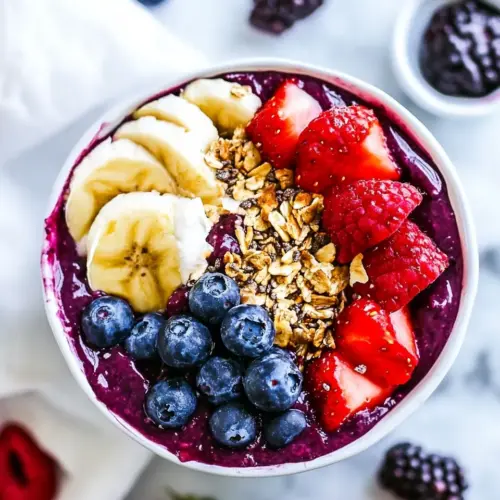
Açai Bowl
Açai Bowl is a creamy, vibrant breakfast that blends frozen acai, banana, and mixed berries into a scoopable, antioxidant rich bowl. Silky from frozen banana and just a splash of milk, this easy, refreshing dish makes a great easy weeknight breakfast or post workout refuel, and it invites endless topping combinations for texture and flavor.
Equipment
- High power blender
- Tamper
- Bowls
- Spoon
Ingredients
- 1/2 cup milk (dairy, almond, coconut, cashew, or soy) Provides creaminess and moisture while acting as the liquid base to help blend the bowl smoothly; choose dairy or plant-based milk to control flavor and richness and adjust consistency with more or less according to preference.
- 1 frozen banana, sliced Adds natural sweetness and a thick, creamy texture when frozen; sliced banana helps create a smooth, spoonable base and contributes potassium and fiber for nutrition.
- 1 cup frozen mixed berries Contributes bright, fruity flavor and natural antioxidants while enhancing the frozen texture; mixed berries add color, vitamins, and a slight tartness that balances sweetness.
- 2 frozen acai packets, broken into pieces (I use Sambazon unsweetened) Supplies concentrated acai flavor and deep purple color while forming the primary antioxidant-rich component; frozen acai packets blend into a sorbet-like consistency and provide the signature taste of the bowl.
- Toppings: granola, coconut, nuts, nut butter, chia seeds, hemp hearts, fresh fruit, etc. Offers crunchy, creamy, and nutritious finishing touches that add texture, healthy fats, protein, and additional flavor; choose from granola, coconut, nuts, nut butter, chia seeds, hemp hearts, or fresh fruit to customize toppings.
Instructions
- Place the milk, banana, berries, and acai packets in a high-power blender that has a tamper. You need a good blender with a tamper to make a thick acai bowl.: You will hear a deep, steady hum as the pieces nestle around the blade, and the cold from the frozen banana and frozen acai will make the blender jar fog slightly. This initial arrangement helps the ingredients contact the blade efficiently. The reason this matters is that a crowded jar with items piled away from the blade will cause the machine to underblend, leaving shards of ice and tough fruit fibers. If your blender struggles, pause and shift the contents with the tamper rather than adding liquid. A common mistake is dumping everything haphazardly and turning the speed high immediately, which can stall the motor or produce an uneven texture.
- Turn the blender on low and use the tamper to push the frozen fruit and acai down. Continue to blend on low until creamy and smooth. If you need to add a little more milk, you can, but don’t add too much or the mixture will not be thick.: Listen for a rhythmic, even motor tone as you nudge the frozen chunks toward the blade. The sound should change from a strained grind to a smoother, more consistent whir as the fruit breaks down. This gentle technique preserves the cold structure so the mixture stays thick, and it prevents you from over liquefying the bowl. The purpose is to coax the fruit to surrender slowly, avoiding heat generation that can make the mixture sloppy. One troubleshooting tip is to stop and scrape if you see large unmixed chunks; forcing speed can overwork the blender and create a thin outcome.
- Divide into two bowls and top with desired toppings like granola, coconut, nuts, a drizzle of nut butter, chia seeds, hemp hearts, and/or fresh fruit. Serve immediately.: As the mixture turns from chunky to glossy, you will notice the color deepen into an even purple and the motor settling into a lighter tone. The texture should be dense enough to mound on a spoon, but still pliable enough to spread gently in a bowl. The why here is about mouthfeel, frozen fruit that is overworked becomes watery while underworked stays icy. If you detect small frozen bits, pulse a few more times with the tamper engaged. Avoid adding too much milk at this stage because it will dilute the scoopable consistency that defines a proper Açai Bowl .
- If you need to add a little more milk, you can, but don’t add too much or the mixture will not be thick: A teaspoon to a tablespoon of additional milk can smooth stubborn dry spots, and you should add it incrementally while observing the texture. The goal is to achieve a creamy density that still holds peaks, not a smoothie you would drink. Visual cues include a glossy surface and the absence of distinct frozen chunks. Common mistakes include pouring a half cup at once which converts the base into a pourable liquid, sacrificing the satisfying spoonable quality.
- Divide into two bowls and top with desired toppings like granola, coconut, nuts, a drizzle of nut butter, chia seeds, hemp hearts, and/or fresh fruit: When you spoon the base into bowls you will feel its chilled weight and see it retain shape, a sign you stopped at the right texture. Arrange toppings with intention, placing crunchy elements where they will remain crisp, and softer items like fresh fruit where they complement without making the bowl soggy. The tactile contrast between cold, smooth base and crunchy toppings is central to the experience. One troubleshooting note is to wait until serving to add wet toppings, as they can soften granola and reduce textural contrast if left to sit.
- Serve immediately: The aroma will be subtle but inviting, fruity and cool. Serving right away preserves the intended texture and freshness of the toppings, and it ensures you taste the vivid notes of frozen acai and mixed berries at their peak. If you delay, the bowl will slowly soften and the crunchy elements will lose their snap. A common error is preparing too far ahead and expecting the same crisp contrasts as a freshly assembled bowl.
Notes
- Choose the right blender, a high power blender with a tamper makes a huge difference for the thick scoopable texture you want. Without enough power, you will get icy bits instead of a velvety base.
- Portion milk carefully, add just enough to get the blades turning, and only add more in tiny increments. Too much liquid is the quickest way to ruin the bowl’s structure.
- Prep toppings in advance, having granola, seeds, and sliced fruit ready makes assembly quick and keeps textures crisp at serving time.
- Freeze bananas properly, slice first and freeze flat so pieces separate easily and blend more uniformly.
- Use unsweetened acai if you prefer less sugar, it gives you control over sweetness and pairs well with naturally sweet fruit like bananas and berries.