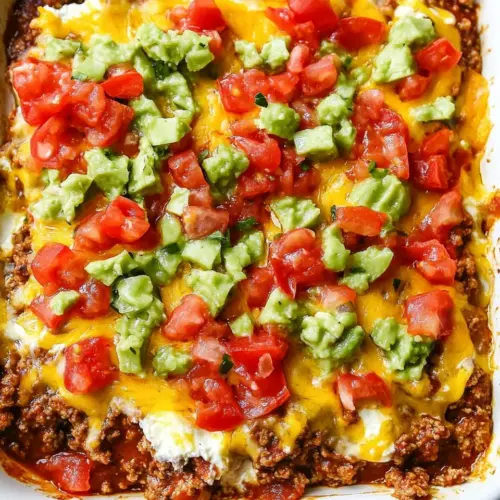
7 Layer Taco Dip
7 Layer Taco Dip is a creamy, crunchy, and easy crowd pleasing appetizer layered with seasoned beans, savory beef, bright guacamole, tangy salsa, and optional melty cheddar, perfect for summer parties and easy weeknight gatherings, giving every chip a bold, satisfying bite.
Equipment
- Medium Saucepan
- Potato masher or fork
- Medium skillet
- Oven safe 8x8 dish
- Broiler or oven
Ingredients
- 1 garlic clove minced Mince finely to release pungent aroma and sharp flavor that brightens and balances the dish; integrates into the bean and beef layers for depth.
- 2 teaspoon cumin divided Season sparingly and split between layers to add warm, earthy notes and a subtle citrusy warmth that complements tomatoes and beef.
- 2 teaspoon chili powder divided Sprinkle into separate layers to contribute smoky, slightly spicy flavor and enhance the overall Mexican-inspired profile of the dip.
- 2 teaspoon paprika Add for mild smokiness and color contrast; blends into the meat or bean layers to round out the spice blend and deepen flavor complexity.
- 1 -1/2 teaspoon fine sea salt Season precisely to enhance and balance all other flavors without overpowering; helps bring out sweetness in tomatoes and mellows the spices.
- 1 -15 ounce red or black beans rinsed and drained Rinse and drain thoroughly to remove excess sodium and liquid; provide a creamy, protein-rich layer that adds body and texture to the dip.
- 1/4 cup water Thin the bean layer slightly when combined or adjust consistency in cooked mixtures; helps achieve a spreadable, cohesive texture.
- 1 tablespoon plus 2 teaspoons lime juice, divided (2 limes) Squeeze fresh for bright acidity and citrus fragrance; divide between layers to lift richness and harmonize flavors from beans to avocado.
- 2 tablespoons oil Heat gently to cook aromatics and bind spices; provides fat for browning the beef and carrying flavor throughout the savory layers.
- 1 lb . ground beef Brown and crumble to create a savory, meaty layer that gives structure and hearty flavor; season while cooking to infuse spices evenly.
- 1 -15 ounce can diced tomatoes Stir in or drain well to introduce juicy, tangy pieces that add moisture and a fresh tomato bite to a middle layer.
- 2 ripe avocados Cube or mash to create a creamy, cooling layer that contrasts spicy and savory flavors while adding rich, buttery texture.
- 1 tablespoon cilantro chopped Chop finely to distribute herbaceous, citrusy notes; sprinkle into avocado or tomato layers to brighten and freshen the dip.
- 1 small red onion finely diced, divided Dice finely and split between layers to add crisp, sharp bite and a bit of crunchy texture while balancing richer components.
- 1 -1/2 cups salsa Spoon or spread to add zesty tomato and pepper flavor; acts as a saucy layer that ties together the beans, meat, and fresh toppings.
- 3 tomatoes finely diced, divided Dice precisely and divide across layers to contribute fresh acidity, texture, and a bright finish that complements richer elements.
- 1 -1/2 cups shredded cheddar cheese optional, omit for paleo / Whole30 / dairy-free Shred to sprinkle a melty, savory layer that adds creamy, salty richness; can be omitted for paleo, Whole30, or dairy-free needs.
- 1 head romaine lettuce chopped Chop coarsely to provide a crisp, refreshing green layer that adds volume, crunch, and a light contrast to heavier ingredients.
- Tortilla chips and sliced red peppers for serving Serve alongside as crunchy vehicles and colorful garnish to scoop the dip; offer contrasting texture and additional salt or sweetness.
Instructions
- Layer 1: refried beans (or extra guacamole for Paleo / Whole 30): refried beans (or extra guacamole for Paleo / Whole 30) : The aroma of warm mashed beans is comforting, earthy, and slightly toasted when you cook them with spices. As you spread this base layer, you should feel a smooth, slightly dense texture under the back of your spoon, which helps support the next layers. This step matters because a stable base prevents the dip from collapsing when scooped. A common mistake is leaving the beans too wet, which makes the dip runny; if that happens, cook off excess moisture or mash a bit more to thicken.
- Layer 2: beef: beef : When the seasoned beef is added, you want to notice savory, meaty aromas and a glossy sheen from any residual juices. The beef should be crumbly yet cohesive, signaling that the fat has rendered and the mixture has thickened. This layer brings depth and richness that contrasts with fresh toppings. Avoid using overly fatty beef, as excess grease can separate and make the layers oily; drain briefly if needed.
- Layer 3: salsa: salsa : Adding the salsa introduces bright acidity and a fresh tomato scent, which cuts through the richness. The salsa should be spooned evenly so you still get distinct layers, not a runny flood. You should hear a gentle plop as it settles, and the color should remain vibrant. If your salsa is very watery, drain a little to keep the dip from becoming soupy.
- Layer 4: guacamole: guacamole : The guacamole should smell bright, with lime and cilantro prominent, and feel creamy but slightly chunky. As you spread it, aim for an even, pillowy surface that cushions the upper layers. This creaminess balances the spicy beef and tangy salsa, making each bite rounded. Over mash the avocados and you lose texture, but under mash and the guacamole may not bind; aim for a slightly chunky consistency.
- Layer 5: beef: beef : Repeating the beef layer doubles down on savory flavor, creating pockets of warmth between fresher components. When you smooth it, you want the beef to provide a stable, slightly textured layer that will meld with the cheese on top. This layer is essential for flavor balance, but be mindful not to overload the dish which can make scooping messy.
- Layer 6: shredded cheddar cheese (optional): shredded cheddar cheese (optional) : The cheddar cheese should be sprinkled evenly so it forms a uniform blanket. Under the broiler it will sizzle and then bubble and brown, releasing a nutty, toasted scent. This finishing step adds a crunchy, savory crust that contrasts the creamy layers below. Watch it carefully while broiling; cheese can go from perfectly golden to overly browned within moments.
- Layer 7: Lettuce, Tomato, Red Onion: Lettuce, Tomato, Red Onion : The final toppers provide crisp, vivid contrast. As you scatter chopped romaine lettuce , diced tomato , and red onion , you’ll notice a fresh, vegetal scent and satisfying crunch. These elements keep the dip feeling bright and prevent it from becoming too heavy. Add them right before serving to maintain crunch, since letting them sit will soften and release extra moisture.
- Heat medium saucepan over medium heat. When hot add 1 tablespoon oil, garlic, 1 teaspoon of cumin, 1 teaspoon chili powder and 1 teaspoon of paprika and let and spices and let cook until fragrant, about 30 seconds.: Close your eyes for a second and breathe in the fragrant lift as the spices bloom in the oil , releasing warm, toasty notes. The sound is a gentle sizzle, and you should see the garlic become glossy but not dark. This step unlocks the oils in the spices, which is crucial for deep flavor in the bean layer. A common error is overheating which chars the garlic and spices, creating bitterness; keep the heat moderate and watch closely.
- Add the beans to the saucepan and 1/4 cup water. Cover and let cook for 5 minutes.: You will hear a soft simmer as the beans absorb the liquid, and the mixture will smell earthy and well rounded. Covering gently steams the beans, helping them soften and absorb seasoning. This brief simmer deepens flavor and ensures a smoother mash. Avoid overcooking which can make the beans gluey; five minutes is usually enough for canned beans to warm through and pick up aroma.
- Take off heat and add 1 tablespoon lime juice. Mash to desired consistency using a potato masher or fork.: The bright citrus of the lime juice will snap forward, balancing the savory bean base. As you mash, listen for the soft tearing of beans and watch the texture change from whole to a spreadable paste. This step matters because texture controls how the dip layers pack and how they feel on the chip. Overworking the mash can create a pasty texture, so stop when you reach a creamy but slightly textured result.
- Set aside until ready to use.: Letting the bean mixture rest allows the flavors to settle and the texture to stabilize. You should notice the surface becoming a little firmer, which makes it easier to spread. Resting also keeps the heat manageable when assembling. Do not leave it uncovered in the fridge too long or it may form a dry skin, cover lightly instead.
- Heat oil in a medium skillet over medium heat. When hot add and beef.: As the oil shimmers, add the beef and you’ll hear a pronounced sizzle as meat hits the pan. This initial contact creates savory browned bits that are flavor gold. Browning the beef properly is key for the umami depth in the dip. Crowding the pan can steam the beef instead of browning it, so use a skillet with room.
- Cook beef until browned, about 8 minutes.: The sound will move from lively sizzle to an even, lower hiss as moisture evaporates and the beef browns. Watch for small browned edges and a rich, roasted meat aroma; these are signs it’s ready. Proper browning develops concentrated flavor, which lifts the entire recipe. Rushing this step will leave a bland, gray meat texture, so be patient and stir occasionally.
- Add in tomatoes and 1 teaspoon cumin, 1 teaspoon chili powder and 1 teaspoon of paprika. Turn heat to medium-low and let cook for 5 minutes, until slightly thickened and then remove from heat and set aside.: The tomatoes will release steam and a gentle bubbling will slow as the mixture thickens, melding with spices into a cohesive sauce. This simmer concentrates flavors and binds the meat so it layers cleanly. Remove from heat when slightly thickened to avoid drying out the beef. If it gets too dry, a splash of water or a little extra salsa can rescue it.
- In a small bowl, mash avocado and add cilantro, 1/3 cup diced red onion, 1/3 cup diced tomato, 2 teaspoons lime juice and 1/2 teaspoon salt. Taste and adjust seasoning. Set aside.: The guacamole should smell fresh and herbaceous, with a soft, creamy texture punctuated by bits of red onion and tomato . Tasting here is essential to balance acidity and salt. This layer brings brightness and a cooling mouthfeel that contrasts the beef. Overmixing will eliminate texture, while under seasoning will leave it flat, so adjust cautiously.
- Preheat broiler to 525ºF. In an 8"x 8" or similar sized oven safe dish, place the refried beans. Smooth over.: The broiler’s intense heat is perfect for quick melting on top later, but here you are building a stable foundation by spreading the warm beans evenly. Smoothness matters because an even surface ensures tidy layers above. Be cautious handling a hot broiler and oven safe dish, and avoid using a dish that is too deep or too shallow for even heat distribution.
- Add 1/2 the beef mixture. Smooth over.: Press the slightly warm beef into an even layer so it bonds with the beans beneath. You should feel a slight resistance as the proteins settle, and the aroma will become richer. This middle layer is critical for balanced bites; too much and the dip becomes meat heavy, too little and it lacks that savory push.
- Add the salsa. Smooth over.: Spoon the salsa to create a bright, glossy band. The sauce should sit distinct from the beef while still settling into crevices for cohesion. This component provides acidity and moisture that contrast the denser layers. If salsa is overly watery, drain a little before adding to keep layers tidy.
- Add guacamole. Smooth over.: Spread the creamy guacamole into an even, cushiony layer. The smell will be fresh and citrus kissed, and the texture should be spreadable without running. This layer balances the richness below and helps create that pleasing bite contrast. Keep it cool and add it right before serving if you want peak color and texture.
- Add remaining beef. Smooth over.: Finish with the rest of the seasoned beef , pressing gently to form a stable top that will meld with the cheese layer. This repetition ensures the savory note is present throughout the dip and not just buried near the bottom.
- Add cheese. Place under broiler until brown and bubbly.: When the cheese hits intense heat it will begin to melt, bubble, and then brown, creating a toasty aroma and slightly crisped edges. That sizzle and bubbling is a sensory confirmation of success. Keep a close eye as broilers vary; remove once golden brown to avoid burning.
- Add remaining lettuce, red onion and tomato.: Scatter the fresh romaine lettuce , remaining diced tomato , and red onion for crunch and color. The contrast of cool, crisp vegetables on warm, cheesy layers is delightful and visually striking. Add these right before serving to maintain freshness and prevent sogginess.
- Serve with tortilla chips and / or veggie sticks.: Offer a bowl of tortilla chips and sliced red peppers for dipping, and expect a pleasing crunch as people scoop through the layers. The variety of dippers accommodates different preferences and textures, making this a communal, shareable dish.
Notes
- Make ahead: You can prepare the bean and beef layers a day in advance and store them separately in the fridge. Reheat the beef gently before assembling to revitalize aromas, and keep the fresh toppings chilled until just before serving.
- Dairy free and paleo option: Omit the shredded cheddar cheese layer and replace it with extra guacamole or an additional layer of salsa. This keeps the dish rich and satisfying without dairy.
- Texture control: If you prefer a smoother base, mash the canned beans more thoroughly and add a splash more water during cooking. For chunkier mouthfeel, mash less and leave some whole beans.
- Adjusting spice: Taste the seasoned beef and bean mixture as you go, adding extra chili powder or a pinch more salt if needed. Small adjustments make a big difference.
- Serving ideas: Offer both tortilla chips and sliced red peppers for guests who want a lighter crunch. Keep extra salsa on the side for those who like saucier scoops.