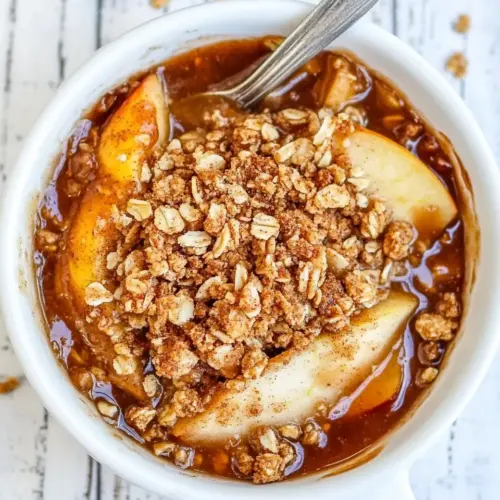
5 Minute Microwave Apple Cinnamon Crisp for One
5 Minute Microwave Apple Cinnamon Crisp for One is a fast, comforting single serve dessert that is juicy, spiced, and easy to make. Tender apple cubes mingle with warm cinnamon and a buttery crumble for a crispy top and syrupy base, perfect for an easy weeknight treat or late night crave. Make it in minutes for instant warmth and cozy flavor.
Equipment
- Microwave
- Microwave-safe Bowl
- Fork
Ingredients
- 2 tablespoons unsalted butter, softened (or vegan butter substitute) Softened to blend smoothly into the topping, provides richness and helps create a tender, slightly crumbly texture when melted during microwaving.
- 2 tablespoons light brown sugar, packed Packed to add concentrated sweetness and a deeper caramel note, helps balance tartness from the apple and aids in creating a slightly sticky crisp topping.
- 2 tablespoons old-fashioned whole rolled oats, use Certified Gluten Free Whole Rolled Oats if necessary Whole rolled oats chosen for hearty texture and chew, contribute fiber and structure to the crumble while toasting slightly during brief microwave time.
- 2 tablespoons all-purpose flour, or Certified All-Purpose Gluten-Free Baking Blend All-purpose flour offers structure and helps bind the oat-butter-sugar mixture into cohesive crumbs, contributing to a delicate, tender topping when cooked.
- 1 teaspoon cinnamon Ground to provide warm, aromatic spice that complements apples, enhances overall flavor by adding sweet-earthy notes and a classic apple-pie profile.
- 1/2 teaspoon ground nutmeg Warm and slightly sweet aromatic that adds depth and a cozy spiced background, working well with cinnamon to round out the fruit filling.
- pinch salt, optional and to taste Optional pinch used to enhance and balance overall flavors by heightening sweetness and rounding savory notes without making the dessert salty.
- 1 medium apple, diced in about 1/4-inch cubes (I did not peel mine, peel if you wish; I used Fuji, use any variety you like) Diced into uniform small cubes to ensure quick, even softening in the microwave, supplying natural sweetness, moisture, and a fresh apple texture to the crisp.
- 1/2 tablespoon unsalted butter, or vegan butter substitute Added in small amount to the filling to introduce richness and a touch of buttery flavor that helps meld spices and sugars when heated.
- 2 tablespoons light brown sugar, packed Packed to sweeten the fruit filling, encourage caramelization of the apple juices in the short cooking time, and complement the granulated sugar.
- 1 tablespoon granulated sugar Granulated sugar provides immediate sweetening and helps create a syrupy glaze with the apple juices as it dissolves and heats in the microwave.
- 1 teaspoon cornstarch Cornstarch used as a thickening agent to absorb apple juices and create a glossy, slightly thickened filling so the dessert isn't watery after cooking.
- 1 teaspoon cinnamon Repeated to layer warm spice in the filling, reinforcing the apple-pie character and ensuring every bite has a balanced cinnamon presence.
- 1/2 teaspoon ground nutmeg Subtle warm spice that enriches the filling with nutty, slightly sweet tones, enhancing complexity and complementing both cinnamon and apple flavors.
- optionally add pinches ground ginger, pumpkin pie spice, cloves, allspice based on taste preference Optional pinches provide customizable aromatic complexity; adding ginger, pumpkin pie spice, cloves, or allspice can tweak warmth and depth to taste.
Instructions
- Make the Crumble Topping: The aroma of softened butter meeting light brown sugar is comforting, a gentle hint of caramel that signals the start of something cozy. As you press the fork through the mixture, notice the transformation from coarse to pebble like crumbs, which ensures pockets of crunch after microwaving. This technique matters because large clumps will not set evenly, and overly fine crumbs will lack texture. A common mistake is overworking the mixture until it becomes paste like, which prevents the desirable sandy crumble. Keep motion light and stop when small pebbles and sandy crumbs form, so the topping bakes into distinct, tender bits.
- In a small bowl, combine all crumble topping ingredients and stir together with a fork until small pebbles and sandy crumbs form; set aside.: At this stage, the textures should feel varied under your fork, with soft butter coating the dry ingredients. This combination will yield the balance of crunch and tenderness that contrasts the fruit. If the butter is too cold, the crumbs will be dry and powdery, and if it is too warm, the mixture will clump; aim for a cool, pliable butter. Avoid using a blender or food processor, which can create overly uniform texture and remove the hand made quality that gives the topping character.
- Make the Apple Base Layer: The first contact of heat with the diced apple releases a fragrant sweetness, and within moments you will smell the cinnamon blooming. Using evenly diced 1/4 inch cubes ensures consistent softening, so the pieces keep structure while yielding syrupy juices. This matters because uneven pieces will result in mixed textures, some underdone and some mushy. A common misstep is cutting irregular pieces; take an extra minute to dice uniformly for predictable results.
- In a small to medium-sized microwave-safe bowl or baking dish, add apples and top with butter. Don’t use an overly shallow dish because the apples will release juices, the butter melts, and it will rise and puff in the microwave, and it will overflow if bowl is too shallow.: You should use a bowl with room to bubble and expand, because as the juices heat they will froth slightly. The sizzling sound is subtle but telling, and a shallow dish often leads to overflow, making a mess. One error I see often is picking a plate or shallow dish to save washing, but that risks spillage. Choose a bowl with two to three inches of headspace to contain bubbling and make stirring easy.
- Cook for 1 minute on high power to soften apples.: After the first minute, the apple should give slightly when pressed with a spoon and release a fragrant steam scented with cinnamon. This brief burst of heat jump starts the breakdown of the fruit without turning it to applesauce. If the pieces are still rigid, they need another short burst, but be cautious because overcooking here leads to watery fruit. A common mistake is assuming microwaves are uniform; times vary, so check after the minute and adjust in short increments.
- Remove bowl from micro and add the sugars, cornstarch, cinnamon, nutmeg, optional salt, optional other spices, and stir to combine and coat evenly.: Stirring distributes the cornstarch so it can thicken the juices uniformly, preventing clumps that will not dissolve during the second cook. You should notice the fruit become glossy as the sugars meld with melted butter , and the aroma of spices will intensify. If you skip thorough stirring, you may end up with pockets of thickener or uncoated pieces, resulting in uneven texture. A frequent oversight is not scraping the bottom of the bowl, where sugars can cling and cause uneven bubbling.
- Evenly sprinkle with the crumble topping.: As you scatter the crumble, aim for a mostly even layer with some variation so steam can escape and the topping can set properly. The contrast between the wet, glossy fruit and the dry, sandy topping creates the textural interplay that defines a crisp. If you press the topping into the fruit it will bake wetter; for crisp contrast, keep it loose on top. One mistake is compressing the crumble, which prevents the topping from finishing into crisp pockets.
- Cook for about 2 minutes on high power, until juicy, bubbly, and topping is set. Due to variance in microwaves, climate, apples and their variable moisture content, cooking times could range from 1 1/2 minutes to slightly over 2 minutes. Start watching it carefully at 1 1/2 minutes and stop cooking when done; don’t overcook.: As it cooks, listen for a soft bubbling and watch for syrup to rise. The topping should appear set but not scorched, and the fruit layer should be glossy and cohesive, clinging to the spoon. This step matters because it concentrates flavors and sets textures quickly. Overcooking will dry the fruit and harden the topping, while undercooking leaves it soupy. A helpful tip is to stop early and let carryover heat finish the job if you see small bubbles rather than vigorous rolling boil.
- Serve immediately. Optionally serve with whipped cream or ice cream.: The final product should be warm, with steam rising and a fragrant swirl of spice. The contrast between warm apple and a cool topping like ice cream is heavenly, though the crisp is lovely on its own. If you wait too long the topping softens as it absorbs juices, so serve promptly for the best contrast. A common mistake is plating and leaving it too long before serving, which reduces textural satisfaction.
Notes
- Use different apple varieties to change sweetness and texture. Firmer apples like Granny Smith provide more tart contrast, while Fuji or Gala soften and sweeten more as they cook, so choose based on whether you want a tangy or sweeter result.
- Swap the oats for quick oats only if you prefer a softer topping. Old fashioned oats give more chew and a rustic feel, while quick oats blend into a finer, softer texture after microwaving.
- Try a flavored sugar by mixing a pinch of ground ginger or pumpkin pie spice into the sugars if you want autumnal warmth. Add small pinches to avoid overpowering the apple and cinnamon foundation.
- Make it vegan by using a plant based butter substitute for both the crumble and fruit layers. Flavor will be slightly milder, but the texture and comfort remain nearly identical.
- Add a crunchy topper like a few chopped nuts stirred into the crumble if you want more contrast. Sprinkle them on top before the final cook so they toast slightly from the residual heat, but avoid large pieces that could not heat through evenly.
- Serve with a cool accent such as a spoonful of whipped topping or a small scoop of ice cream to create that warm and cold contrast that heightens flavor perception and texture enjoyment.