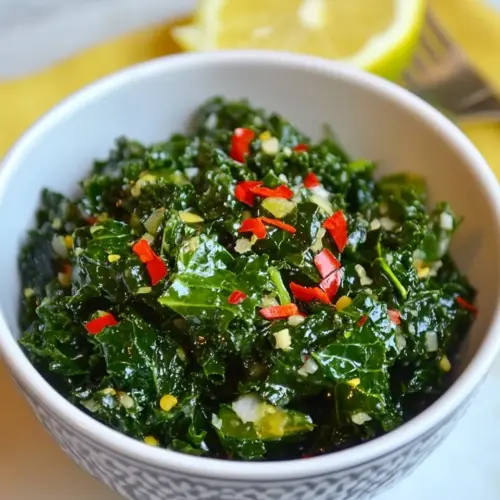
5 Minute Massaged Kale Salad
5 Minute Massaged Kale Salad is a creamy, vibrant bowl that transforms sturdy kale into a tender, silky salad in minutes. The rich avocado dressing with bright lemon, warm ginger, and savory Nama Shoyu creates a balanced, easy weeknight option that feels indulgent and nourishing, perfect for quick lunches or light dinners, try it for a fast, healthy pick me up.
Equipment
- Bowl
- Fork
- Knife
- Cutting Board
- Hands
Ingredients
- 1 -2 bunches of kale leaves, stems removed (about 6-10 ounces) Tenderize and soften tough kale fibers by massaging them; doing so helps release moisture and reduces bitterness, creating a more palatable salad texture. Massage also helps the dressing penetrate the leaves so flavors meld quickly in just five minutes.
- 1 ripe avocado Add creaminess and a silky mouthfeel while contributing healthy monounsaturated fats and subtle buttery flavor; ripe avocado also helps bind the dressing to the kale. Use it to balance acidity and saltiness for a richer overall bite.
- Juice of one lemon Brighten and add lively acidity to the salad, helping to cut through the kale's earthiness and the avocado's richness. Lemon juice also aids in slightly wilting the leaves and preserving color while providing vitamin C.
- 1/2 teaspoon fresh ginger, minced Introduce a warm, slightly spicy aromatic note that enhances complexity and freshness; minced ginger brings a subtle zing that complements lemon and avocado. Use it sparingly to avoid overpowering the delicate balance of the salad.
- 1/4 teaspoon fresh garlic, minced Provide a pungent, savory underpinning and gentle heat when minced finely; garlic deepens umami and rounds out the dressing's flavor profile. Mince finely to distribute flavor without large raw garlic bites.
- Nama Shoyu, or tamari, to taste Season and add salty, umami depth to the dressing; Nama Shoyu or tamari offers a gluten-free alternative and a richer soy flavor than regular soy sauce. Adjust to taste to ensure the salad is well-balanced without becoming overly salty.
- 5 -6 drops liquid stevia (or honey, to taste) Sweeten subtly and balance acidity with a few drops; liquid stevia (or honey) rounds flavors while keeping the dressing bright and harmonious. Use sparingly to avoid cloying sweetness and to let other ingredients shine.
Instructions
- To get started, simply scoop out the flesh of the ripe avocado, and mash it together with the lemon juice, ginger, garlic, Nama Shoyu and liquid stevia.: Right away you'll notice the avocado turning into a creamy paste, its aroma lightly buttery and green. As you mash, the citrus scent of the lemon will brighten the mixture and small flecks of minced ginger and garlic will perfume the bowl. The sound is quiet, subtle, just the soft squish of fruit yielding under the fork. This texture matters because a smooth dressing ensures even coating on the kale , preventing clumps or uneven seasoning. A common mistake is leaving large chunks of avocado, which makes it harder to distribute flavor during massaging, so aim for a smooth consistency and taste as you go.
- When you've got what looks like a smooth guacamole, add in the raw kale leaves and start using your hands to massage the dressing throughout.: As you toss and press, your hands will feel the leaves soften under the dressing, and a faint citrus steam may rise from the bowl. You want each leaf to be evenly coated so the flavors marry. This hands on method warms the dressing slightly, helping it penetrate the fibrous kale . The why here is simple, massaging breaks down cellulose in the leaves which makes them tender and more palatable. Avoid using a spoon alone because it won’t apply the same pressure needed to fully coat and relax the leaves.
- Squeeze well between your hands, almost like kneading bread dough, for a good 2-3 minutes.: During this time the leaves will darken and become glossy, and you may feel them losing stiffness beneath your fingertips. The physical act releases moisture and allows the dressing to bond, creating a smoother mouthfeel. The sound is subtle, fingers sliding through leaves, and the visual cue is the color change from bright green to a deeper, translucent tone. This technique is crucial for a salad that feels tender rather than tough. One pitfall is stopping too soon, which leaves the kale chewy, so be patient and keep kneading until you see the change.
- When the leaves are dark and wilted, give them a taste to make sure the flavor is to your liking. Adjust any flavors as necessary.: At this point the aroma will be a balanced mix of citrus, savory Nama Shoyu , and the warm bite of ginger . Tasting lets you calibrate the acid, salt, and sweetness. If it feels flat, a drop more lemon or Nama Shoyu will lift it; if it’s too sharp, a little extra sweetener can mellow the edges. The reason for tasting now is practical, because massaging has changed how flavors register on the softened leaves. Avoid over seasoning without tasting first, since a small adjustment often goes a long way.
Notes
- Eyeball measurements confidently, the recipe is forgiving, and I frequently adjust amounts by feel to suit my taste and the size of my avocado.
- Prefer tamari for gluten free, if you need a gluten free option use tamari instead of Nama Shoyu to maintain the umami without the gluten.
- Gentle mincing is crucial, finely minced ginger and garlic disperse more evenly, so take a moment to chop them small for a balanced dressing.
- Adjust sweetness last, add the liquid stevia or honey sparingly and taste after each tiny addition to avoid oversweetening.
- Serve immediately for best texture, the salad is most vibrant right after massaging when the leaves retain a tender but lively bite.