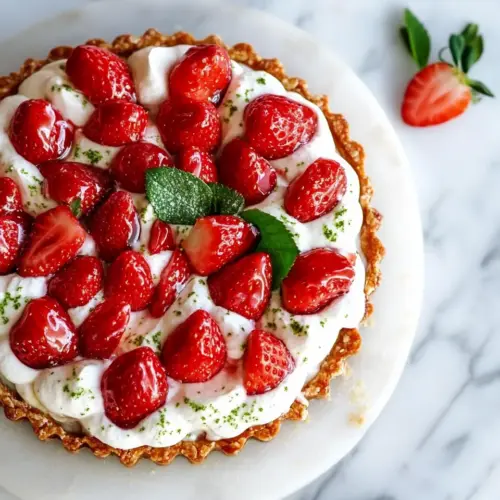
5 Ingredient Strawberry Rose Tart
5 Ingredient Strawberry Rose Tart is a creamy, elegant no bake dessert with a crisp cookie crumb crust, silky mascarpone filling, and delicate strawberry roses on top. This easy, spring friendly tart feels fancy but comes together in minimal hands on time, making it perfect for casual brunches or special occasions and a compelling reason to try it for your next gathering.
Equipment
- Mixing Bowl
- Measuring Cups
- Tart Pan
- Offset Spatula
- Knife
Ingredients
- 1 1/2 cups cookie crumbs, such as graham crackers, biscoff cookies, oreo cookies Crumbled to form the tart base, providing a crunchy, sweet foundation that binds with melted butter; choose graham, biscoff, or Oreo crumbs to adjust sweetness and flavor profile and press firmly into the tart pan for an even crust.
- 5 tablespoons unsalted butter, melted Melted to bind cookie crumbs and create a compact, sliceable crust; use unsalted butter so salt levels remain controlled and pour evenly before mixing to ensure uniform texture and browning when chilled or baked.
- 12 ounces mascarpone cheese, at room temperature Softened to create a rich, creamy filling with a silky mouthfeel; bring mascarpone to room temperature so it whips smoothly with powdered sugar and folds easily into any added flavorings for a luxurious tart center.
- 1/4 cup powdered sugar Whisked to sweeten and stabilize the mascarpone filling while dissolving without grittiness; powdered sugar helps achieve a smooth consistency and can be adjusted to taste for the right level of sweetness in the tart.
- 2 pints of strawberries, cut into roses if you’re feeling fancy Sliced or shaped into delicate roses to top the tart, adding fresh, juicy flavor and visual appeal; choose ripe strawberries for bright color and natural sweetness and arrange carefully to create an attractive presentation.
- extras if you wish, but only if you have these things on hand: Optional and kept separate to indicate extras that can elevate the tart if available; list clarifies that these items are not mandatory but can be used sparingly to enhance flavor or garnish if on hand.
- 1/2 lemon, juiced Squeezed to add bright acidity and balance the richness of mascarpone; use fresh lemon juice sparingly to avoid curdling and to lift flavors in the filling or to macerate strawberries for extra juiciness.
- 1 teaspoon vanilla extract Added for warm aromatic depth and to round out the filling or maceration; vanilla extract should be measured carefully to complement mascarpone and strawberry flavors without overpowering them.
- honey for drizzling Drizzled to add a glossy finish and touch of natural sweetness over the arranged strawberries; honey pairs well with mascarpone and can be lightly warmed for easier pouring to create an appealing sheen.
- fresh mint for garnish Placed as a final garnish to add fresh color and a hint of herbal brightness; mint leaves should be used sparingly to prevent overpowering the delicate floral and fruity notes of the tart.
Instructions
- To make the crust, stir together the cookie crumbs and melted butter until combined and all the crumbs are moistened. Press the crust into a 4 x 14 inch tart pan, pressing it up along the sides until packed. This will also work in an 8-inch round tart pan.: The aroma of warm butter meeting sweet cookie crumbs is comforting, and you should hear a slight brushing sound as crumbs meet bowl. Aim for a uniformly moistened texture, not soggy, so the mixture will compact. Press a bit between your fingers; it should hold together when squeezed. This step matters because an evenly bound crust prevents crumbling when sliced, giving each piece a clean edge. A common mistake is using too much butter which creates a greasy, loose crust, so add butter gradually and stop when the crumbs glisten and hold together.
- Stir together the mascarpone and sugar until creamy and combined. If you have lemon juice or vanilla extract on hand, add a splash. Spread the mascarpone on the graham crust evenly. Refrigerate for at least 1 hour.: When you press the crumb mixture into the pan you will feel resistance as it compacts, and the surface should look even and matte rather than wet. Use the bottom of a measuring cup or a small jar to press the base and sides firmly, creating a uniform thickness. This technique creates structure so the tart slices hold their shape. If you press unevenly, the thinner areas can collapse or become overly crisp; check visually for consistent thickness around the rim and base.
- While the tart is in the fridge, cut the strawberries. I used this tutorial to cut them into roses. Right before serving, place the strawberries on the mascarpone tart. If desired, you can drizzle the strawberries with honey or add a few fresh mint leaves for garnish. You can serve immediately, or keep in the fridge until ready to serve.: Switching pans changes the visual profile, so the crust may become thicker in the smaller pan and bake differently if you were to bake, though this recipe is chilled. Notice how the packed crumbs feel denser in a smaller pan. The why here is about proportion, because a compact crust supports the filling and balances each bite. One pitfall is assuming volume scales linearly, so if using a different pan size, press carefully and check that the crust is not excessively thick in any one spot.
- Stir together the mascarpone and sugar until creamy and combined: As you work the mascarpone with powdered sugar , the mixture becomes glossy and smooth, with a faint sweet scent. Use a spatula or low speed with a mixer to avoid whipping in too much air. The texture should be silken, spreadable but not runny, which ensures a silky mouthfeel against the crisp crust. The reason this matters is texture balance, a lumpy or overly airy filling will not set or slice nicely. Avoid overmixing which can make the mascarpone grainy or loose.
- If you have lemon juice or vanilla extract on hand, add a splash: A little lemon juice brightens the filling, while a touch of vanilla extract adds warm aromatics. When added, take note of the scent lifting from the bowl, and taste a small bit to confirm balance. These small flavor lifts accentuate the strawberries and prevent the filling from feeling flat. A common slip is adding too much juice which can thin the mixture, so add in tiny increments and stop when the taste sings.
- Spread the mascarpone on the graham crust evenly: The spread should look velvety and level, with a subtle sheen in the light. Use an offset spatula or the back of a spoon to smooth the surface, aiming for an even layer that reaches the edges. This evenness matters so each slice has the right proportion of cream to crust. If the filling is uneven, some slices will be overly creamy and others too crust heavy; smoothing carefully prevents that outcome.
- Refrigerate for at least 1 hour: Chilling firms the filling and helps the crust set, giving the tart a clean slice and satisfying texture. During refrigeration you will notice the filling lose a touch of shine as it becomes slightly more set, and the crust will firm at the edges. The why is structural stability, because a cold tart slices cleaner and presents better. Avoid skipping this step, as serving too soon often yields a soft, messy tart that slides when cut.
- While the tart is in the fridge, cut the strawberries: As you slice the strawberries you will smell their fresh, floral sweetness and observe the juicy interior. For rose shaped berries, make thin, even slices and handle them gently so the petals fan gracefully without tearing. This cutting technique enhances the visual appeal and ensures consistent bite size. A common error is cutting slices too thick which prevents delicate shaping and can result in heavy, clumsy decorations.
- I used this tutorial to cut them into roses: Following a clear slicing method will yield petals that curl slightly and look floral, giving the tart an artisan finish. When assembled, the sliced berries should sit snugly together and glisten, creating a decorative surface. The why is purely aesthetic, but presentation elevates the dessert and makes guests pause before tasting. Avoid rushing, because frantic assembly can bruise the fruit and make the display look messy rather than thoughtful.
- Right before serving, place the strawberries on the mascarpone tart: Placing the fruit at the last minute preserves their fresh color and texture, and you will notice a bright aroma lifting as you arrange them. Start from the outer edge and work inward for a cohesive pattern, letting the natural juices stay contained on the fruit rather than soaking the filling. This step matters because freshly placed berries retain structure, keeping slices neat. A typical mistake is assembling too early so the berries weep into the filling and soften the presentation.
- If desired, you can drizzle the strawberries with honey or add a few fresh mint leaves for garnish: A thin stream of honey adds shine and a floral sweetness, and a few fresh mint leaves introduce a cooling contrast. The honey should glisten, not pool, and the mint should look bright and not wilted. These final touches are about balance, rounding the flavor and making the plate sing visually. Overdrizzling with honey can make the tart sticky and overly sweet, so use sparingly.
- You can serve immediately, or keep in the fridge until ready to serve: Serve when the filling is chilled and the berries look fresh, noticing the contrast between cool cream and room temperature air as you plate. Storage in the fridge keeps everything stable, but prolonged refrigeration can slightly dampen the crispness of the crust. The reason timing matters is texture retention; if you store too long the crust softens and the berries lose their sheen. Try to serve within a day for peak quality.
Notes
- Swap cookie crumbs carefully Use biscoff or graham crumbs for warmth, or oreo crumbs for drama; each choice shifts the crust flavor profile without changing technique, and I recommend tasting crumbs before mixing to anticipate the final balance.
- Adjust sweetness mindfully Start with the listed powdered sugar and taste the filling, because berry ripeness alters sweetness needs; add more in small increments if you want a sweeter result.
- Brighten the filling A small squeeze of fresh lemon juice can lift the mascarpone, but add little by little to avoid thinning the mixture and always taste as you go.
- Use the honey sparingly Drizzle honey lightly for shine and floral notes, and warm it slightly so it flows smoothly without making the berries wet and sticky.
- Garnish with herbs A few sprigs of fresh mint add color and a cooling edge; place them thoughtfully to complement the berry roses rather than clutter the surface.
- Make ahead smartly Assemble through chilling the filling, but add the strawberries just before serving to avoid moisture seeping into the filling and softening the crust.