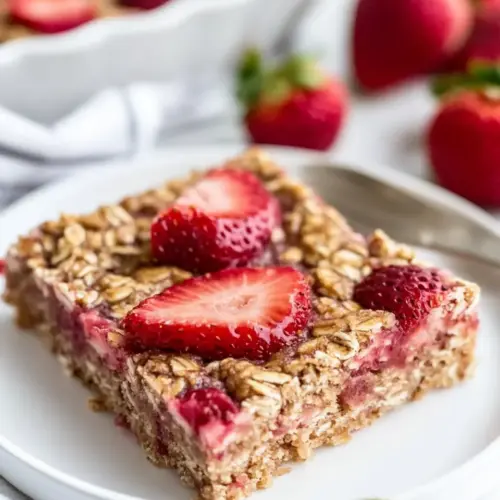
4 Ingredient Healthy Strawberry Breakfast Bars
4 Ingredient Healthy Strawberry Breakfast Bars are a chewy, slightly sweet breakfast bar made with creamy almond butter, mashed bananas, and fresh strawberries. These easy to make bars offer a wholesome alternative to processed snacks, perfect for busy mornings or a make ahead brunch. Try them for an easy weeknight prep that yields portable, satisfying results everyone will enjoy.
Equipment
- 9-inch square baking pan
- Parchment Paper
Ingredients
- 3 large (225 g) ripe bananas mashed (1 cup) Mashed and sweetens the mixture naturally while providing moisture and binding the bars; offers potassium and a soft texture that helps hold oats together during baking.
- 1 cup (240 g) unsweetened almond butter Creamy and acts as the primary fat and binder, supplying healthy monounsaturated fats and a dense, cohesive texture that keeps the bars moist and rich.
- 2 cups (180 g) rolled oats Provides bulk and chewy structure, absorbing moisture and giving the bars their oat-forward texture while contributing whole-grain fiber for heartiness.
- 1/2 tsp sea salt Balances sweetness and enhances flavor while controlling overall taste; also strengthens dough structure slightly and supports gluten-free formulations when used sparingly.
- 1 cup (100 g) fresh strawberries chopped Adds bright, fruity bursts of flavor and moisture; contributes small pieces of fresh fruit that contrast the oat base and provide natural sweetness and acidity.
- 2 to 4 Tbsp (30-60 ml) pure maple syrup for sweeter bars Sweetens optionally to taste, adjusting overall sugar level and moisture; helps caramelize edges slightly and enhance strawberry and banana flavors when added.
- 1 1/2 tsp ground cinnamon optional Warms and deepens flavor with a sweet-spicy note; complements fruit and banana, enhancing aromatic complexity without altering texture when used sparingly.
- 1 tsp pure vanilla extract Adds sweet, aromatic depth and rounds out flavors; enhances perceived sweetness and ties fruit, spice, and nutty elements together.
Instructions
- Preheat the oven to 350 degrees Fahrenheit. Line a 9” x 9” baking pan with parchment paper or spray with cooking spray.: As the oven warms you will notice the kitchen slowly filling with dry, warming air that primes the pan for a reliable bake, which helps the edges firm evenly. Ensuring the 9 Inch Square Baking Pan is lined with parchment paper prevents sticking and makes removal neat. A hot oven means the batter starts setting right away, producing a crisp edge while keeping the center tender. A common mistake is skipping lining, which makes slicing difficult and cleaning tedious.
- Mash the bananas in a large mixing bowl until creamy. Add the almond butter (and pure maple syrup and pure vanilla extract if adding) to the mashed bananas and mix until well combined. Note: If your almond butter is cold or has been sitting in the refrigerator, microwave it for 30 to 60 seconds or until it is very easy to stir.: If your almond butter is cold or has been sitting in the refrigerator, microwave it for 30 to 60 seconds or until it is very easy to stir. : You will hear a soft squishing sound as the bananas break down, and the bowl will release a sweet, fruity aroma. Combining warm, softened almond butter with mashed bananas creates a glossy, cohesive wet base that helps hydrate the oats. This step matters because it ensures even distribution of fat and sweetness, which impacts crumb and chew. If the almond butter is too cold, you will end up with lumps and uneven mixing, so warming it briefly is worth the few seconds. Avoid over mixing, which can make the mixture too loose.
- Add the dry ingredients (oats and sea salt) to the mixing bowl and mix until a thick, sticky dough forms.: As you stir the rolled oats absorb moisture and you will feel the texture change from runny to pleasantly tacky under the spoon. The sea salt will subtly lift all flavors, cutting any flatness in the batter. This transformation is key because the stickiness indicates the batter will bind during baking, holding together when sliced. A typical error is adding extra liquid at this point, which leads to soggy bars that never set properly.
- Stir the chopped strawberries to the large bowl.: When you fold in the chopped strawberries , you will see flecks of red dot the mixture and catch a fresh fruity scent. The strawberries introduce pockets of juiciness that contrast the chewy oats and creamy almond butter . Be gentle; overworking can crush the berries and make the batter too wet in spots. If the fruit is very ripe and juicy, patting pieces dry on a paper towel first avoids extra moisture pooling in the pan.
- Transfer the oatmeal strawberry mixture to the prepared pan and spread it into an even layer. If you’d like, press extra chopped strawberries into the top of the dough.: As you press the mixture into the pan you will feel resistance, and the surface should flatten to an even thickness so the bars bake uniformly. Pressing extra strawberries on top creates an attractive finish and gives more visible fruit on each slice. The even layer ensures consistent bake time across the pan; uneven thickness leads to overbaked thin edges and underbaked center. Avoid packing the mixture so tightly that steam cannot escape, which can create dense bars.
- Bake on the center rack of the preheated oven for 20-25 minutes or until the edges are golden brown and the bars appear set up.: During baking you will notice a warm, toasty scent as the rolled oats and cinnamon deepen, and the top will slowly gain golden color. The center will look slightly firm and spring back to the touch when done, while the edges turn a deeper brown. Baking on the center rack gives balanced heat so the top does not brown before the center sets. A frequent slip up is removing the pan too early; bars that are still jiggly will not slice cleanly once cooled, so err on the side of a few extra minutes if unsure.
- Allow the bars to cool to room temperature before slicing with a sharp knife and serving. If the bars are sliced while they are still warm, the slices don’t come out as cleanly but the bars still taste great.: Cooling lets the structure solidify, and you will see steam fade and the surface become matte rather than glossy. A sharp knife gives clean cuts, and an even patience will result in neat squares. If you slice while warm, edges will smear and crumbs will break away, though the flavor remains excellent. A helpful trick is to chill briefly for firmer slices, but avoid cutting when piping hot which guarantees messy portions.
Notes
- Warm the almond butter: If your almond butter is stiff, microwave it for 30 to 60 seconds so it mixes evenly with the mashed bananas.
- Control sweetness: Start with 2 Tbsp of pure maple syrup and taste the batter, adding more only if you want a sweeter bar.
- Pat strawberries dry: If your strawberries are very juicy, blot them lightly to prevent soggy pockets in the bars.
- Press, don’t pack: When spreading the mixture in the pan, press firmly enough to level without compressing overly, preserving a pleasant chew.
- Watch the color: Pull the bars when the edges turn golden brown and the center is just set to avoid drying them out.
- Slice cleanly: Use a long, sharp knife and wipe it between cuts for tidy squares.