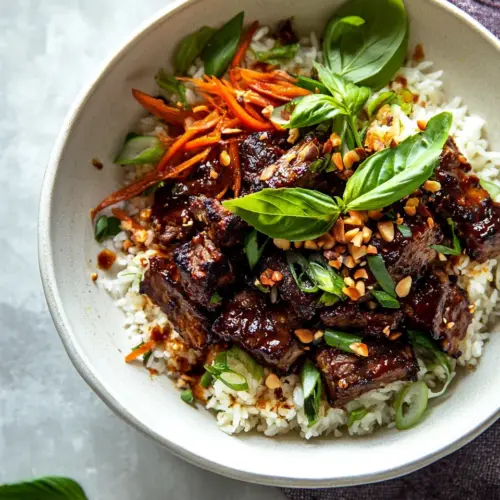
30 Minute Vietnamese Beef and Crispy Rice Bowl
30 Minute Vietnamese Beef and Crispy Rice Bowl offers a crispy, savory, and bright experience with caramelized beef, crunchy golden rice, and fresh herbs. This easy weeknight dinner blends umami rich sauces with zesty lime and fresh herbs for a meal that is both comforting and exciting. Make it for a fast family meal or casual dinner that feels special without fuss.
Equipment
- Large Skillet
- Medium Bowl
- Spatula
Ingredients
- 1 1/2 pounds beef tenderloin or flank steak, cut into 1 inch cubes Cut into 1 inch cubes and marinate briefly to ensure even cooking and tender pieces for quick high-heat searing.
- black pepper Season liberally to enhance savory flavors and balance the sweetness and umami of the marinade throughout the dish.
- 2 tablespoons oyster sauce Add to the marinade to deepen umami richness and provide a slightly briny, savory backbone that caramelizes when cooked.
- 2 tablespoons honey Introduce sweetness and help create a sticky, glossy glaze on the beef while balancing salty and acidic elements.
- 1 tablespoon low sodium soy sauce Contribute a mild salty umami and help balance the marinade for savory depth without overwhelming other flavors.
- 1 tablespoon fish sauce Provide an intense umami and aromatic punch that layers with soy and oyster sauce for authentic Vietnamese depth.
- 3 cloves garlic, minced or grated Mince or grate and incorporate for aromatic sharpness and savory complexity that brightens the meat and dressing.
- crushed red pepper flakes, to taste Sprinkle to add heat and a subtle smoky note, letting you control the spice level to suit personal preference.
- 1/4 cups sesame or extra virgin olive oil Use sparingly for frying and tossing to develop a fragrant sear on the beef and crisp the rice without overpowering flavors.
- 3 cups cooked white rice Serve as the neutral, starchy base to soak up sauces and juices, and to contrast with the crispy rice texture.
- 1 cup shredded radicchio or purple cabbage Provide crunchy, slightly bitter contrast and vivid color, helping to balance sweet and savory components in each bite.
- 4 carrots, shredded or cut into ribbons Shred or ribbon to add sweet earthiness and vibrant color while contributing a tender crunch to the bowl.
- 1 Persian cucumber, sliced Slice thinly and add for a cool, refreshing crunch and mild cucumber flavor that cleanses the palate between bites.
- 2 green onions, chopped Chop and sprinkle to impart a gentle oniony bite and bright green color that complements herbs and acidic elements.
- 1 lime, cut into wedges Cut into wedges and squeeze over the finished bowl to add bright acidity that lifts and balances the richness.
- 1/4 cup fresh basil, and or mint, roughly chopped Roughly chop and mix into the bowl to introduce fresh, aromatic herbaceous notes that brighten each mouthful.
- chopped peanuts, for serving Crush and scatter on top to add nutty crunch and a contrasting texture while enhancing savory-sweet flavors.
Instructions
- Season the steak all over with pepper. In a medium bowl, whisk together the oyster sauce, honey, soy sauce, fish sauce, garlic, and a pinch of crushed red pepper. Add the beef and toss to coat. Heat 2 tablespoons oil in a large skillet over high heat. When the oil shimmers, add the rice and season with salt. Toss to coat in oil. Press the rice evenly across the bottom and up the sides of the pan. Let cook, without stirring, until the rice begins to turn golden brown, about 3-5 minutes. Spoon the rice out of the pan and onto a plate. Return the skillet to high heat and add the remaining oil. Spoon the steak out of the sauce, reserving any sauce left in the bowl, and cook, undisturbed for 2-3 minutes. Stir and cook, undisturbed for another 2-3 minutes. Pour the remaining sauce, 3 tablespoons water, and bring to a boil, reduce the heat to medium and cook until the sauce thickens and begins to coat the steak, about 3-5 minutes. Remove from the heat. Divide the rice among bowls and top with cabbage, carrots, and cucumbers. Spoon the beef and sauce over top. Squeeze with lime. Top with green onions, basil, and peanuts. Eat!: When you first touch the beef , you should notice the cool, firm texture and the faint metallic scent of fresh meat. The sound here is minimal, but feel matters, so pat the cubes dry with paper towel to promote browning. This step matters because moisture blocks the Maillard reaction, and without a good sear the beef will stew instead of caramelize. A common mistake is overcrowding the steak in the bowl or pan, which leads to steaming, so keep pieces in a single layer when searing later.
- In a medium bowl, whisk together the oyster sauce, honey, soy sauce, fish sauce, garlic, and a pinch of crushed red pepper: Right away you’ll smell the pungent tang of fish sauce and the sweetness of honey , and the mixture should glisten. This wet marinade is crucial because it clings to the beef and builds layers of umami. Whisk until homogenous so every cube gets an even coating. Avoid making the sauce too salty by overusing soy or fish sauce; taste as you go if you’re unsure.
- Add the beef and toss to coat: Tossing by hand or with tongs ensures the marinade adheres to each cube and that the garlic disperses evenly. You should hear a slight clink as pieces move, and visually you’ll see the beef develop a glossy sheen. This helps flavor penetrate and jumpstarts caramelization. A frequent error is letting the meat sit too long in acid or salty mixes which can cure it, so don’t marinate excessively if the recipe is on the clock.
- Heat 2 tablespoons oil in a large skillet over high heat: The oil should shimmer and thin out, releasing a faint, warm aroma. Using a hot skillet is essential for achieving a quick, even sear on the rice and later the beef . If the oil smokes heavily, reduce the heat slightly to prevent burning while still maintaining high temperature. A mistake to avoid is adding rice to a cool pan, which will make it stick rather than crisp.
- When the oil shimmers, add the rice and season with salt: The first contact between rice and hot oil should produce a gentle sizzle. Spread the rice immediately so it lies in an even layer and sprinkle a little salt to elevate the flavor. This step creates textural contrast, and you’ll notice the rice edges starting to color within a few minutes. Stirring too soon keeps the grains from forming that coveted crust, so resist the urge to agitate the pan.
- Toss to coat in oil: Move the pan in short arcs or use a spatula to fold the rice so each grain gets a glossy coating. The tactile sensation is important, you want each grain separable, not clumped. Even coating promotes uniform browning, which yields that crunchy crust. Overhandling the rice at this point is a common slip, because it prevents a cohesive crust from forming.
- Press the rice evenly across the bottom and up the sides of the pan: Use the back of a spatula or a spoon to compact the rice into a flat, contiguous layer, even up the sides a little to form a shallow bowl shape. This encourages even browning across surface area and creates those crispy edges we love. You’ll see steam slow and the rice will begin to take on a golden tone. Avoid pressing too hard which can create a dense, gluey layer; medium pressure is ideal.
- Let cook, without stirring, until the rice begins to turn golden brown, about 3 to 5 minutes: During this quiet phase listen for a faint sizzling that means moisture is escaping and the Maillard reaction is happening. The aroma will shift from starchy to toasty and nutty. This patient wait is key for texture, and peeking too often prolongs the process. A rookie mistake is turning the heat down too much, which prevents proper browning.
- Spoon the rice out of the pan and onto a plate: When the crust has formed, the sound of loosening will be subtle but satisfying as the spatula slides under the rice. You should see a golden lattice where the heat kissed the grains. Transferring it preserves the crisp while you finish the beef . If the rice sticks badly, it likely needed more oil or higher heat earlier; take note for next time.
- Return the skillet to high heat and add the remaining oil: Bringing the pan back to high temperature and adding more oil primes it for rapid searing of the beef . The oil should shimmer quickly, and you’ll smell faint nuttiness if you used sesame. High heat locks in juices and forms a caramelized exterior. A mistake here is underheating the pan which leads to long cooking times and a gray, unappealing sear.
- Spoon the steak out of the sauce, reserving any sauce left in the bowl, and cook, undisturbed for 2 to 3 minutes: As the beef hits the hot oil you’ll hear a decisive sizzle, and the surface will darken at the edges. Leaving it undisturbed allows a brown crust to develop. This crust yields concentrated flavor and pleasing texture. The common pitfall is moving pieces too soon, which prevents proper browning and reduces depth of flavor.
- Stir and cook, undisturbed for another 2 to 3 minutes: After flipping or stirring once, give the beef another period to sear and develop color on the other faces. You should smell the caramelizing honey and garlic as the pan intensifies aromatics. Texturally, the exterior firms while the inside stays tender when timed right. Overcooking at this point toughens the meat, so watch the clock closely.
- Pour the remaining sauce, 3 tablespoons water, and bring to a boil, reduce the heat to medium and cook until the sauce thickens and begins to coat the steak, about 3 to 5 minutes: The sauce will hiss as it hits the hot pan and then reduce into a glossy glaze. Watch as it bubbles and thickens, clinging to the beef with a sheen that indicates proper concentration. The aroma will deepen, and the sugars will caramelize slightly. A mistake is adding too much water which dilutes flavor; measure carefully.
- Remove from the heat: At this point the sauce should be glossy and the beef cooked through but still tender. Resting off heat allows juices to redistribute and prevents the sauce from scorching. The pan will cool slightly and the sizzling should subside. Leaving it on heat too long will over reduce the sauce and can make it overly thick or sticky.
- Divide the rice among bowls and top with cabbage, carrots, and cucumbers: As you assemble the bowls, contrast matters visually and texturally. The cool crunch of cabbage , shredded carrots , and crisp cucumber will refresh the palate between warm, savory bites. Layering these elements also ensures each spoonful has variety. A common oversight is piling everything in one spot, which can lead to uneven bites.
- Spoon the beef and sauce over top: The moment of assembly is when aromas mingle, and a glossy drizzle of sauce should cascade over the components. The tactile contrast between the hot meat and cool veggies is delightful, and the sauce ties everything together. Avoid drowning the bowl; reserve some sauce for people who want extra at the table.
- Squeeze with lime: A bright squeeze of lime should sound subtle and release a citrus perfume. The acidity lifts the dish and balances the savory, sweet, and fatty notes. Taste after adding lime so you can adjust the amount for brightness. Too much citrus can overwhelm delicate herbs, so add incrementally.
- Top with green onions, basil, and peanuts: Finish with chopped green onions , fragrant basil or mint , and crunchy peanuts . The final garnish adds freshness, herbal perfume, and a toasty crunch. Serve immediately to preserve textures. A last misstep would be garnishing too early which can cause herbs to wilt and peanuts to soften.
- Eat!: The reward is immediate, with a mix of textures and flavors in each bite. Take a moment to savor the contrast between warm, caramelized beef and crisp, golden rice , and notice how the herbs and lime brighten everything. Enjoy at the table while hot for best texture and aroma.
Notes
- Choose your beef - If you prefer more tender bites, opt for tenderloin and cook briefly; flank steak is economical and flavorful but benefits from slicing across the grain for tenderness.
- Swap oils smartly - Use sesame oil for a nuttier finish or extra virgin olive oil when you want a lighter mouthfeel; both influence aroma and browning behavior.
- Adjust the heat - Increase crushed red pepper flakes for a spicier profile, or omit them and offer chili flakes at the table for guests to customize.
- Make it saucier - Double the sauce quantities and reduce a bit longer to create a thicker glaze that clings to the beef and soaks into the rice for a saucier bowl experience.
- Herb variations - If you prefer mint over basil, swap freely; both add bright, herbal lift, though mint gives a cooler note while basil is peppery and sweet.
- Peanut alternatives - If peanuts are not available, toasted sunflower seeds offer a crunchy, nut free option that still provides texture and toasty flavor.