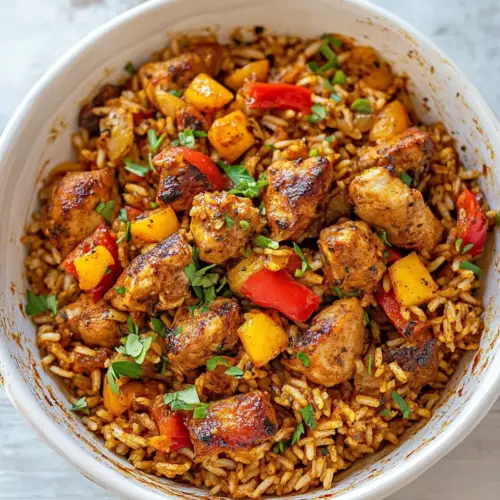
30 Minute Healthy Kickin Cajun Chicken and Rice
30 Minute Healthy Kickin Cajun Chicken and Rice is a creamy spicy and easy weeknight dinner that blends nutty wild rice and fluffy basmati with boldly seasoned chicken and vibrant peppers. This satisfying one pan style meal brings bright texture and smoky heat, perfect for family meals or quick entertaining. Make it when you want big flavor in minimal time.
Equipment
- Medium soup pot
- Large Skillet
- Mixing Bowl
- Fork
Ingredients
- 1/2 cup wild rice Adds a nutty, chewy texture and earthy flavor that contrasts with white rice; helps extend the dish and adds whole-grain nutrients like fiber and minerals.
- 3/4 cup basmati rice Provides a light, fluffy base with a delicate aroma that absorbs flavors; balances the denser wild rice for a pleasing rice blend.
- 2 1/2 cups water or low-sodium chicken broth Simmer to cook both rices evenly while infusing savory depth when using broth; supplies necessary liquid and enhances overall mouthfeel.
- 1 pound boneless skinless chicken breast cut into bite size pieces Offers lean protein and tender bite-sized pieces that soak up seasonings quickly; cooks fast for a 30-minute meal and keeps the dish hearty.
- 2 tablespoons olive oil Coats proteins and vegetables to promote even browning and prevent sticking; contributes healthy fats and a gentle fruity flavor.
- 1 tablespoon cajun seasoning Season boldly to deliver warm, smoky, and spicy Creole flavors; acts as a primary seasoning that defines the dish’s Cajun profile.
- 1 tablespoon creole seasoning Season assertively to add earthy heat and complexity; complements Cajun seasoning with traditional Creole herbs and spice blend.
- 1/2 tablespoon brown sugar Imparts subtle sweetness to balance savory and spicy elements; caramelizes slightly during cooking to deepen flavor nuances.
- 1 teaspoon sweet paprika Adds mild, sweet smokiness and rich color; enhances overall depth without overpowering other spices.
- 1 teaspoon pepper Provides a sharp, bright heat that lifts flavors and seasons the dish evenly; contributes subtle peppery notes.
- 1/2 teaspoon cayenne Delivers concentrated spicy heat for a pronounced kick; use sparingly to control the overall spiciness of the rice and chicken.
- 1/2 teaspoon dried thyme Contributes aromatic, slightly minty and lemony notes; adds classic Cajun herb character and depth to the seasoning mix.
- 2 tablespoons soy sauce Introduces umami and a touch of saltiness that enhances savory flavors; helps balance sweetness and spice in the sauce.
- 1 large red pepper chopped Adds sweet, crisp texture and vibrant color; softens when cooked and brings freshness and crunch to the rice.
- 1 large orange pepper chopped Contributes sweet citrusy crunch and bright color; pairs visually and flavor-wise with the red pepper for a balanced pepper trio.
- 1/2 an onion chopped Adds savory sweetness and texture when softened; forms part of the aromatic base that supports the dish’s flavor.
- 2 cloves garlic minced or grated Provides sharp, pungent aroma and depth; minced garlic disperses flavor quickly and enhances savory richness.
- 1 ounce can diced tomatoes Contributes acidic brightness and slight tomato texture; canned diced tomatoes bring moisture and brightness to the rice mix.
- 2 tablespoons fresh parsley chopped, plus more for garnish Garnishes with fresh herbaceous brightness and color; chopped parsley mixed in and sprinkled on top lightens and freshens the dish.
Instructions
- To start the rice. Add the water to a medium size soup pot. Bring to a low boil and then add the rice and a pinch of salt. Stir to combine and then place the lid on the pot and turn the heat down to the lowest setting possible. Allow the rice to cook ten minutes on low and then turn the heat off completely and let the rice sit on the stove, covered for another 20 minutes (don't take any peeks inside!). After 20 minutes remove the lid and fluff the rice with a fork. Note that rice can cook differently for everyone, this is just what works for me.: Right away you will notice the liquid steam gently rising as the pot comes to a low boil, and that initial faint pop and bubble is your cue that the water is hot enough. As the grains swell they absorb the liquid, and when you lower the heat to the gentlest setting you create a calm, even environment where the rice can finish without burning. The quiet simmer prevents violent rolling boils that could break the grains, and letting the pot rest off the heat for twenty minutes yields fluffy, separate pieces instead of clumpy rice. If you lift the lid too often you lose steam and risk undercooked pockets, so resist the urge to peek. Common mistake to avoid: turning the heat too high during the covered stage, which results in uneven texture and sticky rice.
- Meanwhile heat a large skillet on medium high heat and add 1 tablespoon olive oil. In a small bowl combine the cajun seasoning, creole seasoning, brown sugar, pepper, cayenne, sweet paprika and dried thyme.: As the skillet warms, you should hear a soft hiss when the oil hits the surface, and that sound means the pan is primed for a good sear. Mixing the spices in a bowl first allows them to coat the chicken evenly and bloom in the hot oil. When spices hit warm oil they release fragrant oils, so you will smell a bright, toasty perfume almost immediately, which is an encouraging sign. I always taste a tiny bit of the blend on a spoon so I can sense how the sweetness and heat balance. Common mistake to avoid: adding spices to a cold pan which prevents them from flowering and mutes their aroma.
- Add the chicken and the spice mixture to the skillet and give it a good toss. Then spread the chicken in an even layer and allow it to cook, without stirring for 2-4 minutes. Then stir the chicken and add the soy sauce, continue cooking another 5 minutes or until the chicken is browned all over and cooked through. Remove the chicken from the skillet and set aside.: When the chicken hits the hot oil you will hear a satisfying sizzle and see edges begin to color; that browning is the Maillard reaction and it creates those savory, nutty notes you crave. Leaving the pieces undisturbed allows crusts to form, and when you finally stir the pan you should see golden bits release from the surface. After adding the soy sauce the pan will steam briefly and the sauce will glaze the meat, giving a glossy sheen and deeper umami. Check for doneness by slicing a piece to ensure it is opaque through the center. Common mistake to avoid: overcrowding the skillet which leads to steaming instead of searing.
- Add the remaining tablespoon of olive oil to the skillet. Add the red pepper, orange pepper, onion and garlic. Stir fry the veggies for about 5-10 minutes or until the onions are soft. Add the chicken back to the skillet and toss well. Now stir in the diced tomatoes and simmer until almost all the liquid has evaporated. Remove from the heat and add the chicken mixture to the rice. Toss well and serve! Garnish with chopped parsley if desired.: As the vegetables hit the warmed skillet they should sizzle and soften, releasing sweet aromatics from the peppers and onions and a soft, toasted garlic perfume a few moments later. The sound will shift to a gentle pop and the colors will deepen as the peppers become tender while still keeping a little bite. Returning the chicken to the pan lets the flavors marry and the tomatoes and residual juices will simmer down into a slightly saucy coating, which helps the mixture cling to each grain of rice. When most of the liquid has evaporated you will see the pan dry to glossy pieces and the aroma will be rich and layered. Tossing into the fluffy rice distributes flavors and creates pockets of spice and texture. Common mistake to avoid: finishing with too much liquid which makes the rice soggy instead of coated and separate.
Notes
- Boost the umami Use low sodium chicken broth in place of water to add savory depth without extra salt.
- Control the heat Reduce the cayenne by half for a milder plate, or add an extra pinch if you like a pronounced kick.
- Make it vegetarian Swap the chicken for firm tofu cubes, press and pat them dry then pan sear to get a similar textural contrast.
- Prep ahead Chop the peppers and onion the night before to shave meal time on busy days.
- Garnish wisely Fresh chopped parsley brightens the final dish and cuts through the richness of the spices.